
[Have you had “anomalous experiences” like this skeptic did? I have; but those are other stories. Here’s one that was recounted in Scientific American, where skepticism is (appropriately) an article of faith. “Anomalous experiences” (aka synchronicity, serendipity, coincidence, fate, luck, destiny, Providence, etc.) are by definition non-scientific, as they can’t be replicated like all successful experiments. But unique events are not ipso facto meaningless, as this charming account shows.]
Anomalous Events That Can Shake One’s Skepticism to the Core

I just witnessed an event so mysterious that it shook my skepticism
By Michael Shermer on October 1, 2014
Often I am asked if I have ever encountered something that I could not explain.
What my interlocutors have in mind are not bewildering enigmas such as consciousness or U.S. foreign policy but anomalous and mystifying events that suggest the existence of the paranormal or supernatural. My answer is: yes, now I have.
The event took place on June 25, 2014. On that day I married Jennifer Graf, from Köln, Germany. She had been raised by her mom; her grandfather, Walter, was the closest father figure she had growing up, but he died when she was 16. In shipping her belongings to my home before the wedding, most of the boxes were damaged and several precious heirlooms lost, including her grandfather’s binoculars.
His 1978 Philips 070 transistor radio arrived safely, so I set out to bring it back to life after decades of muteness. I put in new batteries and opened it up to see if there were any loose connections to solder. I even tried “percussive maintenance,” said to work on such devices—smacking it sharply against a hard surface. Silence. We gave up and put it at the back of a desk drawer in our bedroom.
Three months later, after affixing the necessary signatures to our marriage license at the Beverly Hills courthouse, we returned home, and in the presence of my family said our vows and exchanged rings. Being 9,000 kilometers from family, friends and home, Jennifer was feeling amiss and lonely. She wished her grandfather were there to give her away. She whispered that she wanted to say something to me alone, so we excused ourselves to the back of the house where we could hear music playing in the bedroom.
We don’t have a music system there, so we searched for laptops and iPhones and even opened the back door to check if the neighbors were playing music. We followed the sound to the printer on the desk, wondering—absurdly—if this combined printer/scanner/fax machine also included a radio. Nope.
At that moment Jennifer shot me a look I haven’t seen since the supernatural thriller The Exorcist startled audiences. “That can’t be what I think it is, can it?” she said. She opened the desk drawer and pulled out her grandfather’s transistor radio, out of which a romantic love song wafted. We sat in stunned silence for minutes. “My grandfather is here with us,” Jennifer said, tearfully. “I’m not alone.”
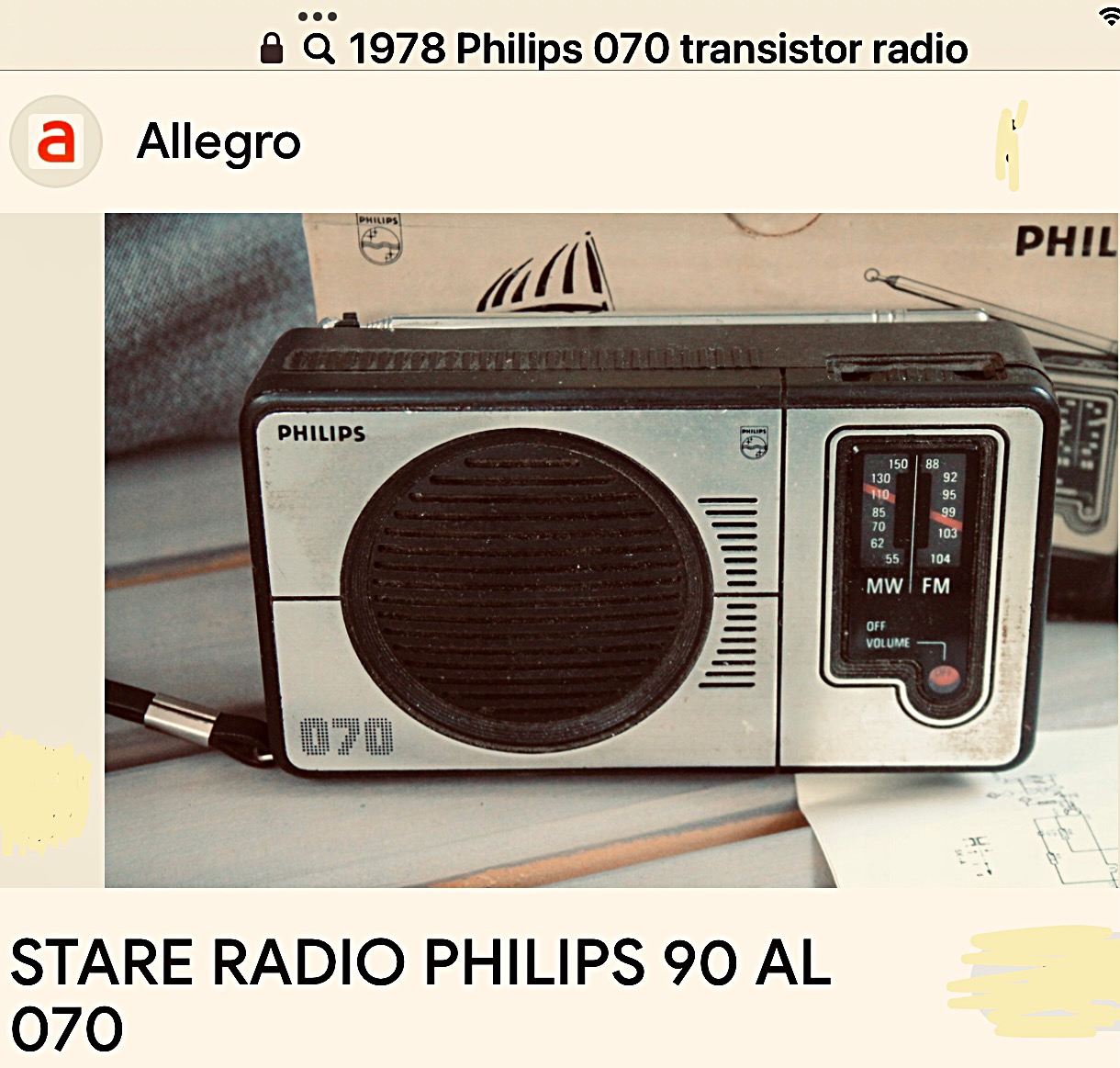
Shortly thereafter we returned to our guests with the radio playing as I recounted the backstory. My daughter, Devin, who came out of her bedroom just before the ceremony began, added, “I heard the music coming from your room just as you were about to start.”
The odd thing is that we were there getting ready just minutes before that time, sans music.
Later that night we fell asleep to the sound of classical music emanating from Walter’s radio. Fittingly, it stopped working the next day and has remained silent ever since.
What does this mean? Had it happened to someone else I might suggest a chance electrical anomaly and the law of large numbers as an explanation—with billions of people having billions of experiences every day, there’s bound to be a handful of extremely unlikely events that stand out in their timing and meaning. In any case, such anecdotes do not constitute scientific evidence that the dead survive or that they can communicate with us via electronic equipment.
Jennifer is as skeptical as I am when it comes to paranormal and supernatural phenomena. Yet the eerie conjunction of these deeply evocative events gave her the distinct feeling that her grandfather was there and that the music was his gift of approval. I have to admit, it rocked me back on my heels and shook my skepticism to its core as well. I savored the experience more than the explanation.

The emotional interpretations of such anomalous events grant them significance regardless of their causal account. And if we are to take seriously the scientific credo to keep an open mind and remain agnostic when the evidence is indecisive or the riddle unsolved, we should not shut the doors of perception when they may be opened to us to marvel in the mysterious.
This article was originally published with the title “Infrequencies” in Scientific American 311, 4, 97 (October 2014)
ABOUT THE AUTHOR
Michael Shermer is publisher of Skeptic magazine (www.skeptic.com). His next book is The Moral Arc. Follow him on Twitter @michaelshermer
As a statistician, I cannot eliminate the slim, but nonzero, possibility that this is an “outlier” or improbable anomaly. However, as a relic of the previous century myself, I have to say that the happy couple is entitled to their own opinion. Further, as one sworn (this was before I understood the Quaker position on oaths) to the Constitution the day I started my career as a Statistician (its true, I’m a recovering bureaucrat) I have to say that if attaching meaning to the event brightens their life, then by the Ninth Amendment, they should live their lives their way! I do have one question, though. Was it ALL music, or were there periodic breaks, for example station identification as required by law? If those were not present, it might tip the balance into the realm of the miraculous! ;^)