On First Day, 11th Month 29 (Sunday November 29 in worldspeak), I had the pleasure of attending meeting at Hopewell-Centre Meeting, at the Hopewell Meetinghouse north of Winchester Virginia.

It was a pleasure to revisit this historic spot, at the mouth of the Shenandoah Valley. This meeting goes back to before the American Revolution, and it has seen so much of war, peace, and all the rest that history practically drips off the walls. Any historically-minded Friend ought to have Hopewell on their list of “must see” Quaker pilgrimage sites.
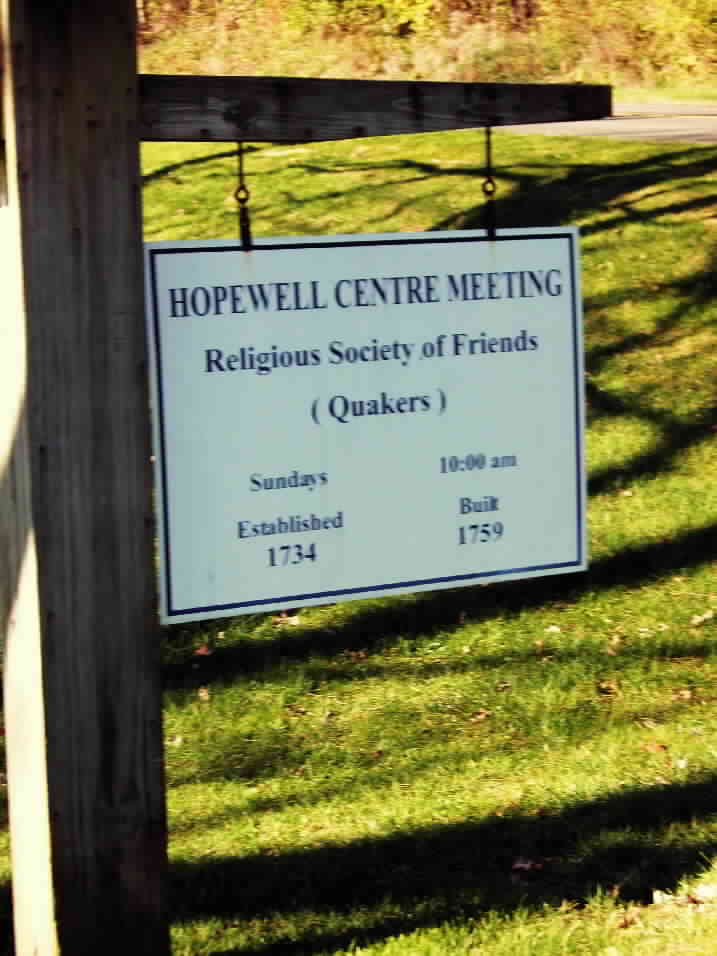
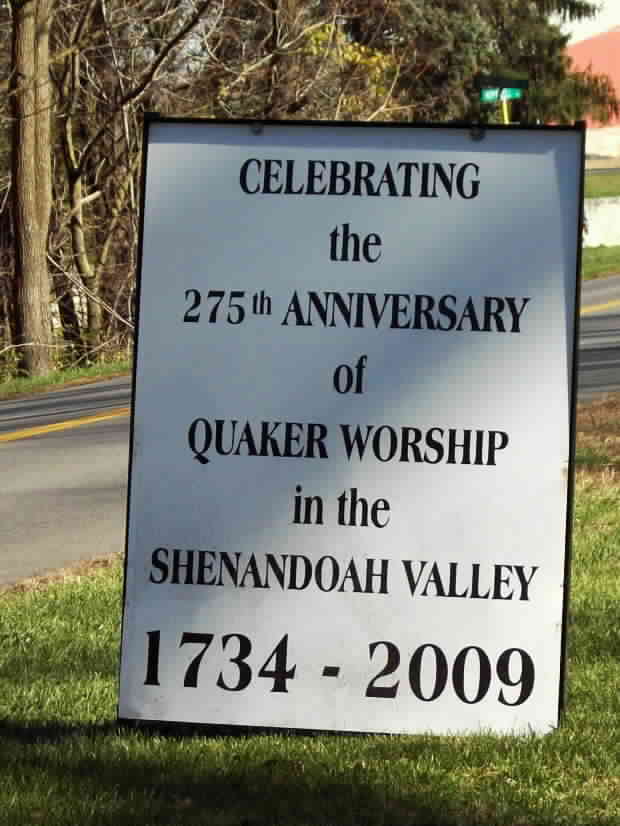
In fact, the meeting is celebrating its 275th anniversary on First Day Twelfth Month 6 (Sunday December 6) 2009 at 10 AM, with worship, followed by all kinds of good stuff. So if you read this in time, plan to join in.
Hopewell’s legacy includes some events noted in both history and fiction. In 1777, several Friends from Philadelphia were taken prisoner by the American forces, told they were going to be tried as British spies and traitors, and taken to Winchester. There they were permitted to worship at the relatively new Hopewell Meeting; two of them took ill and died, and are buried in Hopewell’s large cemetery adjoining the meetinghouse. after protesting their innocence long and vigorously, these “Virginia Exiles” were finally released without charges and the survivors returned to Philadelphia.
Quaker author Elizabeth Grey Vining published a novel, “The Virginia Exiles” about this experience, copies of which are available on Amazon at very reasonable prices.
I can understand how Vining was compelled to tell this story. The first time I visited Hopewell, in the 1980s, stories seemed to leap out at me. Three pieces resulted from this assault of the muses. The area around Hopewell and Winchester became the setting for my first Quaker mystery novel, Murder Among Friends, published in 1992. It’s out of print, having sold out two printings, and I put it online in the late 1990s.
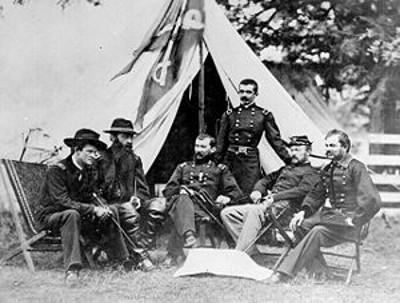
The other two pieces are ghost stories — “The Forgotten Ghosts of Hopewell,” and “Fire In The Valley.” The first takes another slant on the Virginia Exiles, imagining the family members of those who died there still looking for them. “Fire In The Valley” is set in the Civil War, when the contending armies passed through the area many times. The story occurs during the 1864 “scorched earth” campaign led by US General Phil Sheridan, in which many Quaker farms (and the farms of others) were destroyed. It imagines what happen to a Quaker farm family which has a son in the army, and a farm –their livelihood — in peril from the same army.
“Fire In The Valley” is part of the story collection, “Posies for Peg.”
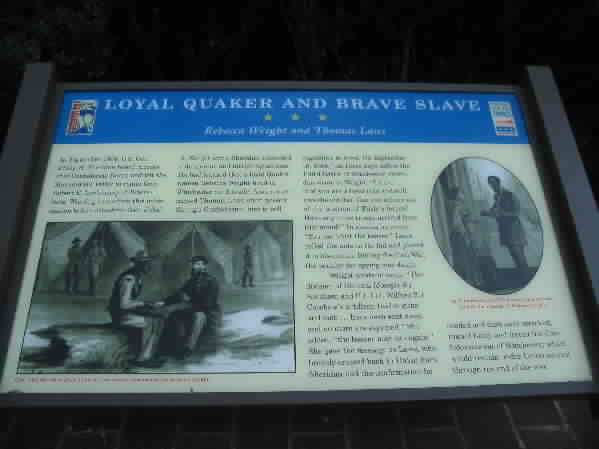
There are many more stories involving Quakers in the Shenandoah during the Civil War. One, which has not been taken up by Friends yet, is that of Rebecca Wright in Winchester, who spied for Sheridan.
These stories, written and unwritten, fill the air around Hopewell, like the scent of apple blossoms in the spring.
And one of them, my most recent, is bittersweet: There’s a small caretaker’s cottage near the meetinghouse, and in 2005-6 it was home to my friend Tom Fox.
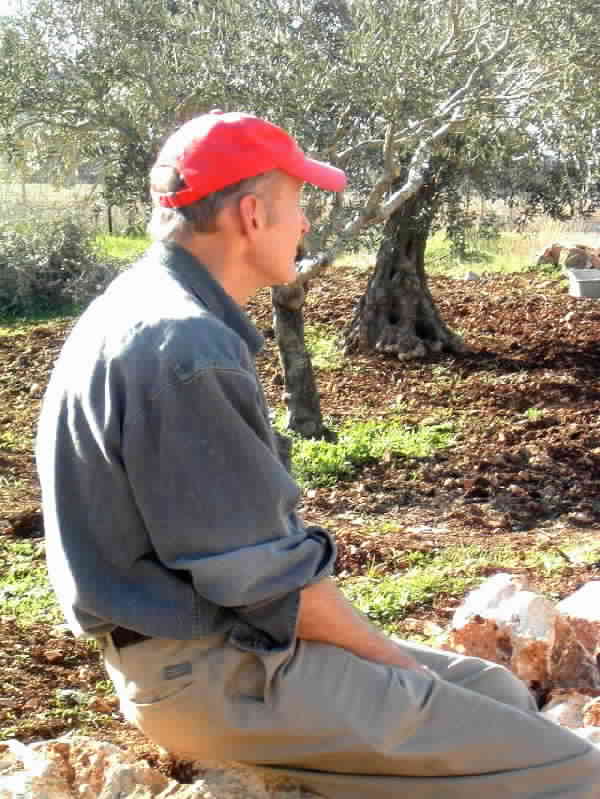
Tom loved the Shenandoah valley and hiked often in the nearby mountains. He lived in the cottage like a monk before leaving for Iraq and the fate that awaited him there. In 2008, a junior high Friends group had a weekend there, for which I was one of the “adult presences,” and I stayed in Tom’s room. His bookshelf was still there, but with only two volumes on it: the Bible on one end, and the Quran on the other.