

 [NOTE: O.M.F.G. — I can NOT believe the Army is bringing back an Eighties recruiting slogan; but by god they are. And recruiting has fallen so below target they’re sending out the Army Secretary herself to do recruiting blitz weekends, like this one in Chicago.
It was a very tough gig, as this report details. Kids in high school and college were asking the right, hard questions, the ones the brass can’t answer satisfactorily. Like when will they deal seriously with its culture of sexual harassment (the response so far is 98% PR/BS). What about high levels of domestic abuse, potential career disruption — and, oh yeah: getting killed or injured in war?
(During Iraq, an experienced Army doc told me there were sixteen troops seriously wounded for every one killed. That’s about 60,000 wounded, and doesn’t include many thousands more with non-bleeding wounds like TBI, Traumatic Brain Injury, and PTSD/moral injury. Yeah, even an up-to-the-minute AI, robotic-and-drone-centered war is still hell on people; look at Ukraine, for god’s sake.)
Speaking of Ukraine, plus Russia and China, the U. S. Military Industrial Complex seems to be rushing into a new Cold War as fast as they can throw tons of new money at it, and bringing with it huge arms buildups in many allied countries. Maybe there’s no practical alternative to that yet, as long as the Ukrainians are determined and able to fight for their national life, Putin is determined to crush them, and China closes in on Taiwan.
But the buildup being contemplated just in the U. S. won’t be achieved only with piles of new cyber doom-gadgets: it will take lots more people, not all in uniform.
And where will they come from? In June it will be 50 years since the military draft ended. And if the Pentagon recruiting results keep lagging, how long will it be before the brass face pressure to start issuing draft notices again to fill all those new slots in the expanded ranks?
If so, I predict the military nightmare of widespread draft evasion and resistance will rise like zombie hordes thinking it’s 1969 again. Look at today’s generational stampede out of Russia. We might have the money to finance this Cold War 2.0; the greying leftovers from the Neocon elite crusade who gave us Iraqistan, are back, and raring to lead the charge from their think tank desks and lobby shops — but do we have the young people to actually populate it and take the incoming?
The Chicago sortie recounted here strongly suggests that Gen Z is much more dedicated to, as the retread Army jingle says, to “Be All That It Can Be” but Out of, not “In the Army.”]

AP News: Army boss’ mission: Persuade schools to welcome recruiters
CHICAGO (AP) — Army recruiters struggling to meet enlistment goals say one of their biggest hurdles is getting into high schools, where they can meet students one on one. But they received a recent boost from a recruiting advocate whom school leaders couldn’t turn away: the secretary of the Army.
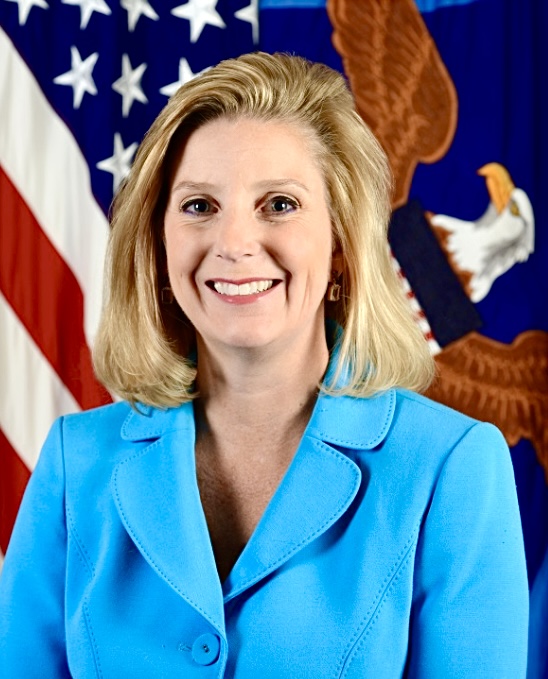
During three days of back-to–back meetings across Chicago last month, Army Secretary Christine Wormuth spoke with students, school leaders, college heads, recruiters and an array of young people involved in ROTC or junior ROTC programs. Again and again, she asked, what can the Army do to better reach young people and sell itself as a good career choice.
In blunt sessions, recruiting leaders told her they need more and better access to high school students. But they also said the atmosphere can at times be unfriendly — or worse — with school leaders, many of whom are skeptical that the Army offers a good career option for their students. “I’m going to use the word hostile,” one recruiter told her. “There’s no other word to use.”
It’s not unusual for the Army’s top civilian to travel the country, pitching the Army message and checking in on recruiting progress. But the Chicago trip came on the heels of the Army’s worst recruiting year in recent history, when it fell 25% short of its 60,000 enlistment goal. It’s up to Wormuth and other Army leaders to find creative new ways to attract recruits and ensure that the service has the troops it needs to help defend the nation.
All the military services are strugging to compete for young people in a tight job market where private companies are often willing to provide better pay and benefits. Two years of the coronavirus pandemic shut down recruiters’ access to public events and schools where they could find prospects. And, according to estimates, just 23% of young people can meet the military’s fitness, educational and moral requirements, with many disqualified for reasons ranging from medical issues to criminal records and tattoos.
Army leaders say their surveys show that young people don’t see the Army as a prime career choice, often because they don’t want to die or get injured, deal with the stress of military life or put their lives on hold.
What Wormuth heard in her Chicago sessions was a litany of challenges, from the issue of school access and competition with colleges to confusing Army websites, limited social media and a general lack of public knowledge about the jobs and opportunities that military service can provide.
In a meeting with Pedro Martinez, the chief executive for Chicago’s public schools, Wormuth noted the recruiters’ frustrations and she pressed for answers on how to fix things.
Martinez agreed that when recruiters try to work with individual schools, and a new recruiter comes in or a counselor leaves, “there’s not always a warm handoff.” He suggested working with the central district office instead.
Swiveling to Lt. Col. Shane Doolan, the recruiting battalion commander for Chicago, Wormuth asked if the team deals well with the central office.
“No, we really don’t have a relationship. And that’s what we’re working on here,” Doolan replied, adding that two years of COVID–19 restrictions hampered those efforts. He also said recruiters found a lack of understanding about the Army.
Doolan and other recruiters told Wormuth that they face resistance from teachers’ unions and school board members who don’t see the value in offering students the military as a career option. In some cases, school officials view the military through a post–Vietnam era lens.
Martinez and other school officials acknowledged there is a knowledge gap, but added that for security reasons, principals and counselors are cautious about who gets access to their schools and students.
They also warned that a recruiter who is good at speaking to students may not be as prepared to deal with school leaders. Recruiters, they said, must be able to explain the benefits of military service to those who are gatekeepers to the students.
High school access isn’t the only hurdle.
Speaking with college leaders, Wormuth stressed that the Army should not be viewed as their competitor for young people.
“The Army is facing a recruiting challenge. That’s what brought me here,” Wormuth told a large group of college presidents and leaders at the University of Illinois Chicago. But, she added, “it doesn’t have to be a choice for kids between the Army and college. Some kids benefit from a little time doing something else.”
In some cases, she said, soldiers return to college after serving, or while continuing to serve, and are better prepared to be good students.
Students offered their own views.
In small sessions with members of the Reserve Officers’ Training Corps (ROTC) and the junior ROTC, students laid bare the gaps the Army must bridge to attract others in their generation. They said young people don’t know the benefits offered by Army service, which include a wide array of career choices or free college tuition. They said students have little exposure to service members and that for every positive mention of the military or the Army online, there are five negative ones.
Gathered around tables and in their uniforms, they spoke glowingly about their ROTC experiences: the camaraderie, the support, the leadership skills they get and the confidence they build.
But all too often, they said, their friends question their choices, and, as one said, “assume I’m going to war.” Some noted that at times their parents are reluctant and had concerns about their safety.
In a crowded auditorium at Whitney M. Young Magnet High School, Wormuth came face to face with those perceptions. Young students peppered her with questions about sexual assaults in the Army, homeless veterans, and the use of the military during racial unrest after the police killing of George Floyd.
Flying home after three days jammed with such sessions, Wormuth said the questions from the Whitney Young students, along with similar issues raised in other meetings, reinforce the need for the military to solve some it its more difficult problems.
“They asked about sexual harassment. They asked about, are they going to be safe? They asked about barracks, in addition to wanting to know what the benefits are,” Wormuth said. “That, to me, underscores the importance of us finding ways to solve those problems. Those are real issues and the market research we’ve done speaks to that.”
She said that she and Gen. James McConville, the Army chief of staff, realize it will take time to fix the recruiting shortfall.
“I don’t think we’re going to build back our recruiting numbers to the level that Gen. McConville and I would feel comfortable with in one year,” she said.
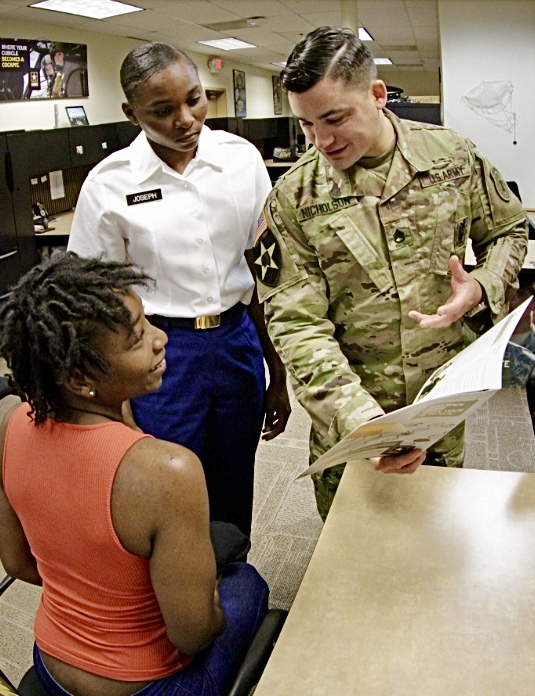 Maj. Gen. Johnny Davis, head of Army Recruiting Command, said some new incentive programs are already working and enlistment numbers for recent months are higher than last year.
Army leaders are pinning their hopes on a new advertising campaign that will launch this week and bring back a tried and true Army slogan from the 1980s: “Be all you that can be.”
In the Whitney Young auditorium, Wormuth said the slogan speaks to the variety of careers the Army offers.
“If coding is your thing, we have a place for you in the Army,” she told the students. “If jumping out of planes or helicopters is your thing, or if you’d rather fly them, you can become an aviator or go airborne in the United States Army. If you want to speak different languages and travel the world, you could become a linguist or a foreign country expert in the army. ”
And, she added, if hip hop is their passion, they can become an Army rapper, since two vocalists just joined the Army band of rappers.
“People remember people who take risks and try to do something in service of something bigger than themselves,” she told the classes. “People remember those who choose to be all that they could be.”
My step grandson decided to “be all he could be” and had his life ended by an Iraqi sharpshooter the first time his armored vehicle left base with him in the gun turret! Not what we all wanted for him!
I’m so sorry to hear of this, Pat, and thank you for sharing it. War is still hell.