Over the course of his long career, John Sargent, who was chief executive of Macmillan until last year and is widely respected in the industry for his staunch defense of freedom of expression, witnessed the growing forces of censorship — outside the industry, with overt book-banning efforts on the political right, but also within the industry, through self-censorship and fear of public outcry from those on the far left.
“It’s happening on both sides,” Sargent told me recently. “It’s just a different mechanism. On the right, it’s going through institutions and school boards, and on the left, it’s using social media as a tool of activism. It’s aggressively protesting to increase the pain threshold, until there’s censorship going the other way.”
In the face of those pressures, publishers have adopted a defensive crouch, taking pre-emptive measures to avoid controversy and criticism. Now, many books the left might object to never make it to bookshelves because a softer form of banishment happens earlier in the publishing process: scuttling a project for ideological reasons before a deal is signed, or defusing or eliminating “sensitive” material in the course of editing.
Publishers have increasingly instituted a practice of “sensitivity reads ,” something that first gained traction in the young adult fiction world but has since spread to books for readers of all ages. Though it has long been a practice to lawyer many books, sensitivity readers take matters to another level, weeding out anything that might potentially offend.
[COMMENT: Well, I do “sensitivity reads” of books too, often. Here’s the routine: I start one, and if I sit back after the first chapter or so and — wake up an hour or two later, then I’m too sensitive for it. Or if, for any of several other reasons, the story or exposition seems wrong, lame, disingenuous or offensive and not worth my time, I’m too sensitive for it.
Sometimes, though, I stifle my sensitivities and forge on through a bad book, then write a scathing review. Click here for one such,
Awful. But would I have stopped the publication of the book? No. The ideas were out there, with or without it. I did my bit to challenge them. Yet such publications were demonstrably doing vastly more “harm” than anything American Dirt could manage, gleefully complicit in mass killing that we’re still paying for, both at home and over there.
Which reminds me of a caveat: the often brilliant writer G. K. Chesterton once quipped that, “There is a thought that stops thought. That is the only thought that ought to be stopped.” And there are publications that should be stopped: child pornography. Or plans for a government overthrow; not ideas about one; not histories, nor novels about one; but real plans. And the point here is not so much to stop the presses
PAMELA PAUL: Even when a potentially controversial book does find its way into print, other gatekeepers in the book world — the literary press, librarians, independent bookstores — may not review, acquire or sell it, limiting the book’s ability to succeed in the marketplace. Last year, when the American Booksellers Association included Abigail Shrier’s book, “Irreversible Damage: The Transgender Craze Seducing Our Daughters,” in a mailing to member booksellers, a number of booksellers publicly castigated the group for promoting a book they considered transphobic. The association issued a lengthy apology and subsequently promised to revise its practices. The group’s board then backed away from its traditional support of free expression, emphasizing the importance of avoiding “harmful speech.”
A recent overview in Publishers Weekly about the state of free expression in the industry noted, “Many longtime book people have said what makes the present unprecedented is a new impetus to censor — and self-censor — coming from the left.” When the reporter asked a half dozen influential figures at the largest publishing houses to comment, only one would talk — and only on condition of anonymity. “This is the censorship that, as the phrase goes, dare not speak its name,” the reporter wrote.
The caution is born of recent experience. No publisher wants another “American Dirt ” imbroglio, in which a highly anticipated novel was accused of capitalizing on the migrant experience, no matter how well the book sells. No publisher wants the kind of staff walkout that took place in 2020 at Hachette Book Group when the journalist Ronan Farrow protested its plan to publish a memoir by his father, Woody Allen.
[COMMENT: “No publisher wants” is sheer baloney & BS. The facts clearly confute it: American Dirt hit the Times bestseller list at #1 and dug in. Yes, some reviewers hated it; fine. The book provoked cries for more diversity in the very pale and insular bigtime publishing world — also fine. And it sold anyway, like the proverbial hotcakes. Book buyers rule.
Here’s the Dirt on my hero: Oprah. But my biggest kudos in this flap go to Oprah Winfrey, who had picked American Dirt for her book club:
Winfrey took a stand amidst the controversy American Dirt . She acknowledged the criticisms and cancellation of the book tour. However, she felt moved by the book and decided, “If one author, one artist is silenced, we’re all in danger of the same. I believe that we can do this without having to cancel, to dismiss or to silence anyone.”
Amen! Note that Oprah did not use the word “censorship”, preferring the more accurate “silencing.” Also note that a very large number of people took her advice: despite all the foofaraw, American Dirt was one of the bestsellers of the year 2020, on the Times list for 34 weeks. I didn’t read it, but I know one thing: many others did, and the sky didn’t fall. (Oh wait — that’s two
Oh—and I know another thing: it’s baloney to say that “no publisher” wants another controversial book that will stay on the bestseller list for more than 8 months. If American Dirt ‘s publisher, Flatiron, had chickened out, others would have hustled to pick it up, and take the profits to their bank. [It’s one of the few glories of capitalism.]
And turning to Woody Allen’s memoir, Apropos of Nothing . Author Stephen King rightly criticized the publisher:
“The Hachette decision to drop the Woody Allen book,” he tweeted, “makes me very uneasy. It’s not him; I don’t give a damn about Mr Allen. It’s who gets muzzled next that worries me … If you think he’s a paedophile , don’t buy the book. Don’t go to his movies. Don’t go listen to him play jazz at the Carlyle Hotel . Vote with your wallet … In America, that’s how we do it.”
[COMMENT: I’m with King. Allen’s book was soon picked up by another U. S. publisher, got mixed reviews, more pans than praise, but still hit several bestseller lists and was republished in a number of other language editions.
I just looked out the window: the sky is still there.
I’m also fine with the outraged reviews; you think Woody’s a perv? Call him out. I’m also fine with those who read it and formed their own opinions. I didn’t buy or read it myself, don’t give a hoot about Allen, and am against child abuse. (I also don’t read much Stephen King, either. Horror’s not my thing; these days, there’s too much of that in what we call real life, like in those very scary places for kids — you know, public schools. . . .)
PAMELA PAUL: I t is certainly true that not every book deserves to be published. But those decisions should be based on the quality of a book as judged by editors and publishers, not in response to a threatened, perceived or real political litmus test. The heart of publishing lies in taking risks, not avoiding them.
From, “On the Other Side of The Forest,” by Nadine Robert and Gérard DuBois; early version. A character is shown after cleaning out a wood-fired oven. You can understand why the publishing world gets nervous. Consider what has happened to books that have gotten on the wrong side of illiberal scolds. On Goodreads, for example, vicious campaigns have circulated against authors for inadvertent offenses in novels that haven’t even been published yet. Sometimes the outcry doesn’t take place until after a book is in stores. Last year, a bunny in a children’s picture book got soot on his face by sticking his head into an oven to clean it — and the book was deemed racially insensitive by a single blogger . It was reprinted with the illustration redrawn. All this after the book received rave reviews and a New York Times /New York Public Library Best Illustrated Children’s Book Award.
In another instance, a white academic was denounced for cultural appropriation because trap feminism [hip hop and related music which deals heavily and usually favorably with commercialized sex] the subject of her book “Bad and Boujee ,” lay outside her own racial experience. The publisher subsequently withdrew the book. PEN America rightfully denounced the publisher’s decision, noting that it “detracts from public discourse and feeds into a climate where authors, editors and publishers are disincentivized to take risks.”
[COMMENT: Again, I’m on a somewhat different track: you think a published book is racist, say so, and tell why and how. And be ready for pushback. The real villains here are chicken-hearted editors and publishers.]
Books have often (and often unpredictably) contained delicate and challenging material that rubs up against some readers’ sensitivities or deeply held beliefs. But which material upsets which people changes over time; many stories about interracial cooperation that were once hailed for their progressive values (“To Kill a Mockingbird,” “The Help” ) are now criticized as “white savior” narratives.
[COMMENT: Not to freaking mention “Uncle Tom’s Cabin.” The list of its cultural and political infractions and “harms” could fill another couple pages. About the only thing that might be said in its behalf would be something like –oh, well, it DID, you know, help overthrow slavery. But, really, the stereotypes — and, like, the white author uses the N-word in it 109 times (I counted)!! Omigawd.]
PAMELA PAUL: Yet these books can still be read, appreciated and debated — not only despite but also because of the offending material. Even if only to better understand where we started and how far we’ve come.
[COMMENT: I saw the film of “The Help” three times, in a theater in a Deep South city. Each time, the house was nearly full, and most of the viewers were Black women, many not so young. And each time, at the end they cheered and wept for this white-girl written story, and left talking of how affirmed and seen they felt, they and so many of their sisters and foremothers. Maybe you can sneer at, denigrate and dismiss their honest, grass roots, not-for-the-papparazzi reactions. But I didn’t, and won’t.
Yet how did a white woman (and a white male director) bring this off? It’s called “imagination,” and “empathy” (plus something called talent). Some of us have it, lots of us don’t.
Further: Click here for my thoughts on To Kill a Mockingbird , Atticus Finch, and Harper Lee’s late-life sequel to it, Go Set a Watchman.]
PAMELA PAUL : Having both worked in book publishing and covered it as an outsider, I’ve found that people in the industry are overwhelmingly smart, open-minded and well-intentioned. They aren’t involved in some kind of evil plot. Book people want to get good books out there, and to as many readers as possible.
An added challenge is that all of this is happening against the backdrop of a recent spate of shameful book bans that comes largely from the right . According to the American Library Association , of the hundreds of attempts to remove books from schools and libraries in 2021, a vast majority were made in response to content related to race and sex — red meat for red states, with Texas and Florida ranking high among those determined to quash artistic freedom and limit reader access. Republican politicians, for so long forces of intolerance, are now deep in the book-banning business.
[COMMENT: Deep in it. You know what to do. Read. Buy books. Stand up for them. Even smuggle them in across the state lines, along with the special pills for those in need who are racing the clock. These are struggles your great grandparents were involved in, or should have been. Now it’s your turn.]
We shouldn’t capitulate to any repressive forces, no matter where they emanate from on the political spectrum. Parents, schools and readers should demand access to all kinds of books, whether they personally approve of the content or not. For those on the illiberal left to conduct their own campaigns of censorship while bemoaning the book-burning impulses of the right is to violate the core tenets of liberalism. We’re better than this.

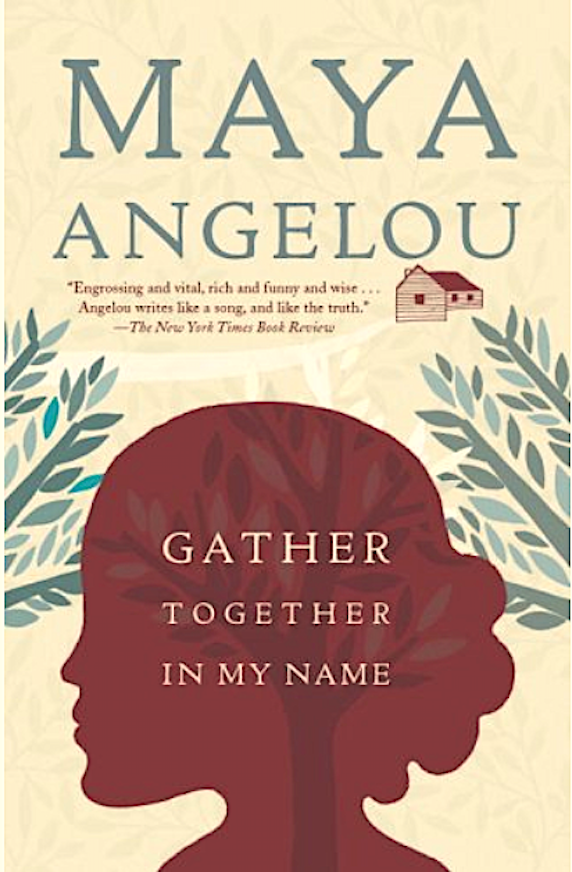
 I also read Maya Angelou’s Gather Together in My Name; powerful. I can see why some don’t like it: earthy, unvarnished, but for me, a fine tale of survival.