Category Archives: Stories – From Life & Elsewhere

Dog Days Tale: Honesty Is the Best Policy – Mostly

I was ready to cut up columns when Mike nodded at me over the phone receiver again. ”It’s Judy Drake,” he said. “At the Phoenix.”

“Chuck! I got an idea for you!” she said. Judy was one of those people the word “perky” was invented for; but I was glad to be distracted. Judy was the culture editor at the Boston Phoenix, the big downtown weekly paper where I used to work. She got to cover the really big events in town, like new movies, plays, the symphony, and above all, the big-name rock concerts.

When I worked at the Phoenix she doled out free concert tickets like lottery prizes, and we all lapped them up. Boston had a lot of big events. I had seen Bob Dylan, Jimi Hendrix, Joni Mitchell, even Johnny Cash this way.

Those giveaways also worked great for the owner of the Phoenix; as long as we kept humming the latest concert tunes around the office, we forgot to notice that he didn’t pay us decent wages or benefits. But heck, who needed health insurance when we had a chance to see Frank Zappa, or The Who, for free? (Ah, youth.)

I was still a sucker. “Do you know,” Judy asked, “about the concert at Boston Garden tonight?”

Did I? Didn’t everybody? It was Sly and the Family Stone, who were still hotter than a firecracker after their many hit records, like “Everyday People,” “Dance To The Music,” “Life,” and their show-stealing gig at Woodstock.

Boom-chocka-locka-lockaI hadn’t made it to Woodstock, but I had watched the movie more than once, and their pulsing rendition of “I Want To Take You Higher,” with its “Boom-chocka-locka-locka” refrain was engraved on my brain cells. “Oh, Sly!” was all I could say.

“Sooooo, how’d you like to go?” Judy teased. I could hear her grinning all the way from town.

“Me?” I shouted. “But, Judy, I’m not worthy! So, who do I have to kill?”

Read more →

About Puerto Rico: Hurricane Betsy and the Twenty-Five Dollar House

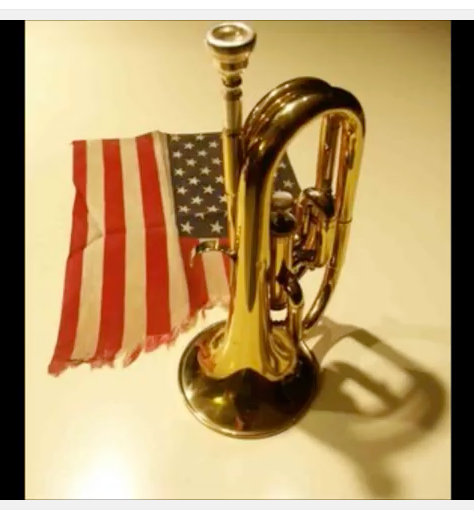
August, 1956 –The night before the hurricane, I listened to the bugle calls before I went to sleep, as usual. The calls weren’t played on a real bugle, of course, but from a record, blasting out of big loudspeakers somewhere in the barracks on the other side of the base, where the airmen lived. They played one call at nine o-clock, another long one, called “Tattoo,” at nine-thirty, and the last one, Taps, at ten.

Unless there were a lot of planes taking off or landing, the bugle calls carried on the still night air over the tall palm trees and all the way to the family housing, where they echoed down our curving streets, which ran along the edge of the base facing the ocean.

That ocean, the Caribbean, was only two blocks from our house at 131 C Street. That is, it was two blocks to the edge of the land; from there to the water was another two hundred feet or so, down a cliff.

The side street by our house ran right up to the cliff, and there was no fence. But even though lots of kids lived in our neighborhood, we didn’t worry about falling over the cliff. It didn’t drop straight down, and it was covered with thick bushes and vines, which would catch and hold anything as small as a person.

We had other things to worry about at Ramey Air Force Base, though, things like mosquitoes and huge roaches two or three inches long, and the fact in 1956 there wasn’t any TV station with programs in English to watch. And since I was thirteen, I also worried about whether any of the pretty girls at school would ever like me, and whether I could stand up to the tough boys if someday I had to.

But none of that was worrying me on this particular night. All that was small-time compared to Hurricane Betsy. Betsy was big and dark and full of dangerous high winds and driving rain. After wandering aimlessly around out in the ocean for several days, the storm was now bearing down on the island of Puerto Rico, and on Ramey Air Force Base, due to hit us any time.

Read more →

Dog Days Profile: Jim Corbett, Sanctuary Prophet of Post-Desert Quakerism

Jim Corbett was by no means a conventional social activist. But one night in the early 1980s, he volunteered to help find legal assistance for a Salvadoran refugee arrested by the Border Patrol. But before he could file the required forms, the Salvadoran was abruptly deported, in defiance of the U.S. government’s own laws. Corbett was shocked, then galvanized. From this spontaneous effort to respond to the refugees’ plight sprang what became the Sanctuary movement.

The movement was not unlike the later Occupy upsurge, only more low-profile, based in religious communities. It eventually involved hundreds of churches and synagogue across the U.S., and helped thousands of refugees who fled massacres and war in Central America — wars mostly supported by the U.S. government policy. As part of this policy, the refugees were mischaracterized as “economic migrants,” and many were deported, with more war and death waiting for them.

Read more →

Dog Days Tales: His Eye Is On the Sparrow

One sunny morning in mid-June I was on a train chugging alongside the Hudson River from Manhattan. A few hours later, in my brand new Camp Frontier tee shirt, I inspected the rifle range. It was small, only six target stands, and backed up against the slope of a wooded hill, with nothing behind it for many acres. It looked good: safe, cozy, familiar. This I could handle.

I asked Herbie if I could try out the range. He wasn’t too keen on the idea, but let me take a few potshots. I put two bullets through the bull’s eye, several more close to it, and was getting ready for my last shots when I noticed a fluttering in the trees halfway up the hill.
Lifting my eye from the rifle sight I saw birds flitting through the branches, seemingly unconcerned about the slugs kicking up dirt a few feet below them.

Come on, tweeties, I whispered urgently to them. Come on down here. Let me find out if I’m really still a sharpshooter. Come to papa. But they didn’t.

Everything went well that summer until the morning the killer appeared. Several times a week I met groups of campers at the range, showed them what to do, explained the importance of following instructions, gave out ammunition, and barked the commands:

Read more →