
CNN Rush Transcript [text may not be in its final corrected form] from August 12 on the content and the significance of the retrieved TOP SECRET documents (emphasis added):
Erin Burnett (CNN-OutFront): In all, 11 sets of classified documents, four of them, according to this receipt, marked top secret. Four of them marked top secret, and one with that special designation of the highest classification were taken from Trump’s Mar-a-Lago. All in, the FBI collected more than 20 boxes.
Evan Perez is OUTFRONT in Washington.
Burnett: Evan, it’s pretty incredible, right? It’s been a year and a half of negotiations. They sent back 15 boxes. Oh, you got everything. It turns out no. Oh, no, now you’ve got everything. And now another 15 boxes with all of this list.
What more are you learning about what the FBI took and why?
EVAN PEREZ, CNN SENIOR JUSTICE CORRESPONDENT: No, Erin, the timeline that you just laid out is exactly the importance of why the FBI went to do this. They listed on this document their 33 entries. And, of course, the most important one is the set of documents that are labeled as TS/SCI. This is — this means top secret — I’m sorry. Top secret compartmented information.
And this is information that as you pointed out is supposed to be read or viewed only in special rooms that the U.S. government believes, you know, can be protected from electronic surveillance, for instance, and that’s the reason why, you know, sensitive com-compartmented information is treated this way.
And according to the FBI, these are documents that were found most likely in the storage room in the basement of Mar-a-Lago in the president’s beach house. The important part of this is that the FBI was working with — and the Justice Department was working with the president’s lawyers over a period of months trying to get them to provide these documents. In the end, they still — at the end of all this process, and back and forth, they found 20 boxes to take away on Monday.
BURNETT: I mean, it’s incredible, right? You say you gave everything over and there’s 20 boxes and some of them with the highest levels of security. How is Trump and his team reacting now that we all can see the warrant, Evan, and the receipt list?
PEREZ: Well, the first reaction is that, well, the stuff that the FBI may have found was actually declassified by the former president. The truth is that it’s a bigger process. Just because he said it doesn’t mean it’s actually declassified. There is an entire process to declassify things.
The second thing we’ve now heard from Kash Patel, one of the former allies of the former president, is that, well, it’s actually the GSA’s fault. This is the government agency that transported the documents for the former president. That it’s their fault because they took away stuff that shouldn’t be taken.
The GSA, by the way, this hour just responded and said, well, the GSA only transported things that the former president identified as things to be transported. So they’re saying it’s the fault of the former president and his team who told them what to take.
BURNETT: Right. And, of course, first of all, they’re saying he requested it. Secondly, nothing answers the fact that when they requested he return it, he didn’t.
PEREZ: Over a period of 18 months.
BURNETT: Time and time again, he didn’t even under subpoena. Yeah, there’s that as well, right? If there really was a mistake, it all would have been given back, it would seem by any normal analysis.
PEREZ: Right.
BURNETT: All right. Evan Perez, thank you very much.
As Evan gets more, he’s going to bring it to us.
I want to go straight now to David Laufman, because he led the Justice Department’s counterintelligence section until 2018, overseeing the investigations into both Hillary Clinton’s and the former CIA director General David Petraeus’ handling of classified records.
So, you know of which you speak. You’ve investigated similar crimes about taking documents, classified information. But when you see this today, David, you see the Department of Justice is investigating possible violations of the Espionage Act by a former president, what went through your mind when you saw that?
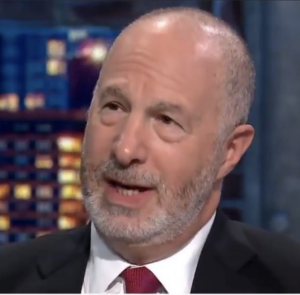
DAVID LAUFMAN, FORMER CHIEF, JUSTICE DEPARTMENT’S COUNTERINTELLI-GENCE SECTION: Well, if it were some other president, we might be completely shocked. In some respects it’s not that surprising given this president’s consistent flagrant disregard for the protection of classified information and disregard for the intelligence community throughout his presidency.
His careless, reckless disclosure of sensitive classified information not only to foreign nationals but to the heads of governments of our foreign adversaries — it could be said that this is just another version of that flagrant disregard and contempt.
Having said that, it is nonetheless shocking to me, having overseen prosecutions of multiple defendants under provisions of the Espionage Act to see that same statute leveled as a foundation for a search warrant executed on the home of a former president of the United States.
BURNETT: I mean there is just something about it. You see those words and you just have to stop for a moment.
I want to ask you again, David, just to go through this list. It’s three pages here, these 33 items that Evan was just discussing, the receipt for property, right? This is the list of things that the FBI took from Trump’s home. All in [all], 11 sets, David, of classified documents. Four of them top secret, one with the very special designation of top secret and sensitive compartmented information. What stands out to you on this receipt list?
LAUFMAN: Well, the high volume of classified information, the level of sensitivity of that information. We’re talking about multiple sets of top secret information, which by definition is defined as the disclosure of which could cause grave damage to the national security of the United States. And then compound that with the category of top secret documents that were SCI.
I mean, those are documents that are sourced based on the most sensitive intelligence collection our government has. Most typically electronic type of surveillance communications intercepts through, for example, the national security agency’s activities or CIA activities.
So the fact that he had SCI material out in the wild, so to speak, at risk is particularly stunning and particularly egregious.
BURNETT: Right. That’s the secure compartmented information. So based on what you now know was taken, and I want to be clear, we know a lot because you’ve got this list, but we don’t know exactly nor obviously should we [be] given the security designation [know] what it pertains to or what the details are. But from what you know here, was the FBI search necessary?
LAUFMAN: It seems to me that the results of the search as reflected even in the somewhat opaque receipt of property completely bear out the government’s narrative to the magistrate that there was in fact sufficient probable cause to carry out this search.
It completely validates the search warrant. It completely validates the government’s investigation into whether the president unlawfully was retaining classified information and other presidential records, other government records unlawfully at Mar-a-Lago.
You know, whether this investigation transforms into an outright criminal prosecution remains to be seen. Oftentimes in evaluating whether to charge a case under the Espionage Act with regard to the unlawful retention of classified information, what the government is looking for is the presence of aggravating factors.
Now, [aggravating factors could be] how high the volume was of classified information kept in a place it wasn’t supposed to be, what the level of classification or sensitivity was, in what types of places was it stored, who had access to it, what was the purpose of keeping it there, was it disseminated to anybody?
So they’ll be looking at a number of factors in evaluating whether to take the next most momentous step evaluating whether to charge the former president or somebody close to him.
BURNETT: All right. David, thank you very much. I appreciate your time.
And on that crucial question of where we go from here, I want to long-time conservative attorney George Conway, along with Elliot Williams. They both join me, former federal prosecutor and former deputy assistant attorney general.
So, thanks so much to both of you.
So, George, when you look at the charges being investigated here tonight and the list of what was taken as far as you can go through it, and there’s a lot of classified information on there, do you think Trump’s in real trouble here?
GEORGE CONWAY, CONSERVATIVE ATTORNEY: Yeah, I think he’s in very substantial legal jeopardy. If anybody else had done this, as I said last night on your show, if a national security advisor had done this, if an assistant to the president had done, this if I had done this or you had done this, we’d probably be already charged.
I mean, having TS — top secret and top secret SCI information in our home? You’re not allowed to bring that out. You’re not allowed to bring that home. People have been charged for a lot less.
There was a woman last year in a very highly publicized case, she was a civilian in the defense department and she was detailed to the U.S. embassy in Manila. And she took home to her bedroom a couple of just academic theses that were labeled secret, not top secret or top secret SCI, and she was charged with a crime. She was only using it as models for her own classified thesis. But the fact she took them home to her bedroom got her three months in prison.
BURNETT: Three months in prison.
So, Elliot, let’s go through this. The search warrant here as we have it identifies three potential crimes, federal crimes that the Justice department is investigating Donald J. Trump for. They are violations of the Espionage Act, obstruction of justice, and criminal handling of government records.
So, Elliot, you know, obviously, we’re getting a little context from George with that example from Manila, three months in prison for that individual. How serious are these potential violations?
ELLIOT WILLIAMS, CNN LEGAL ANALYST: They’re incredibly serious. So, look, people hear the Espionage Act and think of cloak and dagger and trench coats and spies overseas. It’s a far broader act than that, written I think 100 years ago and covers really the mishandling and bad storage of information that could cause harm to the United States. I think — you know, particularly with respect to the documents and picking up on some of the points that have been made here, you know, the language — the definition of top secret information is information that could cause exceptionally grave harm to the United States if disclosed.
And so, none of this belongs — even for a former president of the United States — in an unsecure location out of someone’s home. So any of these three crimes, and we can walk through each of them, but any of them, number one carries serious penalties and is focused on sometimes gross negligence in just mishandling information. It’s incredibly serious, whether it’s the president or somebody else who might have been investigated here who might be pulled in here.
BURNETT: So, George, let me ask you because [Trump aide] Kash Patel, we just mentioned him. Evan was giving the — sharing what he [Patel] is putting out as the defense for President Trump. He’s now saying that, oh, well, it was an accident. We had nothing to do with it of how these documents ended up here.
Here’s what he just said on Fox News.
(BEGIN AUDIO CLIP)
KASH PATEL, TRUMP AIDE: The GSA has since come out, the Government Service Administration, said they mistakenly packed some boxes and moved them to Mar-a-Lago. That’s not on the president. That’s on the National Archives to sort that material out.
(END AUDIO CLIP)
BURNETT: So, George, the National Archives have been trying to get these documents back from Trump for 15 months, OK? They asked for them. They negotiated. They sent some back.
But not all of them. They realized some were missing. They gave him a subpoena, they sent some more back, some more back.
And now here we are. So how is it possible for anyone to argue that there wasn’t some very specific, purposeful decisions made about holding these documents back?
CONWAY: Yeah, I mean, the people who are trying to defend Trump are basically desperate. I mean, they have been making all sorts of insane arguments, arguing that the FBI planted documents, arguing that somehow, you know, like Carnac the Magnificent he held them to his forehead and declassified them like that. None of this makes any sense at all.
I mean, he had these documents. He had them for a long time. In order to have taken them from the White House, he probably brought them up to the residence. He had no business bringing top secret SCI materials from the Situation Room or Oval Office up to the residence.
I mean, he had no business having these documents. And as soon as the archives pointed that out, every single one of them should have been returned to the government, and he didn’t do that. And that falls squarely under the prohibition of Section 793 and the Espionage Act.
ELLIOT WILLIAMS, CNN LEGAL ANALYST: Erin, if I can add to that a little bit.
BURNETT: Yeah, go ahead.
WILLIAMS: I had top secret clearance for pretty much my entire time at the federal government at a pretty high level. These are the kinds of documents that just don’t get mispacked or put incorrectly as Kash Patel said there in the back of a truck. There’s extensive regulations on how they’re handled, what kind of room they’re in, who can handle them.
How they’re shredded. There’s regulations on the kind of shredder that can be used to destroy information once it’s no longer — once it can be destroyed.
So this idea that somebody just made a mistake and packed something on the wrong truck and ended up at Mar-a-Lago is just ludicrous. What you have in a search warrant is an indication that someone — number one, a federal judge and law enforcement, has deemed this information — there’s probable cause to believe that three crimes were committed. And that’s what we have here.
BURNETT: All right. Thank you both so very much. Obviously, a very sober situation in which we all find ourselves tonight. Thank you.
– – – – – – – – – – – –
More from David Laufman on CNN, August 13, 2022:
CNN Transcript-Excerpts, from August 13, 2022:
Melanie Zanona, CNN: Now, we should point out that Republicans are still standing by Trump. They are still vowing to pursue oversight and investigations into the Department of Justice if they win back the majority, but it is clear that they are starting to calibrate their response after The Washington Post report Donald Trump might be in possession of highly sensitive nuclear documents.
Melanie Zanona, CNN, Capitol Hill.
Kim BRUNHUBER-CNN: David Laufman led the U.S. Justice Department’s counterintelligence section until 2018. He oversaw investigations into both Hillary Clinton’s and former CIA Director David Petraeus’ handling of classified records. Here is what he has to say about the seizure of top secret documents from Trump’s residence.
(BEGIN VIDEO CLIP)
DAVID LAUFMAN, FORMER CHIEF OF DOJ’S COUNTERINTELLIGENCE SECTION: In some respects it’s not that surprising given this president’s consistent flagrant disregard for the protection of classified information and disregard for the intelligence community throughout his presidency, his careless, reckless disclosure of sensitive classified information not only to foreign nationals but to the heads of governments of our foreign adversaries. And it could be said that this is just another version of that flagrant disregard and contempt.
Having said that, it is, nonetheless, shocking to me having overseen prosecutions of multiple defendants under provisions of the Espionage Act to see that same statute leveled as a foundation for a search warrant executed on the home of a former president of the United States.
(END VIDEO CLIP)
BRUNHUBER: Meanwhile, there are new concerns over the safety of FBI agents. As CNN’s Brian Todd explains, the Mar-a-Lago search appears to have amplified hostility in some quarters towards law enforcement officials.
(BEGIN VIDEOTAPE)
BRIAN TODD, CNN CORRESPONDENT (voice over): Multiple law enforcement sources tell CNN they’re closely monitoring violent rhetoric and threats that have spiked in online forums and other platforms since the FBI’s raid on former President Donald Trump’s Mar-a-Lago compound Monday. Shortly after the raid in an online forum dedicated to Trump, the phrase, lock and load, was one of the top comments posted.
Another post said, Attorney General Merrick Garland, quote, needs to be assassinated, simple as that. One user posted, kill all feds.
JONATHAN GREENBLATT, CEO AND NATIONAL DIRECTOR, ANTI-DEFAMATION LEAGUE: We have never seen anything like this. As soon as the news broke about the FBI search of Mar-a-Lago, we saw angry cries from radical supporters of President Trump, from a range of right-wing extremists.
TODD: One post that CNN found called for violence against FBI agents. Former FBI Deputy Director Andrew McCabe is now worried about agents’ safety.
MCCABE: Potentially, each one of those people as they go through communities, as they knock on people’s doors, show up at businesses, talk to sources of information and witnesses and victims of all sorts could potentially be a target.
TODD: Democratic Congressman Eric Swalwell, a frequent target of the far-right, posted on his Twitter account a recording of a threat against him and his family, which he says came in after the Mar-a-Lago raid.
UNIDENTIFIED MALE: Cut his (BLEEP) head off. Swalwell is worthless piece of (BLEEP). Cut his wife’s head off. Cut his kids’ head off.
TODD: But other members of Congress, hard line Republicans, have contributed to the violent rhetoric since the raid on Trump’s Florida home.
GREENBLATT: We’ve seen Paul Gosar, an elected member of Congress, suggest we need to, quote, destroy the FBI.
TODD: The extremist online postings after the Mar-a-Lago raid were found by CNN Correspondent Donie O’Sullivan, who tracks extremists online. He said this about that online forum supporting Trump where some of those threats popped up.
DONIE O’SULLIVAN, CNN CORRESPONDENT: That website is one of the very same websites where many people were talking about plans for January 6th in advance of the attack on the Capitol, people discussing how to attack police officers.
TODD: In fact, one reply to the “lock and load” threat came from an account run by Capitol insurrectionist Tyler Schleicher, according to the group, Advance Democracy, which investigates cases like this. The reply said, quote, are we not in a cold civil war at this point? Tyler Schleicher’s lawyer did not respond to CNN’s request for comment. The Anti-Defamation League worries about what comes next.
GREENBLATT: It could be the lone wolf who now feels impelled to commit an act of violence against the law enforcement official or against some other person. It could be an organized group.
(END VIDEOTAPE)
TODD (on camera): A congressional security official told CNN shortly after the news of the Mar-a-Lago raid broke, the U.S. Capitol police began discussions about monitoring and planning for potential violent rhetoric. That official saying they have particular concern about violence being directed against members of congress and federal law enforcement. The Capitol police would not comment on security plans.
Brian Todd, CNN, Washington.
God help you all if this man is elected President again. But – if must be, the rest of the country will allow you final exit. We are done having to put up with this derangement.