AP News: UN Says Ukraine facing sexual violence and trafficking crisis
UNITED NATIONS (AP) — Sexual violence in Ukraine, especially against women and girls, remains prevalent and underreported, and the humanitarian crisis in the war–torn country is turning into “a human trafficking crisis,” the U.N. special envoy for sexual violence in conflict said Monday.
Pramila Patten told the U.N. Security Council that there is a gap between its resolutions aimed at preventing rape and other sexual attacks during conflicts and the reality on the ground for the most vulnerable –– women and children.

As of June 3, she said, the U.N. human rights office had received 124 allegations of conflict–related sexual violence — 97 of them involving women and girls, 19 against men, seven against boys and one gender unknown. Verification of the cases is continuing.
Patten said Ukraine’s prosecutor general informed her during a visit in May that a national hotline reported the following forms of conflict–related sexual violence between Feb. 24, when Russian troops invaded the country, and April 12: “rape, gang rape, pregnancy following rape, attempted rape, threats of rape, coercion to watch an act of sexual violence committed against a partner or a child, and forced nudity.”
He claimed the same rules don’t apply to Ukraine’s “nationalist battalions” and said the international community will soon have “the full truth about these crimes, including crimes of a sexual nature, committed by Ukrainian nationalist units and the Ukrainian armed forces.”
Ukrainian Ambassador Sergiy Kyslytsya said his country’s law enforcement bodies, media and non–governmental groups “continue to report numerous cases of sexual violence committed by Russian troops.”
According to the Ministry of Interior, he said, “minors and elderly women were among the victims of Russian rapists” and “fatalities have also been registered.”
U.S. Ambassador Linda Thomas Greenfield cited “a mountain of credible reports of atrocities committed by Russia’s forces against civilians,” including “horrific accounts of sexual violence.”
“More and more allegations show Russia’s soldiers sexually assaulting women and girls, as well as men and boys,” she said. “We have heard from Ukraine’s deputy prime minister that Russian soldiers raped Ukrainian women for hours — and then killed them.”
Patten, who also visited reception centers and border crossings in Poland and Moldova, gave several anecdotal accounts of trafficking attempts and expressed serious concern at “the lack of consistent vetting of accommodation offers and transportation arrangements” for Ukrainians fleeing the fighting. She said over 90% of those refugees are women and children.
As the humanitarian crisis “is turning into a human trafficking crisis,” Patten said, there is an urgent need for cross–border response “by humanitarian partners, law enforcement agencies, border forces, immigration officials and political leaders” as well as a “regional compact.”

AP News: EU blames Russia for food crisis, Russian UN envoy walks out — June 6, 2022
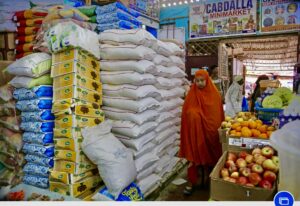
UNITED NATIONS (AP) — European Council President Charles Michel accused Russia on Monday of using food supplies as “a stealth missile against developing countries” and blamed the Kremlin for the looming global food crisis, prompting Moscow’s U.N. ambassador to walk out of a Security Council meeting.
Michel addressed Russian Ambassador Vassily Nebenzia directly at the council meeting, saying he saw millions of tons of grain and wheat stuck in containers and ships at the Ukrainian port of Odessa a few weeks ago.
That was “because of Russian warships in the Black Sea,” and Moscow’s attacks on transport infrastructure and grain storage facilities, and its tanks, bombs and mines that are preventing Ukraine from planting and harvesting, he said.
“This is driving up food prices, pushing people into poverty, and destabilizing entire regions,” Michel said. “Russia is solely responsible for this looming food crisis. Russia alone.”
Michel also accused Russian forces of stealing grain from areas it has occupied “while shifting the blame of others,” calling this “cowardly” and “propaganda, pure and simple.”
Nebenzia walked out during Michel’s briefing, giving Russia’s seat to another diplomat.
Russia’s deputy U.N. ambassador Dmitry Polyansky tweeted later on Telegram’s Russian channel that Michel’s comments were “so rude” that the Russian ambassador left the Security Council chamber.
The Security Council meeting was supposed to focus on sexual violence during the war in Ukraine but Russia’s invasion and the consequences, especially on global food shortages and rising prices, were also raised.
Michel gave strong backing to U.N. Secretary–General Antonio Guterres’ efforts to get a package agreement that would allow grain exports from Ukraine and ensure that Russian food and fertilizer have unrestricted access to global markets.
Ukraine and Russia together produce almost a third of the world’s wheat and barley and half of its sunflower oil, while Russia and its ally Belarus are the world’s number two and three producers of potash, a key ingredient of fertilizer.
Guterres warned last month that global hunger levels “are at a new high,” with the number of people facing severe food insecurity doubling in just two years from 135 million before the COVID–19 pandemic to 276 million today. He said more than 500,000 people are living in famine conditions –– an increase of more than 500% since 2016.
Ukraine’s U.N. Ambassador Sergiy Kyslytsya told the Security Council on Monday that the country remains committed to finding solutions to prevent the global food crisis and is ready to create “the necessary conditions” to resume exports from the key southern port of Odesa.
“The question is how to make sure that Russia does not abuse the trade route to attack the city itself,” he said.
Kyslytsya said the question has become more relevant since four Russian missiles hit a plant in the capital Kyiv on Sunday where freight cars that carry grain to Ukrainian ports were being repaired.
“It means all Putin’s fairy tales about his readiness to facilitate Ukrainian wheat export that he so eloquently tells his rare interlocutors remain too far removed from reality,” the Ukrainian ambassador said.
Nonetheless, “we continue our work with the U.N. and partners to ensure the functioning of the maritime rules for the expert for Ukrainian agricultural products,” Kyslytsya said.
“As a first step,” he said, “Russia must withdraw its naval forces in the maritime waters around Ukraine and provide security guarantees against attacks in ports” and against commercial ships.
U.S. Secretary of State Antony J. Blinken, at a virtual roundtable discussion with private sector groups on food security issues arising from the conflict, accused Russian forces of planting explosives in captured farmland and hoarding Ukraine’s food exports.
Blinken said Russian President Vladimir Putin is doing this and “aggressively using his propaganda machine to deflect or distort responsibility because he hopes it will get the world to give in to him and then the sanctions. In other words, quite simply put: It’s blackmail.”
“The Kremlin needs to realize that it is exporting starvation and suffering well beyond Ukraine borders,” with African experiencing “an outsize share the pain,” he said.
Associated Press writer Matthew Lee in Washington contributed to this report.