
Ukraine: Will Western tanks bring victory?
 Gwynne Dyer is a UK-based Canadian journalist and historian who writes about international affairs.
OPINION: On Tuesday they reset the Doomsday Clock to 90 seconds before midnight. How did they know that Germany would agree to give Leopard 2 tanks to Ukraine on Wednesday?
Now we’re all doomed! No time to run! Ninety seconds is barely time to tuck your head between your knees and kiss your a** goodbye.
The Doomsday Clock was thought up in 1947 by the Bulletin of the Atomic Scientists to dramatise the threat of nuclear war.
They set it at seven minutes to midnight, and have been moving the minute hand back and forth every year since to tell us how close we were to a nuclear holocaust.
Now it’s just a minute and a half – the closest it has ever been – but everything else is being affected by inflation now. Maybe it’s just catching.
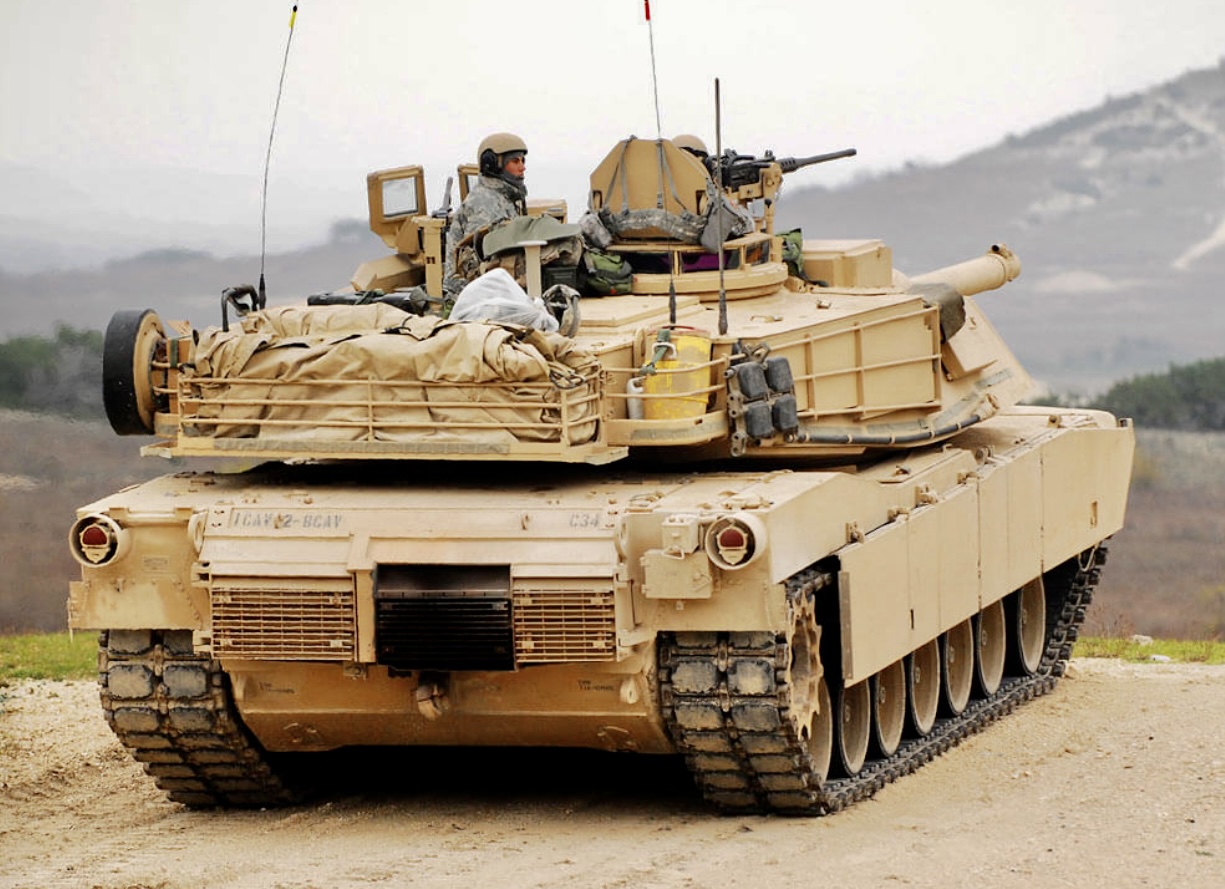
The new tanks are not wonder weapons, and the fact they will come in four different types is a logistical nightmare: different ammunition, different spare parts, even different fuel in the United States’ case.
A ‘company’ of tanks is 14 or thereabouts, and Germany, the United Kingdom and Poland will be sending one company each.
Smaller countries like Finland and the Czech Republic are unlikely to give more, and the US is talking of about 30 M1s – two companies.
That means the total number of Western tanks being given to Ukraine now is likely to be less than 100, whereas the Ukrainians have consistently said they need at least 300 to push the Russians back towards their own borders.
Over time, they may be given more, but time does not work in Ukraine’s favour.
The Ukrainians have roughly matched the Russian invaders in the numbers of troops deployed in Ukraine (because they had to), but that amounts to about 4% of their population compared to only 1% for the Russians.
The Russians can therefore afford to squander the lives of their troops (and often do), whereas the Ukrainians only attack when they are confident that their casualties will be low.
Both the recapture of Kharkiv province and the liberation of Kherson were accomplished last autumn with minimal loss of Ukrainian lives, but such opportunities do not abound.
The long-planned Ukrainian winter offensive may have been cancelled because a) the ground is still not frozen hard and b) the new tanks will be in the hands of trained Ukrainian crews by the spring.
The great Russian winter offensive is under way right now, but getting very little notice because it is making so little progress.
Let’s assume for a moment the Ukrainians will wait till spring, the new tanks make a difference, and the Russians lose a lot more ground.
Would that justify putting the Doomsday Clock ahead to 90 seconds to midnight?
‘Winning’ in Ukraine may be an existential matter for Russian dictator Vladimir Putin, who has staked his reputation and perhaps even his life on making a success of the invasion, but it’s not a life-or-death issue for the ambitious men around him.
They certainly don’t want to die for him, together with their entire families.
So the NATO assessment that a Russian resort to nuclear weapons in Ukraine is most unlikely, which underpins the NATO decision on the tanks, is almost certainly correct.
How much of their country the Ukrainians can recapture remains to be seen, but they are at least free to try.

The Complete Idiot’s Guide to Logistics
It’s the boring stuff, the Russians are learning, that kills you in the end.
When I was a military correspondent, here is how I would explain the importance of logistics in military operations. This will help you understand the problems the Russian army is encountering in Ukraine. [NOTE: And now, flipping the script, the major challenges of making the squads of new tanks the West is to send the Ukrainians count toward success in their battles.]
Say you and your family want to visit Granma back in Indiana, about 500 miles away. You and your partner throw the kids, the dog and some clothes in the minivan, and you’re ready to go.

But wait: There is no food available on your route. So you go back inside and pack up a couple of days of meals, squeeze it into the back. And you feel ready.
Also, there are no gas stations on the way. You don’t feel comfortable carrying gas cans in the car, so you get your pick up truck, and fill up some cans, and put them in the back. You can drive that while your partner drives the minivan.
But also there are no dependable sources of potable water. So you put 200 gallons into cans and lift them into the back of the pick up.
Also, there are no doctors or hospitals. So you persuade some medical people you know to come along in their own car. But they also need food and water and gas, and space for their bandages and medicines and equipment, so they bring two pickups with them, loaded up.
Now we have a convoy of five vehicles. Ready to go? Not quite. There also is reliable information that you could be attacked along the way. So you get five truckloads of soldiers—two for the front, two for the back, and one to control and command their operations. [But what if none of the soldiers know how to drive the trucks? Better add some driving instructors!]
But wait. This security force also needs food, fuel, and water. So that’s another five truckloads right there. Plus, they need ammunition and back up gear. And batteries for all their radios. Add another truck.
When they show up, the medical people roll their eyes and say that with all these additional people, they’re gonna need another truckload of supplies.
Finally, you have the convoy ready. You roll out and get about a mile. A truck gets a flat! Guess what: There are no automotive repair shops on your route either. So you round up a team of mechanics. They have their own truck, plus three for food and water. And two for fuel. And two truckloads more for spare tires, engine oil, filters, and tools.
And finally, your convoy, now consisting of 25 vehicles, is on the road. But you need to avoid the main roads, which might be mined, or have ambushes waiting. So you take to the back country, even to dirt roads. That way is safer, but it also is mighty slow. In two days you make just 63 miles, and then begin to run low on food and fuel. So you hunker down and do some new calculations on how many more truckloads of those you might need.
[Next, substitute “fighting Russia with tanks” for “visiting Granma.”]
Now you are thinking like a military logistician.
Or, as an ex-military man of my acquaintance put it much more succinctly “you need drivers for the cooks, and cooks for the drivers”.