
Boing! Just like that! The Anthropocene officially started on July 11, we’re not in the Holocene anymore.

That golden age of warm, stable climate in which humans started farming, grew their population a thousandfold, and created high-energy, hi-tech civilizations is at an end.
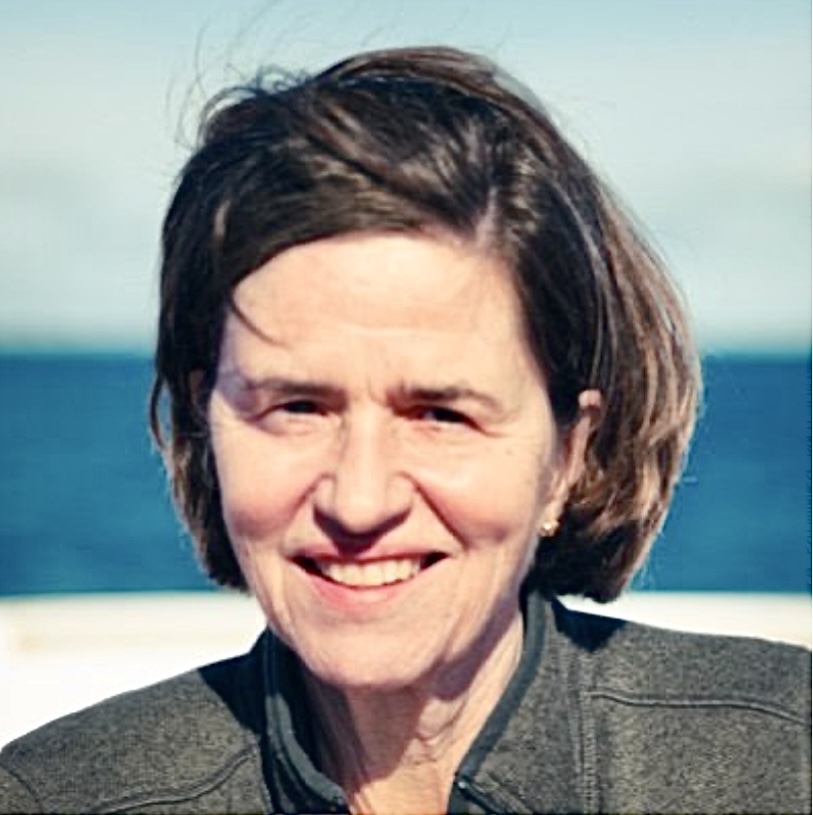
“I was there when the Anthropocene was born. It was so amazing,” said Dr. Katherine Richardson, leader of the Sustainability Science Centre at the University of Copenhagen. “It was actually in 2000, at one of these meetings of the International Geosphere-Biosphere Programme Scientific Steering Committee.”
The meeting sounds like a bunch of scientific bureaucrats sitting around somewhere discussing boring details, and probably for the most part it was exactly that. But Paul Crutzen was there, and he was not a man to suffer fools gladly.
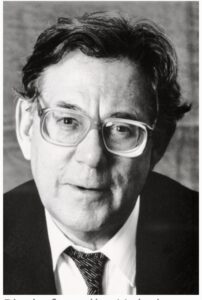
“The different programmes were giving long reports of what they’ve been doing that year and the people that do the paleo stuff were going on and on and on,” Richardson continued. “We’re in Cuernavaca, Mexico. It’s hot. And the vice chair of this is Paul Crutzen, and at some point Paul just lost it.”
“They were saying, ‘Holocene, we’re in the Holocene, and this has happened in the Holocene.’ And Paul just jumped up and said ‘But we’re not in the Holocene any longer. We’re in the…’ He was reaching for a word, and he said, ‘We’re in the Anthropocene’!”
“Boing! Just like that! It happened right there.”
Our future is hotter, not colder, and how much hotter is largely in our own hands. That’s why Anthropocene is the right name: anthropo- = human, so now we live in the Human Epoch.
The new name got some support right away, but its implications were very big and science moves at its own deliberate speed. We were still officially in the Holocene, the epoch that began 11,700 years ago when Earth emerged from the last Ice Age … until last Tuesday.
That’s when scientists in the Anthropocene Working Group (AWG) presented hard evidence that human activity has changed the geology, atmosphere and biology of our planet so much that it has entered a new geologic epoch known as the Anthropocene.
 As Dorothy said to her dog in “The Wizard of Oz,” — “Toto, I’ve a feeling we’re not in Kansas anymore.”
We’re not in the Holocene any more. Our numbers and our powers are now so great that they will determine the climate and even the sea level.
If human activities are inadvertently changing the atmosphere and the biosphere in dangerous ways, many of which we didn’t foresee, then maybe we should also be willing to intervene to stop or reverse those changes.
The Ice Ages that have come and gone regularly for the past two-and-a-half million years are over, cancelled by our greenhouse gas emissions. Our future is hotter, not colder, and how much hotter is largely in our own hands. That’s why Anthropocene is the right name: anthropo = human, so now we live in the Human Epoch.
“We are simply so big and so dominant that we now need to drive the vehicle,” said Johan Rockström, director of the Potsdam Institute for Climate Impact Studies. “We are just sitting there and not really recognizing that we are the ones with the levers now. We are starting to understand how they work, but we are not using them and it’s time to use them.”
Rockström is not actually advocating geoengineering here, but several other climate scientists have been driven to that conclusion by the accelerating changes in the climate system. As indeed was Paul Crutzen himself, who first went public with a call for scientists to consider geoengineering options in 2006.
 It had been a taboo topic until then, but Crutzen’s Nobel Prize gave him the standing to broach the issue publicly. And it all does go together: if human activities are inadvertently changing the atmosphere and the biosphere in dangerous ways, many of which we didn’t foresee, then maybe we should also be willing to intervene to stop or reverse those changes.
This may seem far-removed from the declaration of a new geological epoch, but the name-change is all about perspective. It is a way of making people realize that we human beings are now the decisive influence on how the whole Earth System evolves and that we must pay constant attention to our choices if we want a climate that we can tolerate.
In the meantime, the Anthropocene has a few more hurdles to cross before it is formally acknowledged as our new geological epoch, but they have found the golden spike that will serve as its defining natural phenomenon. It is Crawford Lake, a very deep limestone sinkhole not far from Hamilton, Ont.
It’s the annual layers of sediment at the bottom of the little lake, undisturbed by currents because it is so small and so deep, that contain the evidence of the huge changes wrought on the environment by human beings since the 1950s, most notably the sudden jump in plutonium — from atomic bomb tests — and fly ash from the steel mills in Hamilton.
There’s also lots of plastic waste in the sediments, of course, but mercifully nobody was tempted to rename our time the Plasticine Epoch.

Related: James Lovelock: Darwin’s Successor
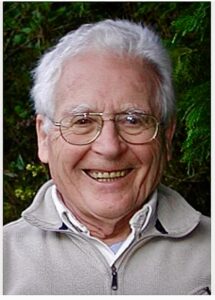
Paul Crutzen, Jim Lovelock was a late bloomer. His first book, ‘Gaia: a New Look at Life on Earth’, was published in 1979, when he was already 60 years old. By the time he died last Thursday, on his 103rd birthday, he had written ten more books on Gaia, the hypothesis that has evolved into the key academic discipline of Earth System Science.
That gives him a strong claim to be Charles Darwin’s legitimate heir. Just as Darwin’s 19th-century theory of evolution shaped our understanding of how life became so diverse, our understanding of the present is shaped by Lovelock’s idea that the millions of living species function as a self-regulating mechanism that keeps the planet cool enough for abundant life.

The puzzle that started Lovelock down that road was the fact that the Sun’s radiation has increased by 30% since life appeared on Earth 3.7 billion years ago, while the planet’s average temperature, despite occasional huge surges up or down, has consistently returned to the narrow range most suitable for life.
What was making that happen?
Collaborating with American biologist Lynn Margulis in the 1970s, he worked out a tentative description of the super-organism he named ‘Gaia’ and wrote his first book. Most scientists treated it with disdain because he was not a biologist, but also because ‘Gaia’ had ‘New-Age’ connotations that he was unaware of. (Jim was not a hippy.)
By 1988, however, the scientific world was starting to take the theory seriously. In 2001 a special congress of more than 1,000 physicists, biologists and climate scientists declared that the planet “behaves as a single self-regulating system comprised of physical, chemical, biological and human components.”
‘Gaia’ (under the more dignified name of Earth System Science) had achieved the status of scientific orthodoxy, Meanwhile, Lovelock had been accorded the status of honorary environmental saint by the Greens, although he regarded most of their priorities as mere distractions and some, like their hostility to nuclear power, as potentially lethal blunders.
Jim Lovelock’s blunt predictions of global climate disaster were once seen as exaggerated, but he understood what was really happening. In his first book, in 1979, he gave a warning that I can still quote verbatim forty-three years later.
“The larger the proportion of the Earth’s biomass occupied by mankind and the animals and crops required to nourish us, the more involved we become in the transfer of solar and other energy throughout the entire system….We shall have to tread carefully to avoid the cybernetic disasters of runaway positive feedback or of sustained oscillation….”
“If…man had encroached on Gaia’s functional powers to such an extent that he had disabled her, he would then wake up one day to find that he had the permanent lifelong job of planetary maintenance engineer…and the ceaseless intricate task of keeping all the global cycles in balance would be ours.
“Then at last we should be riding that strange contraption, ‘the spaceship Earth’, and whatever tamed and domesticated biosphere remained would indeed be our ‘life support system’….(We would face) the final choice of permanent enslavement on the prison hulk of the spaceship Earth, or gigadeath to enable the survivors to restore a Gaian world.”
Apocalyptic but accurate, and yet he never despaired. I didn’t meet him for the first time until twenty years after that book, but every time I went down to Devon to see him his natural cheerfulness kept breaking through his professional pessimism. Eventually, I asked him about it.
He replied: “Why do I oscillate between being cheerful and being pessimistic? My role, really, my main job, is being a prophet, and it’s the only way you can make prophecy. You have to build up scenarios in your mind: it could go this way or it could go that way, and only then can you get a more balanced picture of what the future might be like.
“Earth’s behaviour itself is uncertain enough, but people’s behaviour is the biggest uncertainty of all. I mean, we might be on course for curing all these problems and then some stupid, silly war or a pandemic breaks out and it takes all our minds away from it. We’re the Joker in the pack.”
We are not on course for curing all these problems, of course. We’re far off course, as Jim well knew, but he has given us the vital context of a self-regulating Gaian system. Without that, we wouldn’t even know where to start trying to mend the damage we have done.
He was also a brilliant inventor: his ‘electron capture detector’ confirmed the existence of the ozone hole and make him financially independent. He had a side hustle as a real-life Q, a gadget-maker for MI5. But above all he was a warm, gentle man with an impish sense of humour. It was a privilege to know him.
______________
Gwynne Dyer’s new book is “The Shortest History of War.”
There is no such thing as the “anthropocene”. The vast majority of people on earth, both now, and in the past, had nothing to do with it. It is a racist term.
What we have is “capitalocene”. It arose in the 17th Century, when WHITE people decided there were gains to be made by forcibly expropriating the land of others, and employing non-white people as slaves to work it.
It is NOT about people’s behavior. People behave given the choices available to them. Slaves pick cotton, harvest sugar, dig cobalt for electric vehicles. Other people wear cotton shirts, put sugar in their tea, drive EVs.