High Points From A Low Period in Carolina Quakerdom
High Points From A Low Period in Carolina Quakerdom
As NCYM-FUM moves to its next uncertain chapter, here’s something I want to highlight: amid the hubbub and hokum, there’s also been some first rate Quaker religious expression. Unlike the recent experience of some other yearly meetings, where the victims all-too meekly accepted their expulsion, the purge attempts here have run into some very articulate pushback. Not just once or twice, but frequently.
I don’t know if that forecasts a better outcome; but it has slowed the momentum. In part that’s because the initial purge letters demanding expulsions and division (available in QT#26) are largely an embarrassment, doctrinally and intellectually.
The frequent eloquence of the pushback at least makes writing the history more edifying. And when the current ordeal is over in NCYM (if it ever is), many of those targeted will be able to hold their heads up, and remember when they spoke their truth.
Among what follows, let me start with my current favorite, which is less pushback than a straight-out brushoff. In a series of efforts to placate the purgers, NCYM has sent out a series of questionnaires and mandates, insisting that all meetings submit responses by various deadlines. It appears the hope was that the non-fundamentalist meetings would either abandon or conceal their “heresies” and go along with the demands, or just up and quit.
But by last November, one meeting, Jamestown, had had its fill of such interrogations. Its response to the latest demand for “affirmations” (i.e., submission) to a set of forced queries on “The Way Forward” was this elegant rewording of “Get Lost”:
Jamestown Friends Meeting does not feel called at this time to respond in detail to the queries set forth by the Task Force following NCYM-FUM annual sessions held Ninth Month 2015. We feel that after months of belaboring these issues, it is more important for us to move forward by focusing our resources on heeding Christ’s call to ministry: to feed the hungry, give a cup of clean water, clothe the naked, visit the sick and imprisoned, etc. As we read scriptural accounts of Jesus’ life, we see his call to this work of discipleship illustrated and emphasized repeatedly and in multiple ways.
We do believe there is great value in Friends process as laid out in our Faith and Practice. We do not feel that further energy spent answering these queries in written form at this time moves this process forward in any helpful ways.
We will welcome continued fellowship with Friends/friends of many persuasions and theological perspectives, knowing that we do not have all the answers and that God works through all people who seek to know God and God’s ways as taught, in word and deed, by Jesus. We pray for continuing love and divine guidance for as all, as way opens.
With love and prayers,
Brilliant! But maybe that’s getting ahead of myself.
Let’s go back to the beginning, late 2014, and take a look at some of those Friends who were calling a spade a shovel. Early on, there were those who named the purge effort for what it was:
Living Water — or Flint River Water?
“It is curious,” wrote Spring Meeting, “to hear others within our yearly meeting speak of unifying the meeting by use of exclusion and division, by attempting to cast out those with which they perceive do not agree with their absolutist interpretation of Scripture, their world view of social issues of the day. Within the history of the Society of Friends, as with other faiths, this strategy has repeatedly been applied, only to lead to more division, more misunderstanding, and a distraction away from the true charge of our Faith. That true charge is to demonstrate by our ACTIONS, the love for our fellow persons after the example of Jesus Christ.”
High Point Friends were also plain:
“While Friends call for theological unity, we fear the strategic aims are to marginalize some members of the Yearly Meeting and form a kind of “unity” through divisions or expulsions. It is our concern that this forceful and divisive approach will threaten vital ministries of our Yearly Meeting, splinter some local meetings, and alienate some members from their meetings.”
And Fancy Gap:
“We have seen a fundamental change within North Carolina Yearly Meeting over the past years, as it has chosen a path that we think has turned the body further and further away from Quakerism in thought, conduct, execution of business, and most grievous, in Spirit. We have remained in relationship with NCYM far beyond our ease and comfort, simply in an attempt to be faithful in waiting, to work for the change that we seek, and to bring what portion of Light we might have to our gathered union. Our attempts have repeatedly met with resistance, either in the form of being completely ignored, to outright hostility.”
And about turning Faith & Practice (or at least a few selected portions thereof) into a Creed, New Garden Friends were calm and forthright:
“While we value the scriptures, like George Fox, we do not wish to confuse the words with ‘the Word’ which is above and beyond them . . . nor do we hold such tests of orthodoxy as the Richmond Declaration to be necessary.
We use several versions of Faith and Practice as guides and find their use of queries to be more in keeping with a Quaker understanding of faith and more helpful than ‘affirmations.’ Instead, we trust the Holy Spirit to work within each individual and in our community as we labor to discern a way forward. We believe that if we follow our leadings, we can find the will of God individually and together. We meet together for encouragement and by sharing our experiences build one another up in faith, trusting that when we meet in expectant waiting, the Holy Spirit will reveal the next step we need to take in order to move forward in faith.
As Fox suggests, the Holy Spirit works within us by ‘convincement,’ making it unnecessary for us to insist that each person have a common understanding at each moment. We believe that if we ‘take others to God and leave them there,’ the Light will shine and reveal the Truth to them and to us. For this reason, we reject an unnecessary reliance on doctrine. A creed is a creed, no matter what you call it, and we find such things to be a distraction and the very antithesis of Fox’s focus on trust in the Holy Spirit’s guidance in the here and now.”
And Spring again:
“The ‘Founding Beliefs’ of North Carolina Yearly Meeting: A common theme and quote in many of the recent letters from meetings has been their expectation of adherence to the ‘founding beliefs’ of NCYM. This is a most interesting statement. For the record, North Carolina Yearly Meeting was first organized in the late 17th century, with the first formal gathering deemed a yearly meeting being held in 1697. The Religious Society of Friends and NCYM were founded during that century on the principles that each and every person could have a direct and personal relationship with God, that there was no need for what Fox and other early Friends termed ‘hireling priests’, our charge being to ‘walk cheerfully over the world, answering that of God in everyone’. The increased emphasis on Biblical supremacy as compared to the leading of the Holy Spirit was not a founding principle. . . .
It is our hope that NCYMFUM does return to its ‘founding beliefs’ and seeks a more comprehensive understanding and appreciation of the whole history of the Religious Society of Friends. Such an understanding might lead to the realization that the Richmond Declaration is a fairly recent document (1887) within that history which was produced by one faction within the Society with the intent to enforce conformity by that faction, with the result of creating more disunity within the Society that remains to this day.”
And speaking of the Bible, which many of the purgers claimed was their ‘final authority,’ High Point was again trenchant and on point:
“We join Friends who hold the Scriptures in high regard, yet we are uncertain by what Friends mean by ‘Biblical authority.’ The Bible is subject to human translation, interpretation, and application. For centuries, ‘Biblical authority’ has been used by political leaders to justify wars, slavery, genocide, colonization, and other ungodly enterprises. Most pertinent to our concern for North Carolina Yearly Meeting is the way people use the language of ‘Biblical authority’ to pass judgment and condemnation on others, deny individuals of God-given dignity and grace, silence the voices of women, and implement a spiritual legalism of fear versus love. We also observe that some Christians who insist on ‘Biblical authority’ practice it in selective ways. Many uphold parts of Scripture that support their positions, while ignoring other parts. What do Friends mean by ‘Biblical authority?’ How will Friends determine what is authoritative? Who will make this determination?”
Next, addressing the continuing campaign to ban “dual affiliation.”The purge advocates were deep in the muck of hypocrisy on this, having numerous connections to other branches and non-Quaker groups of their own (“But that’sDIFFERENT!” came the totally unconvincing retort.) And the hypocrisy was made more explicit when it was applied only to Piedmont Friends Fellowship (PFF). The original demand was for all Friends and all meetings with any connection to PFF to “immediately resign” from NCYM-FUM and all its associated efforts.
But when that didn’t fly, it was narrowed down to a single Meeting, New Garden in Greensboro, which had actually joined the the Piedmont Yearly Meeting that PFF created on March 15, 2015. New Garden was clear enough about why they did it:
“For us, the Monthly Meeting is central, but we do not wish to be insular. While some New Gardeners have found meaningful relationships and connections to service opportunities through NCYM-FUM, for others, Friends General Conference is a better fit. In affiliating with Friends General Conference through Piedmont Friends Fellowship and Yearly Meeting, New Garden Friends were recognizing that fact. We did not seek to part ways with NCYM-FUM. New Garden was well aware that NCYM Faith and Practice did not prohibit dual affiliations and that a number of meetings and yearly meetings are dually or even triply aligned with FUM, EFI and FGC before our decision to join PFYM was made. Instead of creating barriers, we sought to open more doors and windows to the wider Quaker world.”
High Point, which is not part of PFF, was more restrained but more trenchant:
“We are confused by strong objections Friends have about members of North Carolina Yearly Meeting participating with others. The ‘new committee’ is asked to consider the general question, ‘Why do meetings feel compelled to participate with organizations outside of NCYM?’ Quakers are not isolationists. Our ministries are enriched when we participate with other Quaker, ecumenical, service, and mission organizations for numerous reasons.”
Spring, which is in PFF but not the new yearly meeting added:
“Our meeting does not consider PFF to be a competitor or rival to NCYM. Our reason for having affiliations with both organizations is to bridge the chasm that unnecessarily exists between these two branches of the Society of Friends, each of which lacks a beneficial aspect of the other. While some members of each organization, particularly within NCYM, seek to widen this chasm and hold no association with the other, we seek a meaningful unity among all Friends that such an affiliation can foster.”
Also heartening was the chorus that spoke up in late spring about the bullying tacticswhich the purge demands were being pursued. Frank Massey of Jamestown and Max Carter from New Garden raised this cry first, in an open letter:
“. . . we are concerned by those instances of what must honestly be called “bullying.” We have watched with growing concern and pain as people we love have been privately and publicly bullied, harassed, and discouraged for honestly held differences of opinion. This has occurred in congregations, in our representative gatherings, in committee work, in phone calls and e-mails, and in individual conversations. It has resulted in distress, retreat from work for the Yearly Meeting, and in extreme cases in hospitalization for stress and anxiety.
It must stop. But when even people of significant leadership experience have expressed frustration in knowing how to confront those who are bullying, we acknowledge the challenge in addressing the situation.”
Yet the main “challenge in addressing the situation” was simply breaking the victim silence. After a new hire staff for the NCYM staff refused the job after being intensely harassed by purgers, the Personnel Committee broke theirs:
“In doing [its] job, the Personnel Committee is disheartened and disturbed by what appear to be roadblocks to our efforts. If individuals have concerns about a person being suggested for a position within the Yearly Meeting, that concern should come to the attention of the Personnel Committee, not directly to the candidate, not to leaders in our Yearly Meeting not on the Personnel Committee and not in participation of a negative campaign against the candidate.
We are concerned about rumors, innuendo, gossip and bullying not only concerning prospective personnel, but among the larger body of Friends in the Yearly Meeting. This behavior is hurtful to some and a hindrance to all, is unbecoming and not consistent with our Quaker Christian expression of love.
We ask that this letter of concern be read in the next meeting of each Yearly Meeting committee or organization, and that we all seek to follow the commandment of loving one another in a Christ-like manner. We pray that Friends cease to participate in rumors, innuendo, gossip and bullying, and take a clear stand against such activity if it occurs in your presence.”
Now, after a four-month lull, NCYM is gathered to take up a new round, under the highly ambiguous title, “The Way Forward,” and in the deepening shadow of a declaration that the meetings which dare to welcome LGBTs, think openly about the Bible, and find their own understanding of Jesus and the Spirit are some kind of imminent threat to the survival of the whole body.
The future of NCYM does seem to be in question. But however that turns out, these eloquent, often inspiring statements will remain.
Related
2 thoughts on “High Points From A Low Period in Carolina Quakerdom”
Thanks, Chuck. Have you been following what has happened in Northwest yearly meeting? West Hills Friends in Oregon has met with the same problem, but I think, there was a strong voice in the YM not to force them to leave the YM. I don’t know where NWYM stands at the moment.
Hi Tina, Yes, we have been following the struggle in Northwest YM; there are several blog posts that deal with it. I suggest you browse the blog with the key phrase “Hard-Core Quaker”, and they should turn up. We had a post just in the past week or so about the most recent reports we’ve had from Northwest.


 But by last November, one meeting, Jamestown, had had its fill of such interrogations. Its response to the latest demand for “affirmations” (i.e., submission) to a set of forced queries on “The Way Forward” was this elegant rewording of “Get Lost”:
As Fox suggests, the Holy Spirit works within us by ‘convincement,’ making it unnecessary for us to insist that each person have a common understanding at each moment. We believe that if we ‘take others to God and leave them there,’ the Light will shine and reveal the Truth to them and to us. For this reason, we reject an unnecessary reliance on doctrine. A creed is a creed, no matter what you call it, and we find such things to be a distraction and the very antithesis of Fox’s focus on trust in the Holy Spirit’s guidance in the here and now.”
 But when that didn’t fly, it was narrowed down to a single Meeting, New Garden in Greensboro, which had actually joined the the Piedmont Yearly Meeting that PFF created on March 15, 2015.
  Also heartening was the chorus that spoke up in late spring about the bullying tactics which the purge demands were being pursued. Frank Massey of Jamestown and Max Carter from New Garden raised this cry first, in an open letter: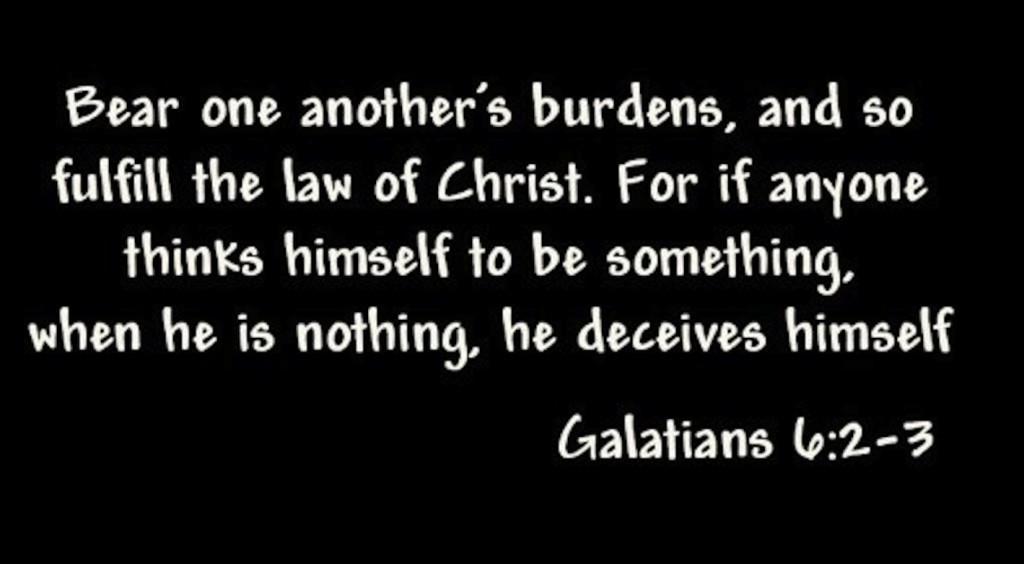
Thanks, Chuck. Have you been following what has happened in Northwest yearly meeting? West Hills Friends in Oregon has met with the same problem, but I think, there was a strong voice in the YM not to force them to leave the YM. I don’t know where NWYM stands at the moment.
Hi Tina, Yes, we have been following the struggle in Northwest YM; there are several blog posts that deal with it. I suggest you browse the blog with the key phrase “Hard-Core Quaker”, and they should turn up. We had a post just in the past week or so about the most recent reports we’ve had from Northwest.