
- [Note: In the heady days of glasnost and perestroika, around 1989, I was once asked to shepherd a couple of Russian visitors to northern Virginia for a day. Worn out from long bouts of sightseeing in nearby Washington, they mostly wanted to relax; I could handle that.
After kicking back at my place for awhile, one of them, a woman I’ll call Ludmilla, asked a favor: she needed some shampoo. Of a special sort, or its closest western equivalent. Was that possible?
Of course it was. When it came to hair care, though, I was a minimalist: discount house brand & anti-dandruff about covered my range of familiarity.
But hair care to help end the arms race? Shampoo for peace? I was all in. With John Kennedy’s “Bear any burden, pay any price” echoing in my head, we headed for the mall.
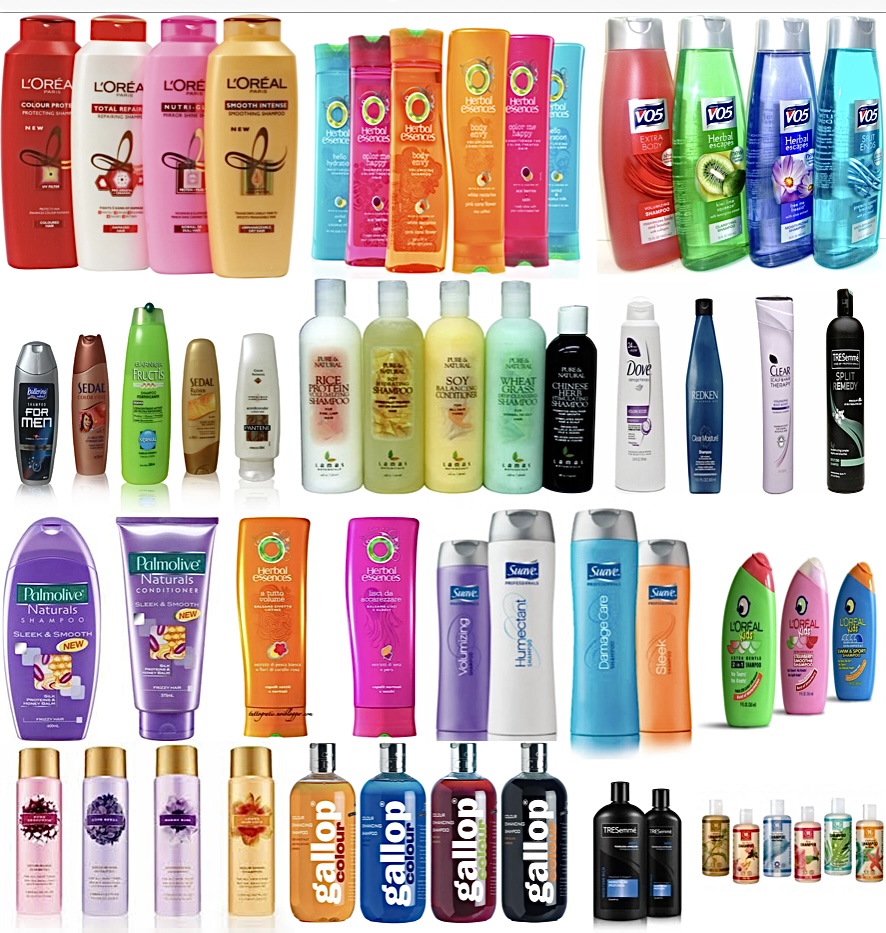
The store we besieged was aptly called “Giant,” a jumbo supermarket plus. Shortly we were prowling the aisles, away from the groceries toward the cosmetics: shelves of toothpaste, rainbows of lipstick, acres of makeup; and then there loomed the telltale heap of slender pastel bottles, many with the sleek outlines of Bolshoi ballerinas.
We turned into the aisle. I paused, to linger discreetly as Ludmilla began her search. As she did, I had a sort of epiphany, a double one, in fact:
First, I was struck by how long and deep the aisle was. Had I ever noticed this about shampoo before? Five or six tiers of shelves went on and on into the distance, all full of these graceful ballerina flasks, as if Swan Lake had suddenly become Swan Ocean. Yet watching Ludmilla tentatively pick up one bottle and then carefully replace it to reverently inspect another, her mien seemed less that of a shopper and more like a visitor to a cathedral.
At length she turned, her selection in hand, and moved back toward me, but slowly, her gaze still roving over the neatly crowded shelves, a hint of wonder in her eyes.
And then my second epiphany: I suddenly knew, as surely as I knew my name, that Communism was doomed.
Yes, America was guarded by all our missiles, and the nuclear bombers my father had once flown. Sure, in Detroit, great factories rolled out the Fords and Chevy trucks that were the envy of all the commisars.
Yet the Soviet Union also had missiles and trucks. But it was shown to me in a flash that there was no way — no freaking way— it would ever close The Shampoo Gap. And absent that, soon or late, it was over . . . .
Ludmilla was thoughtful, even contemplative on the short drive back. So, for that matter, was I. It’s not often you get to see an era end, especially without a lot of bloodshed.
As the following piece explains, we’re seeing the ending of another era, right now. But this time we’re not as fortunate in the way it’s happening. If there’s an epiphany here, it’s that this time, I don’t think shampoo can save us.]

Bear a The Door Between Russia and America Is Slamming Shut
The war in Ukraine is a never-ending catastrophe. Russian forces, concentrated in the east, continue to inflict terrible damage on Ukrainian soldiers and civilians alike. Countless lives have been lost and upended. Once again, the world must confront the possibility of nuclear war and grapple with a compounding refugee and cost of living crisis. This isn’t the “end of history” that we hoped for.

Less violently, another transformation is taking place: After three decades of exchange, interaction and engagement, the door between Russia and America is slamming shut. Practically every day another American company — including the most symbolic of them all, McDonald’s, whose golden arches heralded a new era 30 years ago — pulls out of Russia. Diplomats have been expelled, concerts canceled, products withdrawn, personal visits called off. In the shuttered consulates, nobody is issuing visas, and even if they were, American airspace is now closed to Russian aircraft. The only substantive interaction left seems to be the issuing of sanctions and counter-sanctions.
For a Russian American like me, whose life has been forged in the interstices between the two cultures, it’s a bewildering, sorrowful turn of events. Measures to curtail the Kremlin’s capacity of aggression are, to be clear, politically and morally necessary. But the collateral damage is a severing of ties that is bound to revive harmful stereotypes and close down the space for cross-cultural pollination. More profoundly, the current parting of ways marks the definitive end of a period when Russia’s integration with the West, however vexed, appeared possible — and the antagonism between ideological superpowers was a thing of the past. . . .
The years that followed generated immense good will between our nations. As a Russian in America, I met countless people who built it: . . . There were a lot of marriages. A popular Russian all-female band captured the spirit in the 1990s when they implored, to electric balalaika chords, a hypothetical “American Boy” to come and whisk them away.
Ms. Edel grew up in southern Russia and now lives in San Francisco. She is the author of “Russia: Putin’s Playground: Empire, Revolution, and the New Tsar.”
It is irritating to see Western propaganda so tirelessly promoted.
The annexation of Crimea in 2014 was a direct and immediate consequence of Joe Biden orchestrating a coup in Ukraine that replaced a legitimate democratically elected government using three pro-US and anti-Russian individuals (Arseniy Yatsenyuk , Vitali Klitschko and Oleh Tyahnbok). Yats became prime minister, Klitch is now mayor of Kiev and Tyahnbrok was and probably remained the leader of the far-right Ukrainian Svoboda national socialist (read fascist) party.
This coup ensured that democratic elections championed by Europe and the fleeing president of Ukraine never happened.
This US coup was the cause of the civil war in Ukraine that began almost immediately afterwards. The civil war was triggered by the burning to death of hundreds of opponents of this US coup in a Trade Union hall in Odessa, and other acts by fascists designed to suppress opposition to this coup by force.
It was NATO claiming that with this coup Sevastopol lay poised to become a NATO naval base and the Black Sea a NATO lake that provoked Russia to hold a referendum to decide where the people of Crimea’s loyalties lay. It was NATO claiming the right to install missiles in Ukraine aimed at Russia that Russia spent eight years claiming were a red line for it. Russia spent those eight years constantly demanding that the Minsk and Minsk II agreements of 2014 and 2015 be implemented. Those agreements would have returned the Donbass to Ukraine and reintegrated those there into the Ukrainian democratic process. It was the Ukrainian government that preferred war in the East to peace there.
Few know that there was a US coup in Ukraine in 2014 orchestrated and approved by Joe Biden that precipitated all subsequent history there. How many know that the feet on the ground were Victoria Nuland, wife of the neocon Robert Kagan, who co-authored the seminal “Project for the New American Century” which advocates precisely the type of force projection the US used to eventually provoke this utterly stupid proxy war in Ukraine between Ukraine and Russia.
The claim that Ukraine and Russia were once allies against Nazi Germany is also not exactly true. Western Ukraine sided with the Nazi’s, and the heroes of Western Ukraine fought against Russia as allies of the Nazi’s.