
#1–
AP News: From the end of the world to your town, Elton John’s goodbye
BY WAYNE PARRY — July 16, 2022
PHILADELPHIA (AP) — I think it’s gonna be a long, long time until we see another songwriter and performer like Elton John.
Wrapping up a 50-plus year career with a farewell tour, the British pianist and vocalist has created some of the most memorable and enduring music in the history of pop-rock, songs burned into the collective DNA of humanity.
They may be quite simple, like the basic four-chord glory of “Crocodile Rock,” or dazzlingly complex like the 11-minute magnum opus “Funeral For A Friend/Love Lies Bleeding.”
But now that it’s almost done, I hope you don’t mind that I put down in words how wonderful it has been to have Elton John on our radios and in our ears since the late 1960s.
The artist born 75 years ago as Reginald Kenneth Dwight kicked off the final leg of his North American farewell tour Friday night at Citizens Bank Park, home of baseball’s Philadelphia Phillies. And yes, he felt the love that night.
“America made me famous and I can’t thank this country enough,” he told the audience. “Thank you for the loyalty, the love, the kindness you showed me.”
He has sold over 300 million records worldwide, has played over 4,000 shows in 80 countries, and recorded one of the best-selling singles of all-time, his 1997 reworking of “Candle In The Wind” to eulogize Princess Diana, which sold 33 million copies.
Sir Elton (he was knighted in 1998) has scored over 70 top 40 hits, including nine No. 1s, and released seven No. 1 albums in the 3 1/2-year period from 1972 to 1975, a pace second only to that of the Beatles.
He has five Grammy awards, as well as a Tony award for “Aida.” His crooning of “Can You Feel The Love Tonight” in “The Lion King” motion picture has serenaded millions of children, and will entertain future generations of little ones.
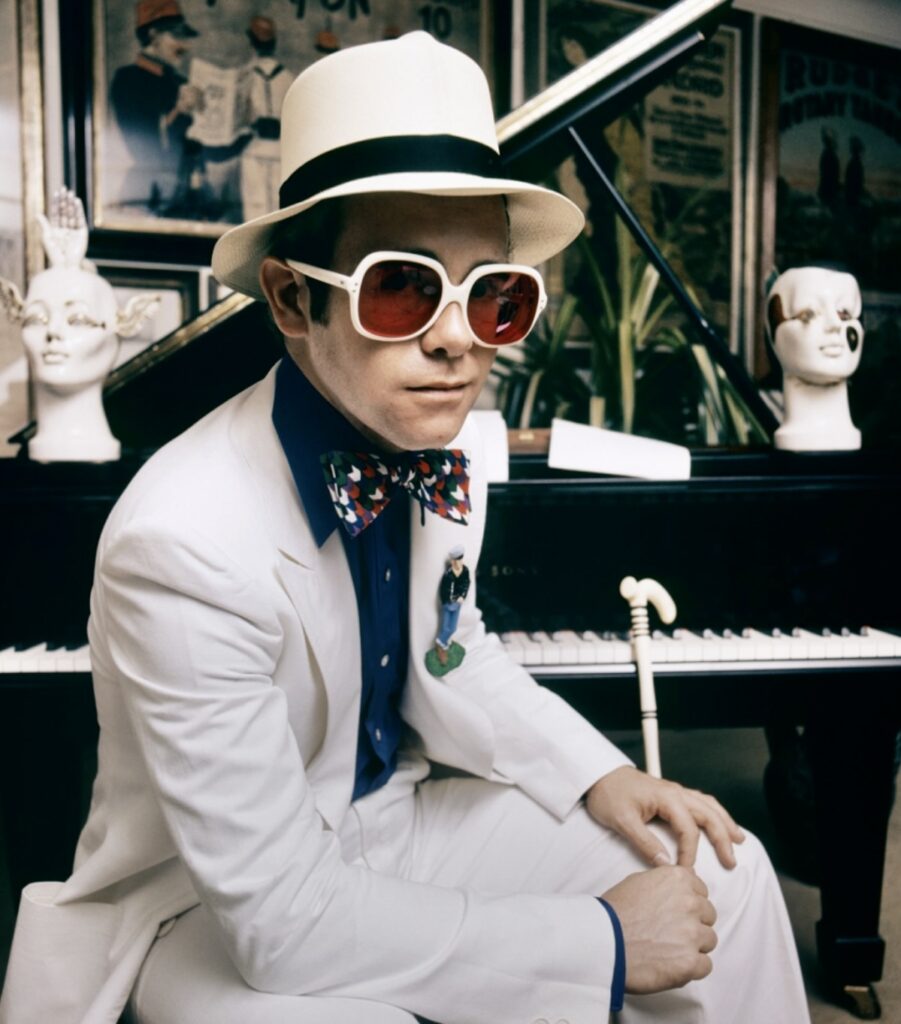
The outrageous costumes and oversized glasses he was known for in his early ‘70s heyday are gone now (he dressed as Donald Duck, Pac-Man, the Statue of Liberty, Minnie Mouse, and a Los Angeles Dodgers baseball player, among others). And while the man has not met a sequin or a feather he doesn’t adore, his wardrobe is (by Elton standards) somewhat tamer these days.
He took the stage in a white tuxedo with black lapels, and purple sparkly glasses, walking somewhat tentatively to his shiny black piano to pound out the instantly recognizable opening chord to “Bennie And The Jets.”
Next up was “Philadelphia Freedom,” which he dedicated to the hometown crowd as “one of the greatest cities I’ve ever played in.” It was his 52nd concert in the City of Brotherly Love.
Throughout the night, John rolled out a dazzling array of smash hits spanning musical styles and genres. The gospel phrasings and cadences that so influenced his early work were evident on “Border Song” and “Take Me To The Pilot,” and even the straightforward radio staple “Levon” got a come-to-meeting revved-up ending.
He showed off the prototypical power ballad, “Don’t Let The Sun Go Down On Me,” with its close cousin “Someone Saved My Life Tonight.”
And when longtime guitar sidekick Davey Johnstone donned an inverted Flying-V guitar, it was time for the power chord arena rockers, including Elton’s hardest-rocking song ever, “Saturday Night’s Alright For Fighting,” and the brash, boastful and Elton-to-the-bone anthem “The Bitch Is Back.”
Elton largely eschewed his famous falsetto; he still has 100 shows to go on the worldwide farewell tour that runs through next year, and he’s learned over the years how to conserve his voice without sacrificing his style and authenticity.
No matter: the crowd happily supplied the falsetto parts for him, including a mass sing-along of the “la-la-la” chorus on “Crocodile Rock.”
He reached back for only one deep track, “Have Mercy On The Criminal,” featuring Johnstone’s bluesy guitar licks, tucking it amid the dozens of smash hits.
And he avoided tear-jerkers like “Sorry Seems To Be The Hardest Word” and the gut-wrenching “The Last Song” about a farewell between a father and his son who’s dying of AIDS, in favor of an upbeat, celebratory mood.
“All The Girls Love Alice,” one of the earliest mainstream rock songs to focus on lesbian relationships in the early ‘70s, is an enduring concert staple, as is the straight-from-the-heart “Your Song.”
Before the closing number, “Goodbye Yellow Brick Road,” Elton peered toward the finish line of his final tour.
“I’m really looking forward to spending the rest of my life with my children and my husband,” he said. “Be kind to yourself. Love each other.”
The consummate showman to the very end, Elton finished the song, and was elevated into the sky on a hydraulic lift as a hole opened in a brick wall atop the stage, engulfed him, and closed again.
So while Elton John will soon be gone from the stage, thank God his music’s still alive.

AP News: US soprano, offended by blackface, pulls out of Italy opera
BY FRANCES D’EMILIO — July 16, 2022
ROME (AP) — Soprano Angel Blue says she won’t perform in an opera in Italy this month because blackface was used in the staging of a different work this summer on the same stage.
The U.S. singer posted a note on her angeljoyblue Instagram page saying she will be bowing out of “La Traviata” at Verona’s Arena this month because the theater recently mounted another Giuseppe Verdi opera, “Aida,” that had performers in blackface.
She blasted such use of “archaic” theatrical practices as “offensive, humiliating, and outright racist.”
Angel Blue, however, was still listed Saturday on the Arena’s website as singing the role of Violetta in “La Traviata” on July 22 and 30.
The theater said it was hoping that Blue, who is Black, would accept an invitation to meet with Arena officials in a “dialogue” over the issue. The Arena, in a statement Friday, said it had “no reason nor intent whatsoever to offend and disturb anyone’s sensibility.”
For decades, U.S. civil rights organizations for decades have publicly condemned blackface — in which white performers blacken their faces — as dehumanizing Blacks by introducing and reinforcing racial stereotypes.
The Arena this summer has mounted performances of “Aida” based on a 2002 staging of the opera classic by Italian director Franco Zeffirelli who died in 2019. That staging uses blackface.
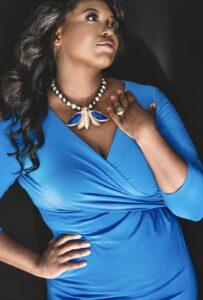
“Dear Friends, Family, and Opera Lovers,” began the soprano’s Instagram post. “I have come to the unfortunate conclusion that I will not be singing La Traviata at Arena di Verona this summer as planned.”
Referring to Arena’s decision to use blackface makeup in “Aida,‘’ the singer wrote: “Let me be perfectly clear: the use of blackface under any circumstances, artistic or otherwise, is a deeply misguided practice based on archaic theatrical traditions which have no place in modern society. It is offensive, humiliating and outright racist.”
She wrote that she couldn’t “in good conscience associate myself with an institution which continues this practice.”
The theater’s statement said “Angel Blue knowingly committed herself to sing at the Arena” even though the “characteristics” of the 2002 Zeffirelli staging were “well known.”
Still, the theater stressed its hope that her protest would ultimately improve understanding between cultures as well as educate Italian audiences.
“Every country has different roots, and their cultural and social structures developed along different historical and cultural paths,‘’ said the statement by the Arena of Verona Foundation. “Common convictions have often been reached only after years of dialogue and mutual understanding.”
The Arena statement stressed dialogue, “in effort to understand others’ point of view, in respect of consciously assumed artistic obligations.”
“Contraposition, judgments, labeling, lack of dialogue only feed the culture of contrasts, which we totally reject,” said the statement, appealing for cooperation “to avoid divisions.”
It’s not the first time that the use of blackface makeup for a staging of “Aida” in Verona has sparked a soprano’s protest. In 2019, opera singer Tamara Wilson, who is white, protested against darkening her face to sing the title character of an Ethiopian woman in the opera at the Arena.