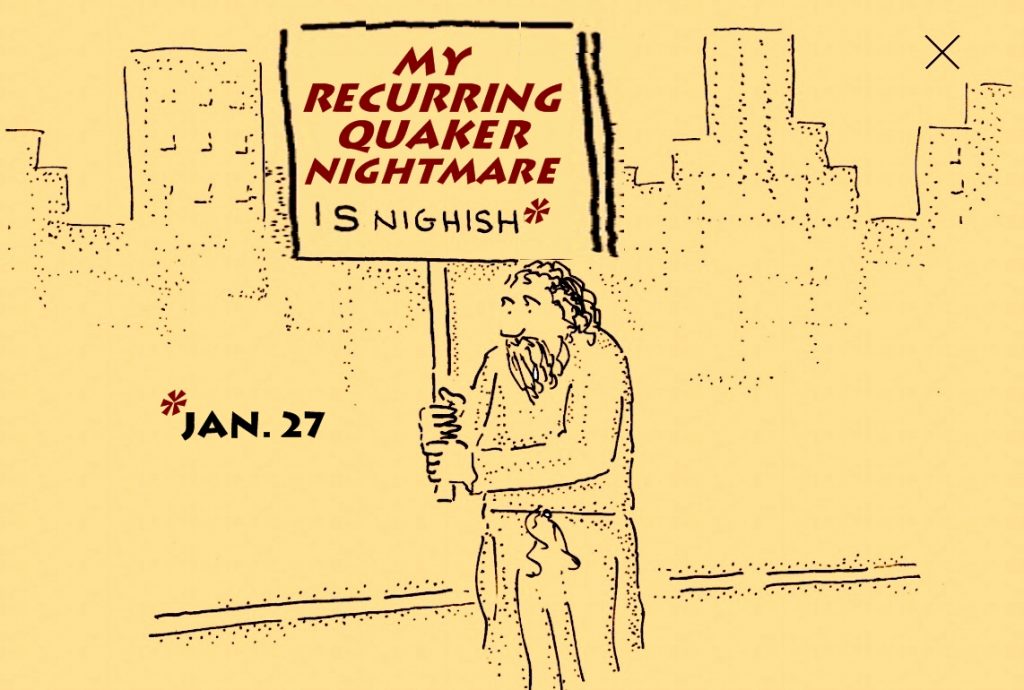
A change equally unorganized & unheralded, potentially as momentous at least for us is, I believe, underway in the U. S. liberal Quakerism I discovered in 1965 (after ditching pre-Vatican II Catholicism).
This change does not necessarily involve moving from physical places, but rather from one economic and class location to another.
When I found it, Liberal American Quakerism was a solidly middle class “sub-subculture,” nearly all white, with a heavy academic/educational tinge. (I acronym it “EMCWAQE”–“E” now as in “Ex,” or as vocalized, “EmQuake.”)
I don’t name EmQuake to flagellate anybody (or myself). After all, everybody & every group is conditioned/limited by its surroundings, so let’s just skip the trendy guilt-trips, which don’t fool anybody anyway, except sometimes us.
However, now in my 53nd year in this group, I see more & more of what’s been well-documented by economists/pollsters, etc. on a broader canvas, namely that these segments (the middle class part of EmQuake) are in a steady slide of downward mobility. We are not leaving our economic & class “homes” voluntarily, but like many of those in the Black Migration, being forced out.
Read more →