
Tough Interfaith Conversations & “Leaves of Grass”
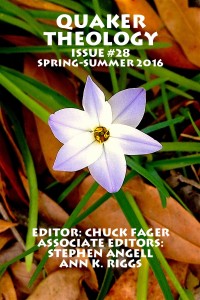
More about Quaker Theology #28 — Interfaith conversation: sounds warm & fuzzy, right?
In reality, though, beyond the Brother/Sisterhood week banquets, it can be pretty tough.
For instance, how would YOU handle these real situations that came up in one such interfaith program?
— a Muslim young man from a rural island whose hadith lineage would not allow him to enter the sanctuary of a Christian church if a cross stood in the sanctuary (but they were scheduled to visit such a church);
— a young Buddhist scholar from Myanmar (Burma) who argued that the Rohingyah young woman in the group should not call herself by that name as that ethnic group as such has never existed in his country (the Myanmar government has been accused of genocide involving Rohingyah); or
— a Muslim young woman who could not room with our one transgendered participant.
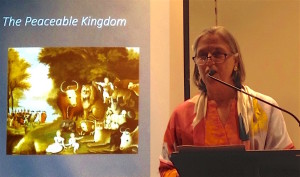
All these and many more such challenges have been faced by Rebecca Mays, a Philadelphia area Friend who has been Director of the Dialogue Institute at Temple University since 2012.
And in the new issue of Quaker Theology, she describes how she faced these complex encounters. (Spoiler: She applied her Quakerism. Read the piece for details.)
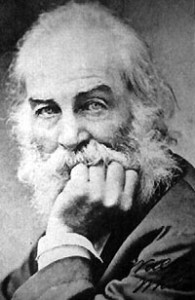
And then, if you ever read some of the poems in Walt Whitman’s Leaves of Grass and they sounded somehow familiar, take a look at Mitchell Gould’s essay analyzing the roots of the impulse behind them, many of which intertwined with the flowering of the movement called Transcendentalism — and how both had many Quaker connections. All this is discoverable in the events of one year. As Gould puts it:
“Whitman was twenty-three in 1842, and was attempting to restart his career in journalism in Manhattan. He had lost all his teen-aged prospects in New York’s Great Fire of 1835, which annihilated both the printing and financial districts, and then, the onset of the Panic of 1837 drove him further into a kind of economic exile on rural Long Island, where he survived most of the time as an itinerant country schoolmaster.” Whitman wrote for and edited a New York City paper called The Aurora; and though his tenure there only lasted several months, they were, Gould argued, pivotal.
During his time there, The Aurora paid close attention to a lecture series by the prophet of Transcendentalism, Ralph Waldo Emerson. And that movement’s journal featured a letter from an unnamed Quaker (or perhaps the Quaker-raised Whitman himself?) which declared,
It is very interesting to me to see, as I do, all around me here, the essential doctrines of the Quakers revived, modified, stript of all that puritanism and sectarianism had heaped upon them, and made the foundation of an intellectual philosophy, that is illuminating the finest minds and reaches the wants of the least cultivated.
 This one long sentence describes the germ of what eventually became modern liberal Quakerism — and, Gould contends, a formative influence on the work of one of our greatest bards. His fascinating essay digs deep into the the roots of both.
Both these pieces are in Quaker Theology #28.
Quaker Theology: There’s nothing else like it.
One thought on “Tough Interfaith Conversations & “Leaves of Grass””