

AP News: Ukraine graft concerns resurface as Russia war goes on
BY MATTHEW LEE AND NOMAAN MERCHANT — July 20, 2022
WASHINGTON (AP) — Ukrainian President Volodymyr Zelenskyy’s dismissal of senior officials is casting an inconvenient light on an issue that the Biden administration has largely ignored since the outbreak of war with Russia: Ukraine’s history of rampant corruption and shaky governance.

As it presses ahead with providing tens of billions of dollars in military, economic and direct financial support aid to Ukraine and encourages its allies to do the same, the Biden administration is now once again grappling with longstanding worries about Ukraine’s suitability as a recipient of massive infusions of American aid.
Those issues, which date back decades and were not an insignificant part of former President Donald Trump’s first impeachment, had been largely pushed to the back burner in the immediate run-up to Russia’s invasion and during the first months of the conflict as the U.S. and its partners rallied to Ukraine’s defense.
But Zelenskyy’s weekend firings of his top prosecutor, intelligence chief and other senior officials have resurfaced those concerns and may have inadvertently given fresh attention to allegations of high-level corruption in Kyiv made by one outspoken U.S. lawmaker.
It’s a delicate issue for the Biden administration. With billions in aid flowing to Ukraine, the White House continues to make the case for supporting Zelenskyy’s government to an American public increasingly focused on domestic issues like high gas prices and inflation. High-profile supporters of Ukraine in both parties also want to avoid a backlash that could make it more difficult to pass future aid packages.
U.S. officials are quick to say that Zelenskyy is well within his right to appoint whomever he wants to senior positions, including the prosecutor general, and remove anyone who he sees as collaborating with Russia.
Yet even as Russian troops were massing near the Ukrainian border last fall, the Biden administration was pushing Zelenskyy to do more to act on corruption — a perennial U.S. demand going back to Ukraine’s early days of independence.
WE INTERRUPT THIS ARTICLE FOR A BRIEF DOSE OF HUMBLING REALITY–
There’s no question that getting a handle on a long, deep history of corruption, stealing public funds, is crucial for Ukraine’s future.
 Yet before going any further into the topic, we need to make a humbling admission:
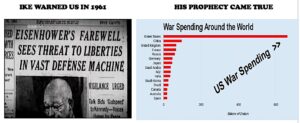
When it comes to looting public funds, especially connected with wars (actual or hypothetical), the USA is head and shoulders the leader of the pack, the pace-setter, the skim-it-off-and-take-it-to-the-bank (and if the banker objects, buy the bank) elephant in the room.
One brief recent example: there were reports during the summer 2021 US pullout from Afghanistan that the puppet US-backed president Ashraf Ghani fled the country carrying suitcases stuffed with embezzled US cash, worth millions.
Those charges remain unproven, in part because they came from the Mother-of-Disinformation, Russia, but also because Ghani wound up in the United Arab Emirates, one of the very unfree states in the Mideast, which has no truck with foreign investigators.
But the practices they were meant to typify were real enough, and so pervasive that they were hard to overstate. In a Washington Post article on the charges,
“U.S. officials have said in confidential government interviews that in Afghanistan “there was so much excess, financed by American taxpayers, that opportunities for bribery and fraud became almost limitless,” The Washington Post previously reported. Ghani’s predecessor, Hamid Karzai, has also admitted the CIA had delivered bags of cash to his office for years, calling it “nothing unusual.” (Emphasis added.)
(NOTE: The Afghan War cost the US more than $2 trillion, with another $2 trillion or so to come. Congressional oversight of the 20 year-war (the US’s longest so far: lousy.)
One other case: Iraq. In its October 2007 article, “Billions Over Baghdad,” Vanity Fair reporters showed that
Between April 2003 and June 2004, $12 billion in U.S. currency—much of it belonging to the Iraqi people—was shipped from the Federal Reserve to Baghdad, where it was dispensed by the Coalition Provisional Authority. Some of the cash went to pay for projects and keep ministries afloat, but, incredibly, at least $9 billion has gone missing, unaccounted for, in a frenzy of mismanagement and greed. Following a trail that leads from a safe in one of Saddam’s palaces to a house near San Diego, to a P.O. box in the Bahamas, the authors discover just how little anyone cared about how the money was handled.
And last but not least, we’ll glance in passing at the fabled US

F-35 super-duper jet fighter, which the Pentagon has been “developing” since the turn of the century, and has cost almost $2 trillion already, and is still years (decades?) away from completion. It was supposed to become the backbone of many allied air forces; yet the Times of Israel summed up its long saga in a headline:
If the F-35 fighter jet is so awesome, why is it so hated?
Israel’s next stealth aircraft is the future of modern warfare, but the Pentagon’s program costs over $1.5 trillion — and it’s not yet operational.
(The very short version: because it eats endless amounts of money, and after 20+ years, it basically doesn’t work; yet seemingly can’t be stopped.)
Besides its almost unimaginable extent, the looting of US defense funds yields very few charges or convictions, not least because so much of it is made “legal” via congressional appropriations, spread all across the political map; and by the unstinted efforts of Pentagon and contractor public relations.
The Pentagon budget, after all, has never been successfully audited, so no one really knows even the outlines of the “waste, fraud and abuse” the occasional unwary politician complains about, usually before soon facing defeat under a flood of war contractor attack ads.
So, when it comes to preaching anti-corruption to small fry like Ukraine, it’s both easy to presume Joe Biden;s sincerity, but also hard to avoid the thick stench of hypocrisy that surrounds such homilies.
Now back to the article about Zelenskyy, Ukraine, and its old/new struggle against official corruption.
 “In all of our relationships, and including in this relationship, we invest not in personalities; we invest in institutions, and, of course, President Zelenskyy has spoken to his rationale for making these personnel shifts,” State Department spokesman Ned Price told reporters on Monday.
Price declined to comment further on Zelenskyy’s reasoning for the dismissals or address the specifics but said there was no question that Russia has been trying to interfere in Ukraine.
“Moscow has long sought to subvert, to destabilize the Ukrainian government,” Price said. “Ever since Ukraine chose the path of democracy and a Western orientation this has been something that Moscow has sought to subvert.”
Still, in October and then again in December 2021, as the U.S. and others were warning of the increasing potential for a Russian invasion, the Biden administration was calling out Zelenskyy’s government for inaction on corruption that had little or nothing to do with Russia.
“The EU and the US are greatly disappointed by unexplained and unjustifiable delays in the selection of the Head of the Specialized Anti-Corruption Prosecutor Office, a crucial body in the fight against high-level corruption,” the U.S. Embassy in Kyiv said on Oct. 9.
“We urge the selection commission to resume its work without further delays. Failure to move forward in the selection process undermines the work of anti-corruption agencies, established by Ukraine and its international partners,” it said. That special prosecutor was finally chosen in late December but was never actually appointed to the position. Although there are indications the appointment will happen soon, the dismissal of the prosecutor general could complicate the matter.
The administration and high-profile lawmakers have avoided public criticism of Ukraine since Russia invaded in February. The U.S. has ramped up the weapons and intelligence it’s providing to Ukraine despite early concerns about Russia’s penetration of the Ukrainian government and existing concerns about corruption.
A Ukrainian-born congresswoman who came to prominence early in the war recently broke that unofficial silence.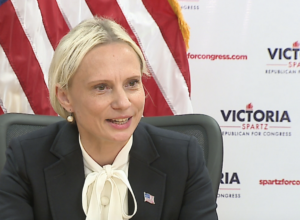
Rep. Victoria Spartz, a first-term Republican from Indiana, has made half a dozen visits to Ukraine since the war began. And she was invited to the White House in May and received a pen used by President Joe Biden to sign an aid package for Ukraine even after she angrily criticized Biden for not doing more to help.
But in recent weeks, Spartz has accused Zelenskyy of “playing politics” and alleged his top aide Andriy Yermak had sabotaged Ukraine’s defense against Russia.
She’s also repeatedly called on Ukraine to name the anti-corruption prosecutor, blaming Yermak for the delay.
Ukrainian officials have hit back. A statement from Ukraine’s Foreign Ministry accused Spartz of spreading “Russian propaganda” and warned her to “stop trying to earn extra political capital on baseless speculation.”
U.S. officials gave Spartz a two-hour classified briefing on Friday in hopes of addressing her concerns and encouraging her to limit her public criticism. She declined to discuss the briefing afterward but told The Associated Press that “healthy dialogue and deliberation is good for Congress.”
“We’re not here to please people,” she said. “It’s good to deliberate.”
Hours later, Spartz gave a Ukrainian-language interview broadcast on YouTube in which she called again for the appointment of an independent prosecutor.
“This issue should be resolved as soon as possible,” she said in the interview. “This is a huge problem for the West, so I think your president should address this issue soon.”
Rep. Jason Crow, a Colorado Democrat who sits on the House Armed Services and Intelligence committees, said he had seen no evidence to support allegations that Zelenskyy’s inner circle was trying to help Russia. But as the war continues, part of the long-term American strategy in Ukraine will have to include addressing waste and mismanagement of resources, he said.
“There is no war in the history of the world that is immune from corruption and people trying to take advantage of it,” Crow said. “If there are concerns raised, we will address them.”
Igor Novikov, a Kyiv-based former adviser to Zelenskyy, called many of Spartz’s claims a mix of “hearsay and urban legends and myths.” Allegations against Yermak in particular have circulated for years going back to his interactions with Trump allies who sought derogatory information against Biden’s son Hunter.
“Given that we’re in a state of war, we need to give President Zelenskyy and his team the benefit of the doubt,” Novikov said. “Until we win this war, we have to trust the president who stayed and fought with the people.”
Corruption was so bad that it led to the Maiden uprising. The story not often told is that Ukraine was literally bankrupt and begging for hard cash to keep itself afloat. The EU promised cash but it was tied to strict IMF rules about cleaning up the corruption. Russia offered more cash with fewer fiscal constraints because it was desperate to keep Ukraine in its orbit. It then sweetened the pot by also offering Ukraine Russian gas at cost. The pro-Russian president went with the much better offer, and this generated a massive backlash against him for the choices thus made. The truth is any choice he made would have been deemed a betrayal of half the country.
To understand war you need to know all that preceeded it. To stand in opposition to war you need to understand the enemies side as well as your own side.