
[NOTE: I hardly eat fish anymore, though in my old-style Catholic boyhood Fish-on-Friday was a rule. I particularly liked tuna. But tuna (along with a lot of Catholic dogmas) turned out to be toxic, along with a lot of other finned favorites. So I mostly let it pass.
But of course that doesn’t absolve me of complicity in the ongoing world fish fiasco: I’m a longtime cat owner. So I’m pondering these two articles too.]
#1 — The Guardian — Interview
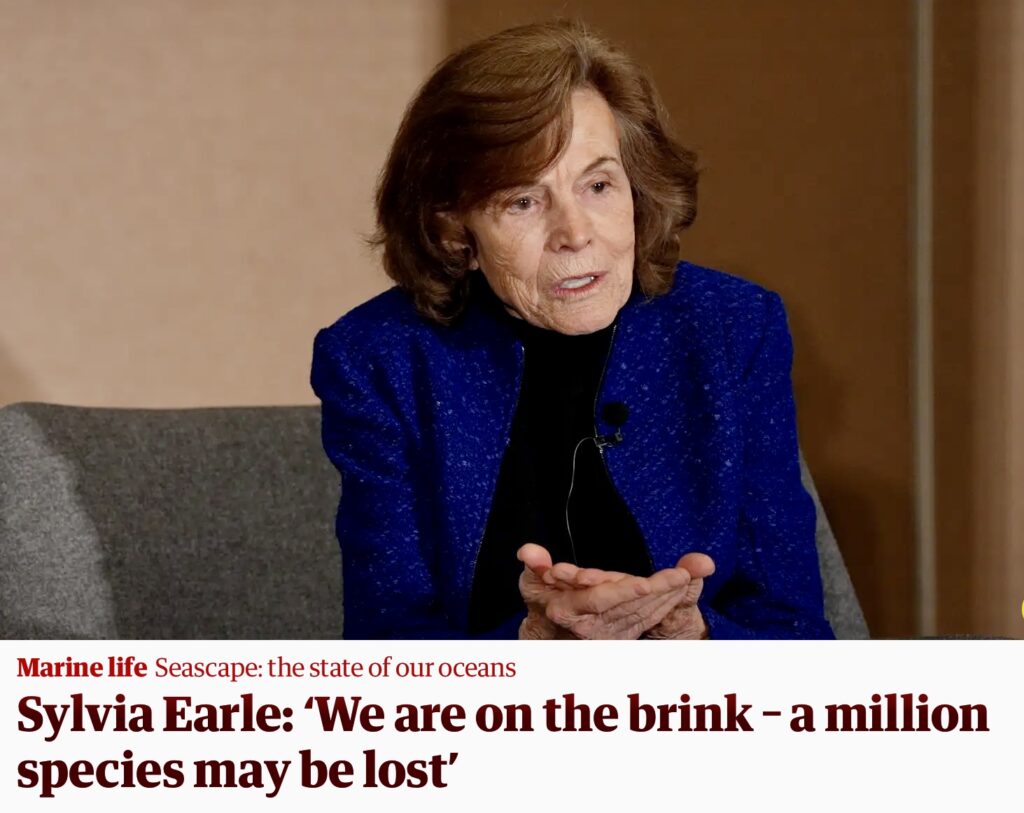
Sylvia Earle on the Oceans: ‘We are on the brink – a million species may be lost’
Chris Michael in Vancouver — Thu 9 Feb 2023
We are a species that is superb at killing, says veteran oceanographer, who calls for us to stop treating fish like crops and give them the respect they deserve

Seascape: the state of our oceans is supported bytheguardian.org
The renowned oceanographer Sylvia Earle has urged a global gathering of marine experts to rein in industrial overfishing that threatens hundreds of species with extinction and to rethink our relationship with the oceans, calling on humanity to “do unto fish as you would have them do unto you”.
In an interview with the Guardian at the Fifth International Marine Protected Areas Congress (Impac5) in Vancouver, the American marine biologist and first female head of the National Oceanic and Atmospheric Administration says intensive factory fishing is treating marine species the same as farmed livestock, despite being very different.
“So many people seem to think that fish are equivalent to cows and chickens and pigs. We even talk about ‘harvesting’ the sea,” she says. “It’s not a harvest – we’re just out there as hunters.”
The key difference, she argues, is that industrial fishing drives species to extinction. “We’re seeing species after species winked out. The trajectory is more than a million species will be lost. We don’t know enough about the ocean to say how many have already been lost … But we do know that we’re good at eliminating whole ecosystems,” she says. “We’re on the brink.”
Earle, 87, compared the hubris of the huge new krill fisheries in Antarctica to the decimation of cod in the 20th century, which led to moratoriums on cod fishing. “With krill in Antarctica, we have the illusion that there are billions of them. ‘We can never eliminate all the krill, we can never eliminate all the tuna’ … except the cod! Oh my goodness, think of the cod here in Canada, in the US and Europe: it just seemed the cod would never ever, ever [run out].”
Born in New Jersey, Earle first came to global attention in 1970 when she set a record by living underwater for two weeks with an all-female team. She has since spent nearly a dozen stints living below the waves, and holds the record for the deepest solo dive.
Her experience living on the Tektite underwater habitat and subsequent vessels gave her a newfound perspective on fish, she explains, allowing her to think of them as individuals. “They have personality,” she says.
“Jane Goodall got into trouble with her learned colleagues for daring to suggest that chimpanzees have personality – that they have feelings, they have families, they care about one another, they feel pain, they feel pleasure, they laugh.
“I don’t know that fish laugh,” she says. “But I’m pretty sure they feel pain and pleasure.
“They are not our fellow primates, but they are our fellow vertebrates. We have eyes, they have eyes. We have a backbone, they have backbones. They have a heart, we have a heart. They have brains – some of us have brains,” she says.
A frequent misconception about fish is their age, she says. “Many of the fish on menus around the world are older than not just our parents, but our great-grandparents. Fish that can be more than 100 years old are on our plates.
We had the power to take the last whale, but we stopped in time. Can we do that again?
“It’s not good for us to be so complacent about where food comes from. It doesn’t mean we’re going to stop eating fish. But maybe we should be more respectful … We don’t accord them with the kind of dignity that we do with most other forms of life. They’re measured by the ton. How many fish are in a ton of fish? How many people are in a ton of people?”
As well as her scientific work, Earle’s advocacy organisation, Mission Blue, has partnered with conservation groups to nominate “hope spots” worldwide in an effort to secure them permanent protection, such as the glass sponge reefs on Canada’s west coast that were designated a marine protected area in 2017.
Despite such successes, she noted that only about 3% of the ocean is protected. “That means 97% is open for exploitation,” she says.
“Some of it is protected because it’s still relatively inaccessible. But we’re getting so good at going to the deepest parts of the ocean – going even under the ice, or places that even 50 years ago you couldn’t access. Now with sonar, there’s no place to hide.
“We capture [fish] with techniques that didn’t exist when I was a kid. We have the power to take the last tuna, just as we had the power to take the last whale, but we stopped in time. Can we do that again?”
She argues that after more than six decades of work, she has a perspective that can be useful now that scientific advances have revealed the ocean in ways never seen before.
“Until fairly recently, the ocean was too big to fail. You didn’t have to protect it,” she says. “But I’ve been a witness. I’ve had the perspective that David Attenborough talked about in the BBC profile, where he referred to himself as a witness to this time of remarkable change.
“Attenborough and I had a parallel trajectory, when the world population was only 2 billion,” she says. “Now we have 8 billion people and the Earth is the same size. We have to be mindful of the mark we’re making on the systems that keep us alive.”
***
Paradoxically, Earle says it is precisely her experience that gives her optimism. She points to the campaign to stop killing whales, which she contributed to during four years on the International Whaling Commission.
“I have watched the trajectory of decline. I’ve also seen the capacity to turn things around,” she says. “Whaling was a big deal for most of the 20th century and for several centuries before. And we came perilously close to losing a chance to save whales, their numbers got to such low levels.
But we did, through international agreements,” she notes, pointing out the irony that it was only when the economic value of whales was seen in terms of tourism and the climate crisis that some countries realised the true cost of killing them.
A similar reckoning with the true cost of killing wild fish would, she says, allow us to reframe their value, undermining what she calls the biggest threat to the ocean: the concept of “seafood”.
“We are so casual about taking wildlife from the ocean,” she says. “I sound like a fish hugger [but] they’re beautiful – as beautiful as any of the other amazing creatures that we have come to treat with greater respect.
“We need to use this thing we call a brain and our empathy for life – all forms of life have a place. And we have this attitude: ‘What good are they? Can I eat it? Can I sell it? If I can’t, it’s just something to crush.’ In your actions, you just ignore it.
Unless you’re a three-year-old kid! A little kid is curious and has an empathy for life … We teach them to kill. We teach them it’s OK. In fact, we encourage it. We have become a species that is just superb at killing.
“If we can make one transformative movement in the 21st century, it’s to gain a greater respect for caring for life – for all of life, ourselves included.”

#2 — Corruption endangers world’s shrinking fisheries | AP News
BY FU TING, GRACE EKPU AND HELEN WIEFFERING
February 10, 2023
WASHINGTON (AP) — As Indonesia’s fisheries minister, Edhy Prabowo was tasked with protecting one of his country’s most precious resources: baby lobsters so tiny one can fit on the tip of a finger.
The waters off the nation’s many islands and archipelagos had once teemed with lobster. But overfishing in recent decades decimated the crustacean’s population, so much so that fishermen turned to catching the hatchlings. They scooped them up by the thousand and shipped them to Vietnamese lobster farms, where the babies are raised to adulthood and sold mostly to dealers in China to meet its enormous demand for seafood.
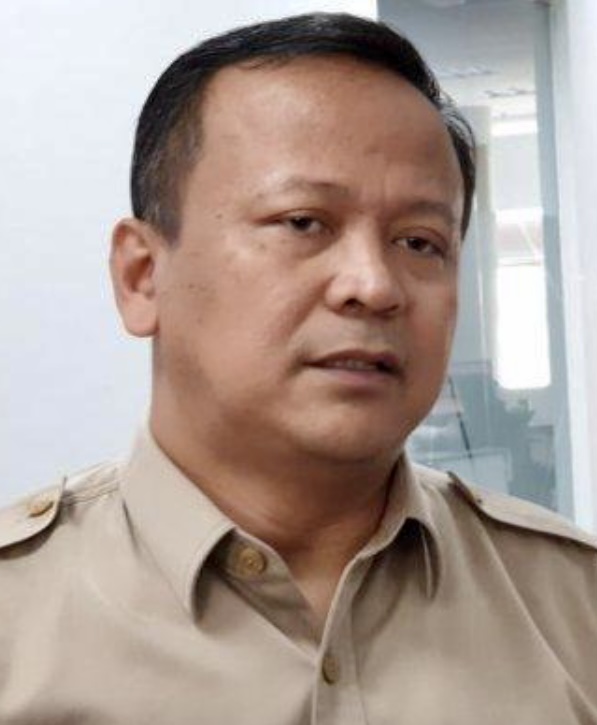
Concerned that such harvesting was harming lobster populations, Indonesia’s fishing ministry in 2016 prohibited the export of the tiny crustaceans. Shortly after taking office, Prabowo lifted the ban. Court documents show that just a month later, in June of 2020, the minister accepted a $77,000 bribe from a seafood supplier to grant it a permit to sell the hatchlings abroad.
The money kept flowing. In his short stint as minister, Prabowo accepted bribes of nearly $2 million. He was arrested in 2020 by Indonesian authorities, having used the graft to purchase 26 road bikes, Old Navy children’s clothes, Louis Vuitton bags, Rolex watches and two luxury pens. Prabowo, 50, was sentenced to five years in prison for corruption. His attorney declined to comment.
Prabowo’s case is not an outlier. It’s emblematic of the corruption plaguing dozens of coastal developing countries that are key in managing some of the world’s most threatened fishing grounds, according to experts and a review of criminal case files and media reports by the AP.
At least 45 government officials have been accused of corruption in the past two decades, the AP found. The allegations range from high-ranking officials like Prabowo accepting large payments from fishing companies to obtain lucrative contracts to low-level civil servants accepting a few thousand dollars to ignore fishermen bringing illegal catch ashore.
“Fisheries corruption can have devastating impacts on marine ecosystems and local communities that may depend on them,” said Ben Freitas, the manager of ocean policy at the World Wildlife Fund, based in Washington.
“Countries with weak governments that lack oversight and accountability are more susceptible to corruption risk. And that is where fisheries corruption plays a pernicious role in overfishing. It can lead to the over-exploitation of resources. It is a global problem.”
The situation is most critical in areas managed by developing nations because many industrialized countries have already overfished their own waters, forcing them to dispatch fleets of trawlers across the globe to meet growing seafood demand. People worldwide consume twice as much seafood as they did five decades ago, according to United Nations estimates, and 35% of stocks are considered overfished, up from 10%.
Many coastal developing countries depend on fish for millions of jobs and to meet the dietary needs of their populations. The U.N. Office on Drugs and Crime warned in a 2019 report that failing to tackle corruption will lead to “significant financial, environmental and societal damages.”
Such corruption, the report added, “negatively affects developing countries in particular.”
Those wishing to conceal their operations or pay bribes to get around restrictions have found fishing to be a welcoming industry.
Companies have little trouble changing the name or flag state of a fishing boat, and it’s common practice to register vessels under shell companies in Liberia or the Marshall Islands. Scofflaw ships are known to turn off their location tracking devices, offload illegally caught fish to other boats, or “launder” it by mixing it with their standard catch.
“The lack of accountability, I think, is even greater in the fisheries sector than it is in other environmental-related activities,” said Juhani Grossmann, a program leader at the Basel Institute on Governance, which is working on anti-corruption efforts with Indonesia’s Ministry of Marine Affairs and Fisheries.
At least with illicit lumber operations, Grossmann said, “you don’t have a different shell corporation for every single truck.”
The AP review found that most cases of corruption and graft were low-level schemes, like one in India in which prosecutors last year alleged two fisheries officers extorted $1,100 to approve subsidies for a fish farm. Another involved fishermen reportedly bribing Malaysian officers with at least $11,000 for every boat they agreed not to report.
Some are much larger and involve global financial institutions. In 2021, the Swiss bank Credit Suisse admitted to fraudulently financing a massive loan to Mozambique to expand its tuna fishing fleet. A contractor handling the loan paid kickbacks of $150 million to Mozambican government officials.
Stephen Akester, a fisheries management adviser who has worked in Africa and South Asia for four decades, said there is a long history of foreign companies — particularly from China — forging corrupt relationships with fisheries officials.
“They exploited the weakness of these governments for whom any kind of revenue was big money, even small dollars,” he said. “And that still continues today.”
In Gambia, a small West African nation nestled along Senegal’s coast, the permanent secretary of the Ministry of Fisheries and Water Resources, Bamba Banja, was charged in 2021 with accepting a bribe from a Chinese company to free a vessel detained for illegal fishing.
According to charging documents, an employee of Golden Lead Company Limited told Gambian authorities that he and another shareholder in 2018 gave Banja 100,000 Gambian dalasi, or about $1,600, to release the ship. The case is ongoing; Banja’s lawyer told the AP that the fisheries secretary denies any wrongdoing.
Authorities in Namibia allege an Icelandic seafood company paid roughly $6 million in bribes to Namibian officials to be permitted to fish in the country’s waters. The so-called “ Fishrot ” scandal first came to light four years ago; Namibia’s former fisheries minister and justice minister are still on trial and have been banned by the State Department from entering the U.S.
The Icelandic company Samherji has denied committing crimes. In a 2021 statement, it said there had been “a lot of chaos” in its Namibian operations and many expenses weren’t formally documented.
Corruption is not limited to developing countries. A top European fisheries official in 2019 was linked to a criminal network that sought to launder illegally caught bluefin tuna that arrived in Spain from Italy and Malta via French ports.
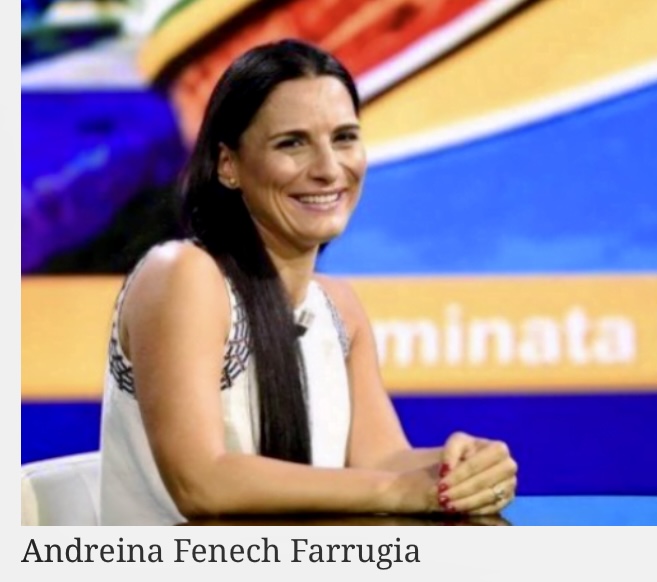 The director of Malta’s fisheries, Andreina Fenech Farrugia, remains suspended as investigators with the Spanish Civil Guard probe whether she helped the criminal syndicate bypass European Union tuna quotas. According to a transcript of a phone call intercepted by police and published by the newspaper El Confidencial, the fisheries director was heard telling a tuna magnate, “You have to pay me.”
Spanish authorities declined to comment on the case. Malta’s Ministry for Agriculture, Fisheries and Animal Rights said that Fenech Farrugia was on unpaid leave. She has not been charged with a crime and could not be reached for comment.
The cases reviewed by AP likely represent a small fraction of the corruption that takes place daily as hauls of seafood are transported and sold around the world.
Most cases go undetected, said Adam Graycar, a professor of public policy at the University of Adelaide who has spent much of his career studying corruption.
“You have inspectors colluding with fishing boat owners,” he said. “Nobody’s going to tell you what’s happening or give you any data.”
In Ghana, for instance, the fishing ministry has been unmarked by any major corruption scandal. Yet the Environmental Justice Foundation, which has investigated abuses in the fishing sector for two decades, issued a report last year documenting how the West African nation has become ensnared in “a culture of corruption in which bribery and intimidation pervades all levels of fisheries management.”
“The environmental and social injustices resulting from the current status quo are myriad, with fishing communities disproportionately bearing the burden of a broken system,” the group concluded.
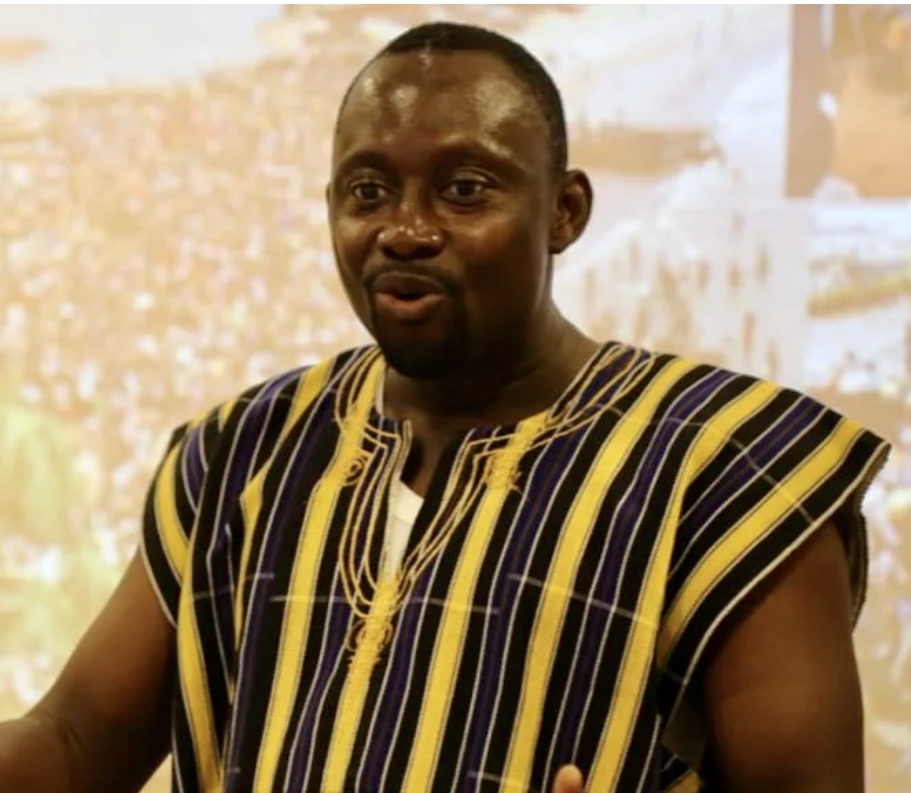
Kyei Kwadwo Yamoah advocates for better fisheries management in Ghana as convenor of the Fisheries Alliance. In reviewing infractions reported by observers on fishing vessels for a World Bank project in 2016, Yamoah found wide, unexplained gaps in enforcement. The government had penalized some companies, he said, but others were granted a renewed fishing license without question.
“There was no clarity as to why these vessels were not even booked or sanctioned, while there was a clear case of a breach of law,” Yamoah said.
Overfishing and illegal fishing have pushed Ghana’s fish stocks to near collapse, prompting presidential action and putting the livelihoods and the health of millions of Ghanaians at risk.
The situation, Yamoah said, is growing dire: Some days fishermen spend all day on the water and come back with nothing.
___
Associated Press reporters Colleen Barry in Milan, Ciarán Giles in Madrid, Joshua Goodman in Miami, Abdoulie John in Gambia, Sheikh Saaliq in New Delhi, and Edna Tarigan and Niniek Karmini in Jakarta contributed to this report.
Does this mean we should be buying farmed fish for our food, and boycott ocean fish?
Mary Kay, I’m no nutritionist. Here’s what I do: 1. Skip almost all ocean fish, because the oceans are full of toxics; and 2. Go light on farmed fish, because I’ve read that lots of those “farm” operations are full of toxics too (like industrial poultry & hog farms on dry land). The upshot: I pass by most fish. I also eat less meat than I used to, but I’m not “boycotting” any of it exactly. Not until they get serious about vegan bacon, at least.