GOOD NEWS
There were few Black historic landmarks. Two brothers changed that.
By Nick Tabor — February 11, 2023

In 1970, there were only two National Historic Landmarks focused exclusively on Black history. By 1976, that number had risen beyond 70.
Behind this change was a large coalition of Black scholars, policymakers and activists, led by two brothers from Ohio who started the campaign in a D.C. basement.

Vincent deForest and Robert DeForrest pursued this initiative through the Afro-American Bicentennial Corp., which they had created to nudge the 1976 independence commemoration in a less-Eurocentric direction. (The brothers spelled their last names differently after Vincent deForest changed his to match his birth certificate, which he saw for the first time as an adult.)
The culture of the National Park Service in the 1970s was not always hospitable to their ideas. Park service officials sometimes argued that the sites the ABC nominated as landmarks didn’t have enough “historical integrity.”
The ABC, in turn, argued that the park service’s criteria put too much emphasis on architecture and were inherently weighted against Black communities, where grand old buildings were less likely to be intact.
Ultimately, the ABC succeeded thanks to a combination of political savvy, powerful backing and favorable timing.
Now, almost five decades later, the ABC’s influence is everywhere, both in physical sites and in the field of historic preservation — but the story of its unlikely success has been largely forgotten.
From a D.C. basement to Capitol Hill
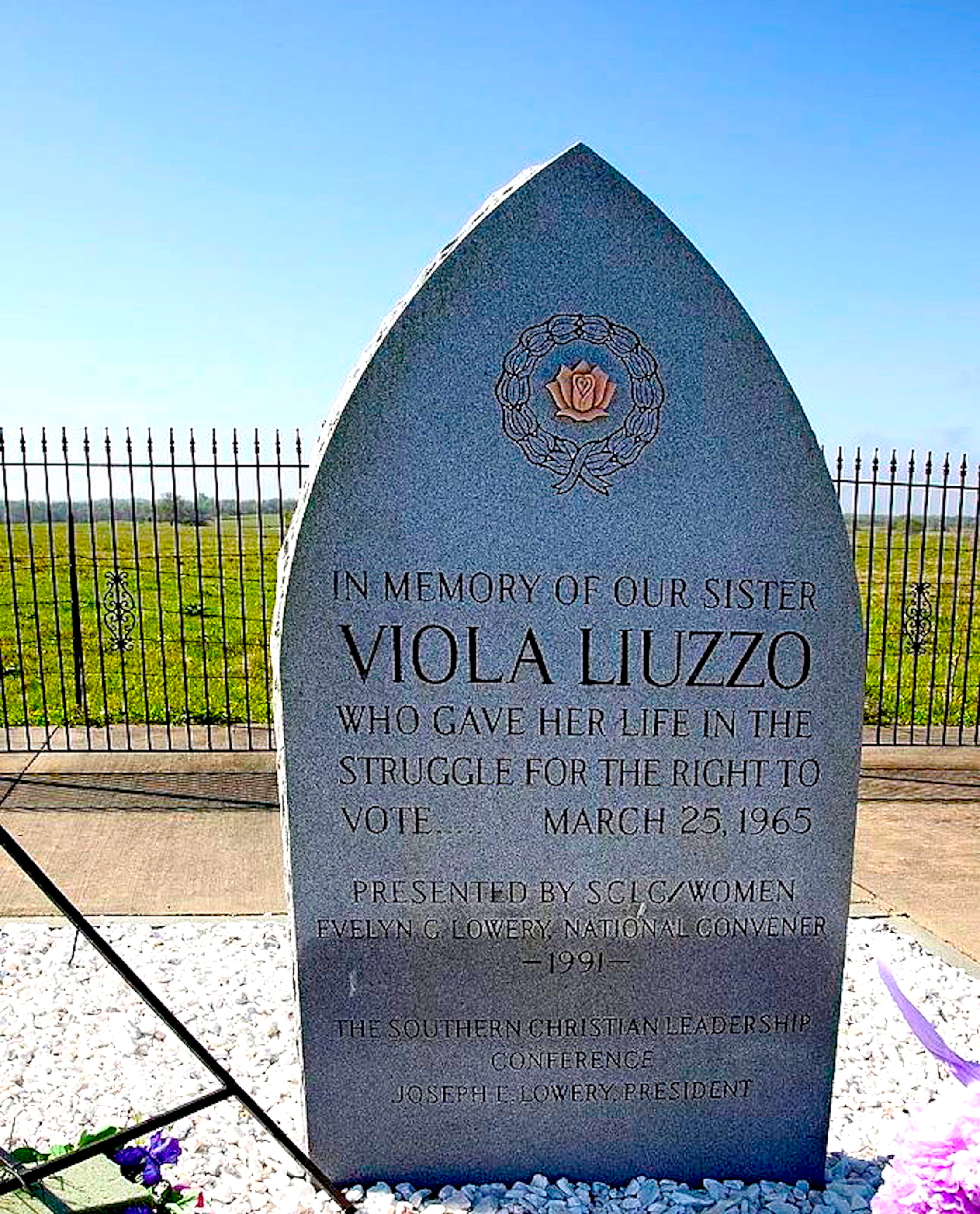
Vincent deForest, 86, lives in St. Louis with his wife of 55 years. Robert died in 2007. The brothers were born in Cleveland, the two youngest of eight children. Their mother died just after Vincent was born, and he grew up in four different homes.
”There wasn’t a lot of stability,” he recalled. “And maybe that’s one of the reasons why history became so important to us.”
Vincent dropped out of school at age 17 and joined the Marine Corps, but he later studied architecture and worked for Robert Madison, the first Black licensed architect in Ohio. In the early-1960s, he found himself in Washington, D.C., en route to a Peace Corps assignment that didn’t pan out. He stayed in town and joined the civil rights movement, eventually taking a job with the Southern Christian Leadership Conference under the Rev. Martin Luther King Jr. Robert came to join him after being discharged from the Army.
Preparations for the bicentennial had begun as early as 1966, when Congress appointed a commission to spearhead the project. It was clear to many in the civil rights world that unless Black activists got involved, the celebrations would overwhelmingly focus on two centuries of White America.
“I have enough appreciation for the history of the country to know that 1776 is not a high-water mark for African American involvement in our country — or Native American,” Vincent said.
The federal commission had three program areas: heritage (devoted to historical displays and publications), horizon (looking to the country’s future) and festival (events planned in D.C. and other major cities). When the deForests launched the ABC, they hoped to wield influence in all three areas. But it was their work in the heritage category, stemming from Vincent’s background in architecture, where they had the most traction.
Around 1970, Vincent cleared space in the basement of his house in D.C.’s Takoma neighborhood for some filing cabinets and desks. He and Robert made it their office. The first members of their advisory board, and the shop that printed their fliers, all resided within the neighborhood. In those early days, no one in the park service’s higher echelons was taking their calls. “The park service was a little plantation at the time,” Vincent said.
But when his father-in-law, an architect in St. Louis, heard about what he was doing, he offered to pass Vincent’s name along to George Hartzog, the NPS director, with whom he had worked on the Gateway Arch. A few days later, Vincent received a call from Hartzog, inviting him in for a meeting.
“And at that meeting, he had lined up all of the top people within the park service to hear what we had to say,” Vincent recalled. “He said that if we got the money, he would put it on the top agenda.”
Funding came in the spring of 1972. That March, the brothers were in Gary, Ind., for the National Black Political Convention — at the time, the largest-ever Black political meeting. They set up an ABC exhibit and pitched their project to everyone who would listen. It wasn’t until the flight back that Vincent made his most important contact: Ron Dellums, a Black congressman from California. Dellums, from his seat in first class, recognized Vincent as he was walking toward coach.
“He grabbed me and said, ‘No, sit here!’” Vincent said. “So we flew all the way back to D.C. together. He wanted to know everything.”
Two days later, the brothers found themselves in a meeting with Rep. Julia Butler Hansen (D-Wash.), a member of the House Appropriations Committee. Soon, the committee earmarked funds for an ABC contract with the park service to conduct an exhaustive survey of Black history sites.
The contract enabled the brothers to rent an office near Logan Circle and to hire a research director, a young museum consultant named Marcia Greenlee. But the ABC was still unprepared to handle the work on its own.
Instead, it depended on the Association for the Study of African American Life and History, founded in 1915 by Carter G. Woodson, known as the “father of Black history.” With its help, the ABC’s advisory board quickly became a “who’s who” of Black scholars. Charles H. Wesley, John Blassingame, Mary Francis Berry and Benjamin Arthur Quarles were all members.
“To be honest, I think they blew the minds of the folks at the National Park Service with a lot of that research,” said Amber N. Wiley, a University of Pennsylvania professor who has studied the ABC’s work. The group became a nexus between the academy and the federal government.
However, even with the federal contract and the extensive scholarly support, Greenlee and her team still met with resistance from the park service.
“Afro-Americans, in common with several other ethnic minorities in the United States, have few historic sites with physical remains because of two factors — slavery and racism,” she wrote in a 1973 report called “Beyond the Fireworks of ’76.”
“Slaves were without material wealth. They were compelled to devote their labors to the establishment of white men’s wealth. Many of the structures which have now been declared historic by Anglo-Americans were built by black men although that aspect of their history is almost never mentioned.”
Still, the park service ultimately acted on the group’s recommendations. Between 1974 and 1976, it added at least 67 Black history sites to the National Historic Landmarks program, thanks largely to the ABC’s research. These included numerous sites in D.C. — such as the Charlotte Forten Grimké House near Dupont Circle, the Carter G. Woodson Home in Shaw and the Metropolitan African Methodist Episcopal Church downtown — along with the Martin Luther King Jr. Historic District in Atlanta, the Harriet Tubman home in central New York and the Maggie Lena Walker House in Richmond.
Changing the face of historic preservation
When the bicentennial fanfare died down, the ABC rebranded itself the Afro-American Institute for Historic Preservation and Community Development. Its work with the park service was mostly finished, but it had many other initiatives, including a summer program for Black teens to work on historic preservation projects, a program to help poor people lower their energy costs and a series of workshops to collect ideas for restoring Black neighborhoods that had been wrecked by highway construction.
But after Ronald Reagan became president in 1981 — and James Watt, a longtime foe of the conservation movement, became his interior secretary — federal contracts for the deForests’ programs became few and far between.
“The economic pressure forced me to get a job,” Vincent said. He wound up working for the park service, eventually as a special assistant to the director. He retired shortly after George W. Bush took office as president. By then, Robert DeForrest had become ill, and the ABC’s successor organization was no longer active.
Almost five decades after the bicentennial, the ABC’s influence is widely overlooked. Wiley says that when the organization has been discussed in scholarly literature, it’s usually in footnotes. However, it’s likely that many important Black history sites would have been destroyed if not for the ABC’s intervention. And in the field of historic preservation, the problems the ABC highlighted have become more widely recognized — even if they haven’t been eradicated.
The ABC paved the way for contemporary organizations like the African American Cultural Heritage Action Fund, which was established in 2017 to help protect Black history sites. In recent decades, the National Park Foundation has also devoted more resources to preserving the history of minority groups. Wiley also says other organizations — for instance, those dedicated to preserving women’s history, Latin American history and LGBTQ history — have consciously drawn on the ABC’s model of “bringing the academy to the public in a digestible way.”
Vincent deForest says some of the fights are far from over. He points to the U.S. semiquincentennial — the 250th anniversary of the signing of the Declaration of Independence — which will be celebrated in three years. Citing recent squabbling over “critical race theory” and efforts to keep parts of U.S. history out of school curriculums, he said the lead-up has reminded him of the battles he fought in the early 1970s.
“What we are facing today,” he said, “is an indicator that we still have not learned our lesson.”
– – –
Nick Tabor is a freelance journalist and the author of “Africatown: America’s Last Slave Ship and the Community It Created,” forthcoming from St. Martin’s Press.
 Other News
 Other News
The Guardian
Former Russian TV News Editor/War Protester Marina Ovsyannikova says she still fears for her life after ‘chaotic’ escape to France

Former Russian TV editor, who was under house arrest, described her journey across Europe last October
Angelique Chrisafis in Paris
Fri 10 Feb 2023
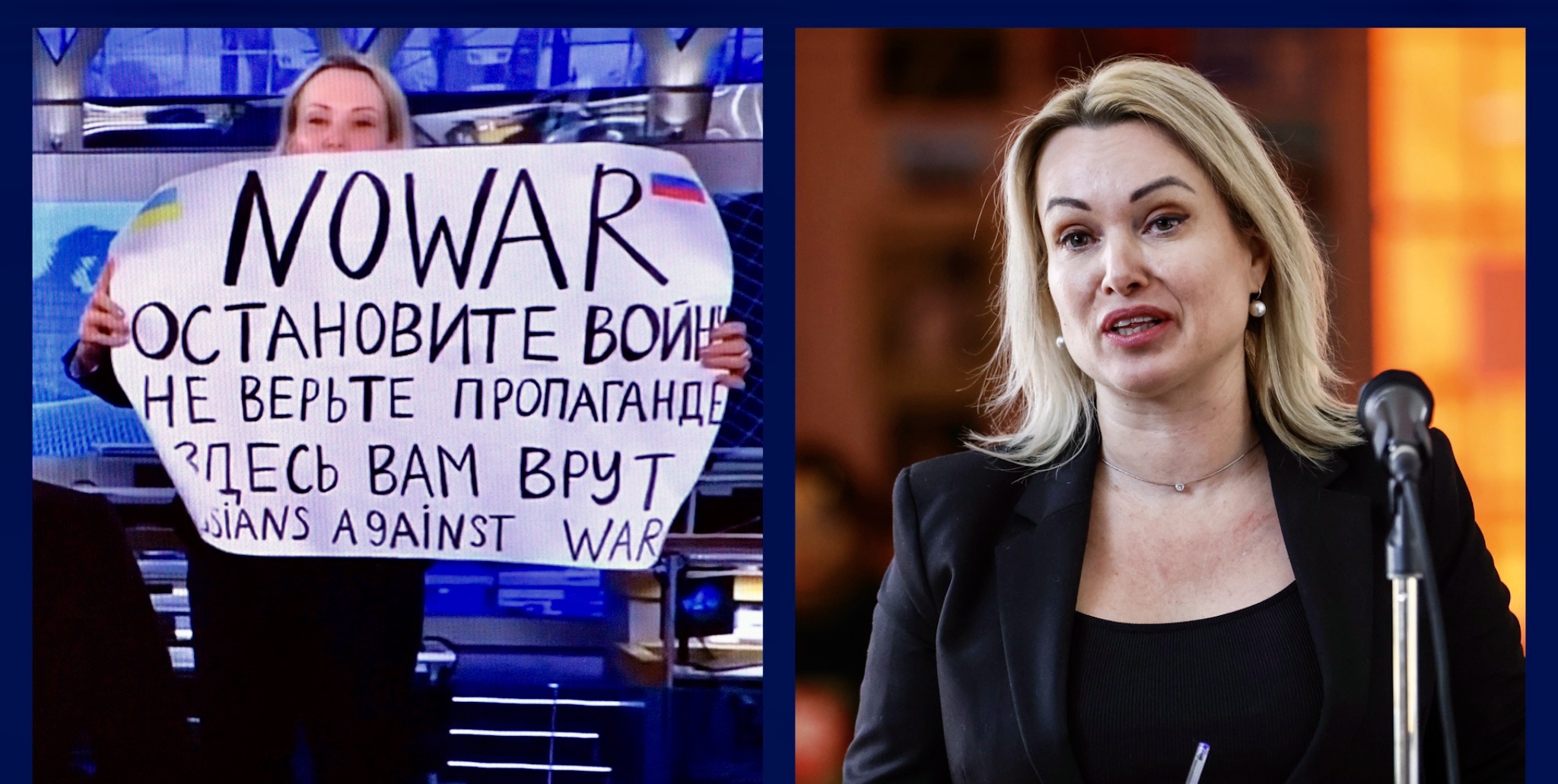
Marina Ovsyannikova, the former Russian state TV editor who famously interrupted a live news broadcast to protest against the start of the Ukraine war, has described her “chaotic” escape from house arrest in Moscow and how she fled across Europe to seek asylum in France.
“I didn’t want to emigrate until the very last moment,” Ovsyannikova said at a Paris press conference with the journalists’ organisation Reporters without Borders. “Russia is still my country, even if war criminals have power there. But I had no choice – it was either prison or exile. I’m very grateful to France, a free country, to have welcomed me.”
Christophe Deloire, the secretary general of Reporters without Borders, which helped organise the escape under the codename “Evelyne”, likened it to “the most famous crossings of the Berlin Wall”.
The Ukrainian-born Ovsyannikova, 44, gained international attention in March after bursting into a studio of Channel One, her then-employer, during a live news bulletin to denounce the Ukraine war, holding a poster reading “no war”. At the time, she was fined 30,000 roubles (£460) for ignoring protest laws.
She continued protesting against the war after quitting her job at Channel One. Last August, she was charged with spreading false information about the Russian army for holding up a poster that read “Putin is a murderer, his soldiers are fascists” during a solo protest on the Moskva River embankment opposite the Kremlin. She was subsequently forced to wear an electronic ankle bracelet and placed under house arrest in Moscow, where she was to await trial. She faced up to 10 years in prison if found guilty.
Ovsyannikova said that shortly before a court hearing in Moscow last October, her lawyers told her to flee to save herself and her 11-year-old daughter. They told her she wouldn’t survive prison, and that she would be “broken”.
She escaped from her house with her child on a Friday night “when all the security forces had finished their working week and were in rest mode”. She calculated there was less chance of being immediately pursued at the weekend.
Of the journey from Moscow through Russia, she said: “We went in so many different directions I don’t even know what direction we took, we changed to seven different vehicles.”
Ovsyannikova did not say which border out of Russia she crossed, but described how just before reaching it, the car they were travelling in got stuck in mud in a field.
“We had to run out of the car and find our way on foot through fields in the dark night. It was difficult, we didn’t have any phone network, we had to work out where we were by the stars. It felt like an eternity, it was a real ordeal. We wandered for several hours before finding the road, hiding from passing vehicles and tractors … I was losing hope. I was thinking ‘Why did I do this? Maybe it would have been better to go to prison.’ But thankfully, we reached the border where people were waiting for us.”
She said her departure from her Moscow home was so “chaotic” that she initially forgot to remove her electronic bracelet, breaking it off only when she had changed to a second car.
Ovsyannikova and her daughter eventually entered France on a Schengen [refugee] visa. They found a remote house in the countryside before changing to several other locations. The night after Ovsyannikova’s “anti-war” action on the Russian news broadcast last March, the French president, Emmanuel Macron, had said publicly that France would give her consular protection or asylum.
Asked if she now feared for her life after the deaths of other Russian figures abroad, Ovsyannikova said: “I clearly do.” She said that when she spoke to Russian friends, they speculated about a poisoning or a car accident.
Ovsyannikova was born in Odesa to a Ukrainian father and Russian mother and grew up in the Chechen capital, Grozny, where she experienced the start of the first Chechen war.
She said she had decided to hold up a protest sign live on TV at the start war in Ukraine because she wanted to “burst the propaganda bubble” in Russia.
“My emotion was running high. I had a difficult childhood, very unhappy. I lived in Chechnya as a child. My house was destroyed during the Russian operations there and we fled with my family, with all the refugees, with no possessions, with nothing. I imagined the Ukrainian women having to live through that.”
She said she would “not stay silent” on the war in Ukraine and would continue to “do everything I can for this war to end”.
On Friday, Ovsyannikova published a book in German detailing her life and ordeal and setting out what she called the workings of the Russian state propaganda machine, describing how any news on Putin was never allowed to be followed by a negative news item on another topic.
“The problem is that all of Russia is in an information bubble of orchestrated propaganda,” she said. “There are no independent media. To have accurate information, you need a VPN on your mobile phone, and that’s the only way to access real information.”
———-
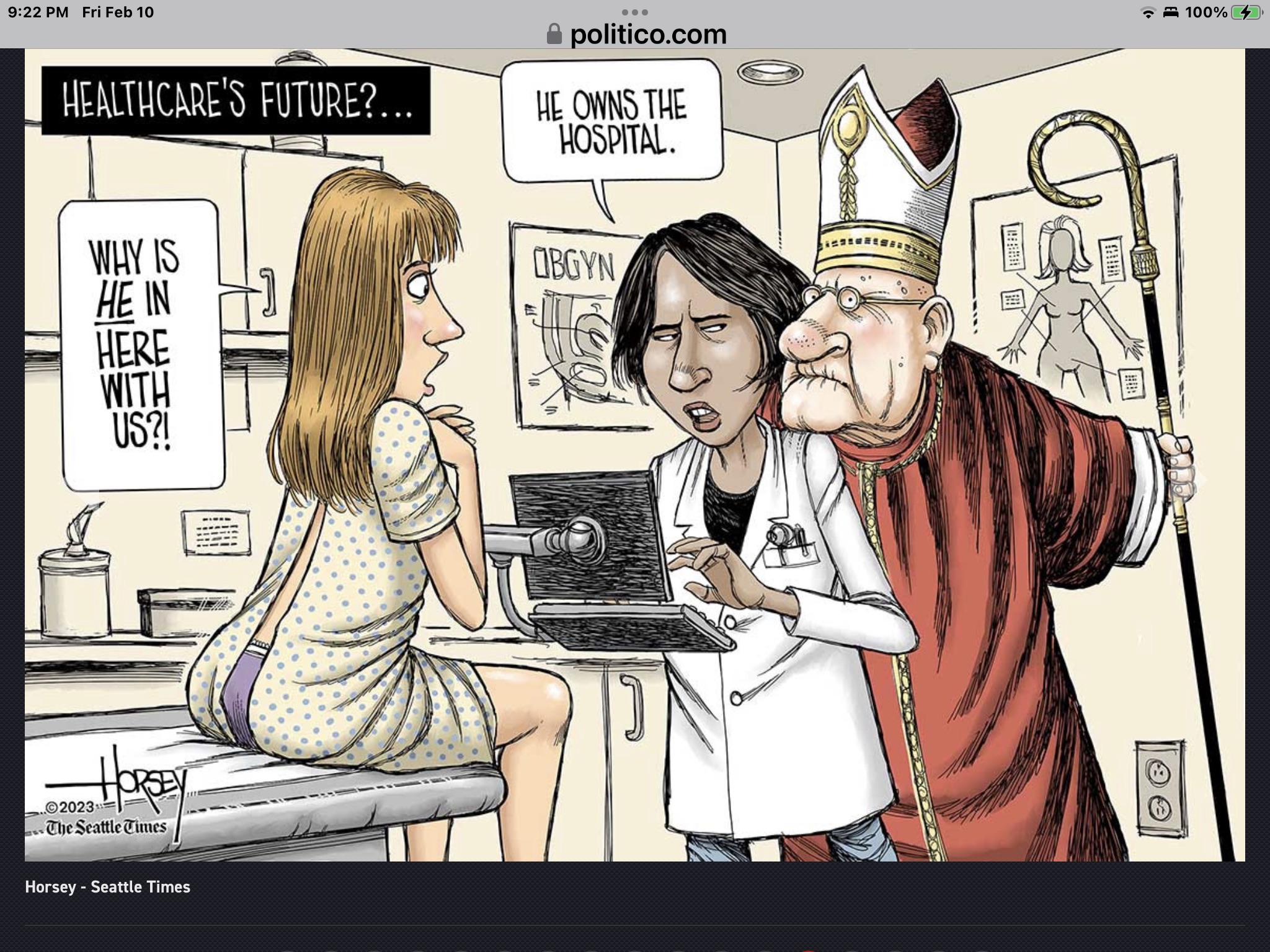
[NOTE: these last items embody the ambiguity of real life: when it comes to women, the Catholic Church is overall a retrograde force, especially in the USA. But in many other countries, the church has sometimes acted as the main (sometimes the only) force defending human rights and democracy, and paying for its work in suffering and blood.q
Bad News
AP News: Nicaraguan bishop who refused exile gets 26 years in prison
BY GABRIELA SELSER AND CHRISTOPHER SHERMAN
February 10, 2023
MEXICO CITY (AP) — Roman Catholic Bishop Rolando Álvarez, an outspoken critic of Nicaragua’s government, was sentenced to 26 years in prison and stripped of his Nicaraguan citizenship Friday, the latest move by President Daniel Ortega against the Catholic church and his opponents.
A day after he refused to get on a flight to the United States with 222 other prisoners, all opponents of Ortega, a judge sentenced Álvarez for undermining the government, spreading false information, obstruction of functions and disobedience, according to a government statement published in official outlets.
The sentence handed down by Octavio Ernesto Rothschuh, chief magistrate of the Managua appeals court, is the longest given to any of Ortega’s opponents over the last couple years.
Álvarez was arrested in August along with several other priests and lay people. When Ortega ordered the mass release of political leaders, priests, students and activists widely considered political prisoners and had some of them put on a flight to Washington Thursday, Alvarez refused to board without being able to consult with other bishops, Ortega said.
Nicaragua’s president called Álvarez’s refusal “an absurd thing.” Álvarez, who had been held under house arrest, was then taken to the nearby Modelo prison.
Álvarez had been one of the most outspoken religious figures still in Nicaragua as Ortega intensified his repression of the opposition.
Nicaragua’s Episcopal Conference did not immediately respond to a request for comment on the sentence. Reached by the AP, Managua vicar Mons. Carlos Avilés said he hadn’t head anything official. “Maybe tomorrow.”
The church is essentially the last independent institution trusted by a large portion of Nicaraguans and that makes it a threat to Ortega’s increasingly authoritarian rule.
Monsignor Silvio Báez, the former outspoken Managua auxiliary bishop who was recalled to the Vatican in 2019, described the sentence on Twitter as “irrational and out of control the Nicaraguan dictatorship’s hatred toward Mons. Rolando Álvarez.”
Álvarez, the bishop of Matagalpa about 80 miles (130 kilometers) north of Managua, has been a key religious voice in discussions of Nicaragua’s future since 2018, when a wave of protests against Ortega’s government led to a sweeping crackdown on opponents.
When the protests first erupted, Ortega asked the church to serve as mediator in peace talks, though they ultimately failed.
On April 20, 2018, hundreds of student protesters sought refuge at Managua’s cathedral, where the church was collecting donations to support demonstrators. When police and Sandinista Youth descended, the students retreated inside, leaving only after clergy negotiated their safe passage.
“We hope there would be a series of electoral reforms, structural changes to the electoral authority — free, just and transparent elections, international observation without conditions,” Álvarez said a month after the protests broke out. “Effectively the democratization of the country.”
By that summer, the Church was under attack by Ortega’s supporters.
A pro-government mob shoved, punched and scratched at Cardinal Leopoldo Brenes and other Catholic leaders as they tried to enter the Basilica San Sebastian in Diriamba on July 9, 2018.
For nearly 15 hours overnight on July 13-14, 2018, armed government backers fired on a church in Managua while 155 student protesters who had been dislodged from a nearby university lay under the pews. A student who was shot in the head at a barricade outside died on the rectory floor.
More recently, Ortega has accused the Church of being in on an alleged foreign-backed plot to depose him.
Last summer, the government seized several radio stations owned by the diocese. At the time, it appeared Ortega’s administration wanted to silence critical voices ahead of municipal elections.
The Holy See has been largely silent on the situation in Nicaragua, believing that any public denunciation will only inflame tensions further between the government and the local church.
The Vatican’s last comment came in August when Pope Francis expressed concern about the raid of Alvarez’s residence and called for dialogue.
Earlier this week, judges sentenced five other Catholic priests to prison. They were all aboard Thursday’s flight.
U.S. officials had called Thursday’s massive release a positive sign, but said they did not yet see a change in the government’s policies toward dissent.
Before the sentence was announced Friday, Emily Mendrala, a deputy assistant secretary in the State Department’s Bureau of Western Hemisphere Affairs, said “we see yesterday’s event as a positive step that could put the (bilateral) relationship on a more constructive trajectory.” But she added that “we still have concerns with the human rights situation and the situation with democracy in Nicaragua.”
The State Department said Secretary of State Antony Blinken spoke by phone Friday with Nicaragua Foreign Minister Denis Moncada about the prisoners’ release and “the importance of constructive dialogue between the United States to build a better future for the Nicaraguan people.” Presumably the conversation occurred before Álvarez’s sentence was announced.
Vilma Núñez, director of the Nicaragua Center for Human Rights, which had been supporting prisoners in their cases, called the sentence “arbitrary and last minute,” noting that it included crimes that were not part of his original conviction.
“The personal well-being and life of the Monsignor is in danger,” Núñez said, mentioning Ortega’s comments about the bishop Thursday night.
Antonio Garrastazu, regional director for Latin America and the Caribbean at the International Republican Institute in Washington, spoke before the sentence of the importance of Álvarez’s decision to stay in Nicaragua.
After expelling nearly all of his most vocal critics, Ortega found himself stuck with the bishop in a still heavily Catholic country.
“The Catholic Church, I think, is one of the main institutions that the Ortega regime really, really fears,” said Garrastazu. “The Catholic Church are really the ones that can actually change the hearts and minds of the people.”
Prior to the release of prisoners, sanctions and public criticism of Ortega had been building for months, but both United States and Nicaraguan officials say the decision to put 222 dissidents on a plane to Washington came suddenly.
The majority had been sentenced in the past couple years to lengthy prison terms. The release came together in a couple of days and the prisoners had no idea what was happening until their buses turned into Managua’s international airport.
“I think the pressure, the political pressure of the prisoners, the political prisoners became important to the Ortega regime, even for the people, the Sandinista people who were tired of abuses,” opposition leader Juan Sebastian Chamorro, who was among those released, said during a press conference Friday. “I think (Ortega) wanted to basically send the opposition outside of the country into exile.”
In Ortega’s mind, they are terrorists. Funded by foreign governments, they worked to destabilize his government after huge street protests broke out in April 2018, he maintains.
Ortega said Vice President Rosario Murillo, his wife, first came to him with the idea of expelling the prisoners.
“Rosario says to me, ‘Why don’t we tell the ambassador to take all of these terrorists,’” Ortega recounted in a rambling speech Thursday night. In a matter of days, it was done.
__
AP reporters Gisela Salomon in Miami, Ciaran Giles in Madrid, Spain and Nicole Winfield in Rome contributed to this report.
Also, from Catholic News Agency:
Walter Sanchez Silva
By Walter Sanchez Silva
ACI Prensa Staff, Feb 10, 2023
The dictatorship of Daniel Ortega in Nicaragua sentenced on Friday, Feb. 10, the bishop of Matagalpa, Rolando Álvarez Lagos, to 26 years and four months in prison, charging him with being a “traitor to the homeland.”
The sentence against Álvarez comes just one day after the regime deported 220 other disdidents to the U. S.
The sentence read this afternoon by Judge Héctor Ernesto Ochoa Andino, president of Criminal Chamber 1 of the Managua Court of Appeals, states: “The defendant Rolando José Álvarez Lagos is held to be a traitor to the country.”
“Let it be declared that Rolando José Álvarez Lagos is guilty for being the author of the crimes of undermining national security and sovereignty, spreading fake news news through information technology, obstructing an official in the performance of his duties, aggravated disobedience or contempt of authority, all committed concurrently and to the detriment of society and the State of the Republic of Nicaragua,” the sentence states.
Detailing each of the charges and their respective penalties, the text adds: “The defendant Rolando José Álvarez Lagos is sentenced to 15 years in prison and perpetual disqualification from exercising public office on behalf of or at the service of the State of Nicaragua.”
“The loss of the convicted person’s citizen rights is declared, which will be perpetual, all of this for being the author of the crime of undermining national security and sovereignty,” the ruling continues.
The sentence also decrees “the loss of Nicaraguan nationality to the sanctioned José Álvarez Lagos, in strict adherence to Law 1145.”
The aforementioned Law 1145, as well as a constitutional reform that allows the loss of nationality of those sentenced for “treason,” was passed by the National Assembly of Nicaragua Feb. 9.
Today’s ruling reads: “The defendant Rolando José Álvarez Lagos is sentenced to five years in prison and an 800-day monetary fine (based on a percentage of his daily salary) for being the author of propagating fake news through information and communication technologies.”
“The penalty in days-of-fine is equivalent to the amount of 56,461 córdobas and 15 centavos (about $1,550).”
Lastly, the judgment sentences the “defendant Rolando José Álvarez Lagos to five years and four months in prison for being the author of aggravated obstruction of the performance of duty of an official to the detriment of the State and the Republic of Nicaragua” and also “one year in prison for being the author of the crime of contempt of authority.”
“The prison sentences will be served successively, so the convicted Rolando José Álvarez Lagos must serve 26 years and four months in prison,” the sentence reads.
According to the sentence, Álvarez must be imprisoned until April 13, 2049.
The bishop refused to board the plane yesterday afternoon along with 222 other deportees, including four priests, who were flown to the U.S. in an agreement with the U.S. State Department. Álvarez decided to stay to accompany the Catholics who are suffering the repression of the dictatorship in Nicaragua.
In a statement issued Friday following the deportation of the 222 Nicaraguan political prisoners, Rep. Chris Smith, chair of the House Global Health, Global Human Rights, and International Organizations Subcommittee of the United States House of Representatives, said: “We must continue to work to combat the brutal Ortega regime and free the remaining prisoners — including courageous Bishop Rolando Álvarez, who refuses to abandon his flock.”
“He is truly a Christ-like figure with a servant’s heart, and we continue to urge Pope Francis to speak unequivocally on his behalf and seek his release,” the congressman said.
———-