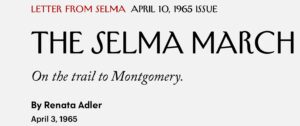
Apropos of Dr. King’s birthday, and looking toward Black History Month, an email came In Monday telling me the New Yorker magazine had posted on its website an article from the April 10, 1965 issue called, “Letter from Selma,” about the voting rights march from Selma to Montgomery, Alabama.
And I was mentioned in it.
Sure enough; it’s the only time I have appeared in the magazine.
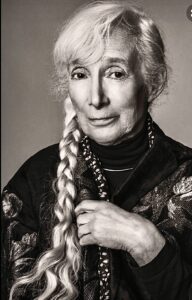
I barely remember what was in that “Letter,” though I can still see the writer, Renata Adler, appearing by the edge of U.S. Highway 80.
Renata Adler
I do recall how strikingly out of place she seemed, on its rough and rocky shoulder, crowded with disheveled marchers, and lined with armed troops eyeing the nearby scrub forests for snipers.
Adler looked as if she had been plucked from a stroll on Fifth Avenue and teleported to Alabama, in a colorful and almost slinky sheath dress, with a broad voguish hat bending under the stray breezes, notebook in hand.
We talked for just a few minutes. It’s a good article. Only time my name ever appeared in the New Yorker, as far as I know.
I think you can read it for free.
And there’s more: on Jan. 18 I was asked to speak to the good people of Life’s Journey UCC Church in Burlington NC, and tell them the title story from my memoir, “Eating Dr. King’s Dinner.”
Telling a story that’s 56 years old — and as up to the minute as the latest headlines.
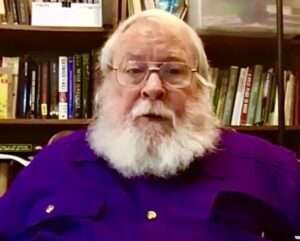
Of course, I didn’t get to go to Burl-Ing ton, which is about 40 miles west of Durham. Instead, I ZOOMed in from home in Durham; that’s This American (Pandemic) Life, 2021.
and explain how for a long time after that year in Selma, it had a happy ending. But then, in 2013, that ending was erased, and the story of fighting for voting resumed.
Only this time, the wear and tear of age had me on the sidelines, but still connected, reminding the young that this continuing story is now theirs too, and it was their turn, not yet to tell it but to write the decisive next chapters with their lives.
In mid-2014, a blast of church schism fever blew into the three-century old North Carolina Quaker community like a line of summer tornadoes. At its annual conference, a purge was suddenly demanded to “purify” their ranks of meetings deemed theologically “liberal” or friendly to LGBTQ persons. The same wave had already shattered Quaker groups in … Continue reading Solving the Mystery of “Murder at Quaker Lake”→
[Note: This is the second part of a Dog Days series on how early civil rights work and later years in the Postal Service came together for me. The first installment is here.] <one> For a mail handler, the mail stream is much more like a moving body of water. A lot of it came … Continue reading Karmic Collision-II: Lab Rats and the Road Not Taken→
<one> The time I spent in the civil rights struggle for Black voting rights in 1965 was a very important part of my life. And the time I spent working for the Postal Service (USPS), beginning twenty years later in 1985, was important too. But the two experiences were very different, so different I couldn’t … Continue reading Karmic Collision – I: The Post Office, Voting Rights & Me. Dog Days Reading.→
[In midlife, Diane Faison and her family faced multiple traumas while living in Richmond, Virginia., including the murder of her mother-in-law and family conflict over her estate.] Diane writes, After all this, it was no surprise that my husband said he wanted to leave Richmond. I don’t want the children living in this atmosphere, he … Continue reading “Passing the Torch”, Author Speak #6: Diane Faison Mckinzie→