
A Jewish-Quaker’s Anguished Spiritual Journey
Sandy Green
[NOTE: Reprinted with permission from Types & Shadows, The Journal of the Fellowship of Quakers & The Arts, Issue #108. More info on FQA at: fqaquaker.org]
Here’s a Summary of My Story:
I am a Jewish Quaker, an Anti-Zionist Jew, I am a Survivor of Sexual Abuse Who Turned Trauma into Activism, Poetry, and A STORY
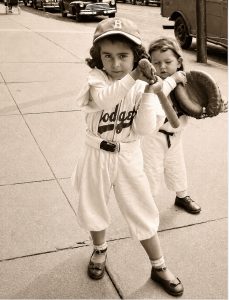
I was born into a Jewish Homeland, Brooklyn, in1944, before the birth of the State of Israel. At the time, Brooklyn was the heart of the Jewish Diaspora in America. Excerpts from my story, Nostalgia for Home, appended below, depict my life growing up in that very special place, during the 40’s and 50’s. I lived there until 1963 when I married one of the neighborhood boys.
When we married, I followed him to Yale, where he studied Chinese history on his way to becoming a professor. We left the Homeland and moved to New Haven, CT, a culture shock for both of us. I did office work for the phone company until 6 months pregnant with our son, when I was forced to quit. I birthed two daughters within the next five years.
After the birth of our children and the death of my mother the marriage floundered, and we sought help at the Jewish Family Service of New Haven, where we were assigned a rabbi as our therapist, on his way to becoming a clinical psychologist. To make a very long and painful story short, the therapist did not help the marriage, instead he took advantage of my vulnerability and used me for his needs, breaking whatever codes of ethics both his professions decreed.
Shamefully, we ended up marrying. Without knowing what the words meant at the time, our relationship fit the profile of transference/counter transference.
My damaging experience and all the literature I read, corroborates that the nature of such a relationship is incestuous. I could write a book about it.
It ended with abuse that traumatized me, leaving me alone, damaged, and separated from my family. Years later, when Roe v Wade was struck down in 2022, I felt it sanctioned rape and incest and the decision brought back that long ago personal trauma. I could not speak, and from my state of despair I wrote the poem, “Profane Not Thy Daughter”. Most of my poems have origins from a place so deep, I could not live in it.
PROFANE NOT THY DAUGHTER
Leviticus 19:29
Dedicated to My Therapist
Profane not thy daughter to make her your Harlot
Proclaim your secret passion, forsaking her soul
Burden her with shame, blame!!!
Forsake her virtue for your wanton desire;
Shame her, blame her, destroy the sacred bond
That nourishes her innocence,
For the bondage and submission of your desire!!
Profane not thy daughter to make her your Harlot
Profane not thy daughter bound in your Hypocrisy
Your dismay,
You carry the blame, and she the shame
It’s the incestuous rapture of the insurrection of her soul
Profane not thy daughter, your mistress of the night,
Bearing fruit upon your lustful penetration,
Your Blame, Her Shame
Forsaken Me, Is this my Destiny?
I AM A SURVIVOR; I fought that recurring state of despair and found God in the process. Kierkegaard, the philosopher wrote, “If man is destroyed by despair, it is because he had not experienced it deeply enough, for if he had, a new reality would have saved him.”
My saving reality from despair became God. I really believed that out of my despair I was being led by the spirit of God. I trusted it, and followed the spirit, my instinct, wherever it took me. Then it took me on a Jewish roller coaster ride, to great heights and deep lows. It led me on a “messiah journey,” and that grandiosity motivated me, and drove many of my decisions for many a year forward.
Although, a prose poem I wrote, “Spiritual Moment,” depicts an experience much earlier in time, it set the stage for other coincidences that felt “Godlike;” when I let the forces overtake me. The downslide from the grandiosity was deep despair. I lived into what for sure could be conceived as being crazy by many, but ironically it is what kept me out of the hospital, or perhaps worse.
Without coming from a religious Jewish family, being Jewish played a central role in my identity, intersecting directly with my Brooklyn identity. In that world it seemed as if we were in the majority, no one was hiding from it. But Judaism, as a cultural identity alone didn’t work for me. Even without formal education or indoctrination, I somehow knew we must have been called, “the chosen people” for a reason. I have been on a lifelong quest to understand what that meant.
What were we Jews chosen for, and by whom?
Were we chosen to act as a communal body, for the good of others, or individually, for our own entitlement? Or, chosen to be plagued with what it might mean to be chosen, as a target for outside scrutiny. Thus, I have had a fascinating, but very chaotic, cultural, spiritual, and religious Jewish journey.
While married to the rabbi, I gained a special appreciation for two central aspects of Judaism. The most important and greatest gift to the Jewish people is the ritual of Shabbat. The other supposed gift, the land of Israel, has been a blessing and a curse for me and perhaps for all Jews. But in this period, I loved both of them. I’ll begin with Shabbat.
My family did not observe the traditional Jewish Sabbath, if anything, Sunday became the day of rest because most stores were closed due to the blue laws, and family became more important. Later, when married to the Rabbi, the Jewish Sabbath, as I observed it, changed the week from the mundane to the holy. Depending on the various denominations, there are rules about what you can and cannot do, followed more or less.
For us, it meant the end of the work week, gathering of family and friends, seven kids in our merged family, his 4 and my 3. We held an intentional dinner on Fridays, candle lighting, meaningful conversation, an abundance of food, which lasted at least thru Tuesday, served on the best China. It became a reprieve from routine and everyday problems. At its best it felt like Thanksgiving once a week.
Now, I keep the tradition alive sporadically, not religiously. I plan my socializing on Fridays, inviting my Quaker, Moslem and Black friends to my Shabbat table. With the candles lit, the mood is set for something meaningful. In between those dinners, I attend Friday evening services on Zoom at Tzedek Chicago, my Anti-Zionist Synagogue. On Saturdays, I go for hikes, take photos, do art, take a Shabbat nap, and sometimes go to a movie.
Now onto Israel:
I first learned of Israel through my Aunt Betty, who was a member of Hadassah, a Jewish Women’s Organization. She worked tirelessly wrapping bandages and other supplies to send off to Israel during the early fifties. Her effort was so notable that her name was engraved on the Golden door at Hadassah Hospital on Mount Sinai. She died in 1956 at the age of 46 and so in her memory, the family yearned to visit Israel and the hospital that honored her name.
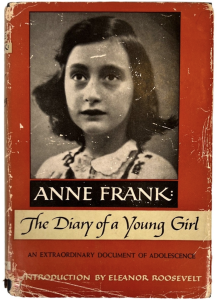 At that time, girls my age were reading The Diary of Anne Frank, so besides Israel, I became woke to the Holocaust. And at the same time, in 1955, the Brooklyn Dodgers won the World Series, finally defeating the Yankees. The excitement of those damn bums winning, transcended everything in my life.
My first trip to Israel in 1984 was with the rabbi husband; we traveled on an inheritance from my father, who died shortly after our marriage the year before. At that point I had been living in New Haven for over twenty years. The trip was the beginning of the end of the relationship, but I fell in love with Israel, and sought it as a refuge in my dismay.
The following year when the marriage was in freefall, I took my daughters to Israel. I yearned for it in my dreams; it reminded me of the Brooklyn I left behind, before I knew its secrets. Gabor Maté, a Canadien Jewish physician, author, specializing in trauma, describes Israel as “the dream for one people and the nightmare for another,” I was still in the dream phase. He was born in 1944, the same year as me, in Budapest. He lost many relatives in Auschwitz and in 1956 his immediate family emigrated to Canada.
My next two trips were with a Jewish youth organization. Being married to a rabbi helped me get the job. It was with an international organization, with a base in CT. The job gave me security, an identity, a life style that tolerated my mood swings and a raison d’etre. It also gave me two staff missions to Israel that deepened my relationship with the country.

The blinders began to come off on these trips as I started to question the legitimacy of what I observed. On the first mission, we went to a settlement on the West Bank, the new residents were all from Brooklyn. Something did not feel right about this scene, but their pride in the place and joy in having made this move seemed to legitimize their actions, and at that point I did not know enough to question it.
On this same trip, we met with low level Knesset members, Bibi Netanyahu being one of them. I even asked him a question; wish I remembered the question or if he answered it.
I stayed on after this trip living in the Old City of Jerusalem for a week, studying at a Yeshivah, a Jewish school, in a program called Discovery. It was a crash course in Jewish mysticism, Kabbalism. The Torah had been computerized, and by choosing random words, the program seemed to find hidden messages about God.
It all terrified me: “Oh my God,” I thought, “maybe there really is a God.” I felt like I had to do something BIG. Upon my return home, I needed deprogramming, and went to a Hasidic rabbi. However, the experience helped me make the decision to move to Philadelphia with the youth organization.
I believed I could offer something meaningful to the organization there. I could make “it” the premier youth organization for community service in the Philadelphia area. Ultimately, my efforts got me fired, for I had pushed my agenda beyond an unspoken rule that the organization was there for Jewish kids to meet and socialize only with other Jewish kids.
But Philadelphia gave me access to a wide range of other Jewish experiences, which I joyfully took part in. I met some “greats” within the city’s Jewish world and had various interactions, which fed my “messiah trip.”
But this Jewish world, local and international, had a shadow side that led me to my eventual disenchantment with both Israel and Judaism.
Shortly after being fired, I took my final trip to Israel, in 1993. I went for six months with the intention of possibly making Aliyah, which literally means “rising up,” by moving to Israel permanently, an entitlement for all Jews.
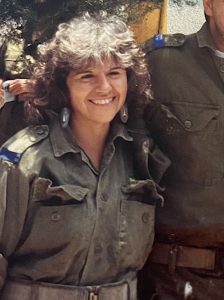
The Israeli army and airline sponsored the trip by offering an inexpensive flight, then allowing you to stay for six months by first volunteering for the army. I lived on an army base for a month; my job was greasing starters for army tanks. On weekends I went on field trips and were exposed to different aspects of Israeli life.
I had one encounter with an army sergeant that stands out: while he espoused entitlement to the land, as God seemed to have commanded in the Torah, I interrupted him, and said, “don’t you have to fulfill all of God’s commandments as stated in the Torah, especially about treating your neighbor as you would like to be treated?” I can still see his face when he could not answer.
After the army, for the next 5 months, I lived in Jerusalem. I took an intense Hebrew immersion class to see if I could learn the language well enough to make the move. Languages are not my forte, but I thought I could if I decided to move there.
For the final segment of the trip, I moved to Abu Tur, an area of Jerusalem that overlooked an Arab village. While there, I followed a Rebbe who had very close ties to the Philadelphia community and became my guru for a time, both there and in NYC where he had a Shul. During part of that summer, I lived on his Moshav, a cooperative agricultural community, similar to a Kibbutz, but not as strict, hosted by his followers.
I left Israel in September 1993, right before the Oslo accords were signed. I anticipated returning, but it was not to be. God had other plans for me.
Goodbye Jerusalem
With Remembrance I bring to you this song
Written upon the heat of my heart
I sing its words to the bird
The bird who heard the call
It was that bird the smartest one of all
I tremble with anticipation of the cold winds
The ripping thunder that tears at the heart of ambivalence
I write this song to please
To renew the energy I felt
I write these words with dying breath exploding into the future
A song of death a song of life
That emerges from the heart of the bird that sings
The bird that sings my song
And carries it along the trees that tremble
I write this song for you my master
Oh obey, at least for one more day
My heart is ripe with pleasure
Of your voice tingling behind my ears
I hear you, I see you
The pain that befalls your eyes
I feel the pleasure of insight
Oh obey, at least for one more day
It was that bird, the smartest one of all
That falls from the trees so tall
How did it know, when it was time to go
It was the pain that befalls your eyes
I left, and turned away from yet another day
Once again, what was I chosen for? Thus began my quest for something else; and that’s when I discovered the Quakers!!
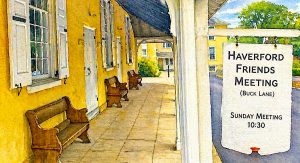
I came home to a disrupted life, had many jobs and my living arrangements were precarious. I landed in an apartment a couple blocks from the Haverford Quaker Meeting, which I happened upon one day. The Meeting house doors were open; I walked in and sat quietly for a very long time. It calmed me.
I began attending Meeting on Sundays, never to speak, and always left at the rise of Meeting. The folks there intimidated me, I didn’t think or feel good enough. But slowly, very slowly I became integrated into the community and joined after attending for seven years.
I became a member in 2006 as the Israeli Lebanese war began. I could not sit back silently any longer and watch that carnage without speaking. When I joined Haverford Meeting, my Quaker activism opposing the Israeli Palestinian Apartheid began. As a pacifist, I had become a convinced Friend.
I think that my passion for the oppressed comes from my roots in Brooklyn, I always favored the underdog, perhaps beginning with my devotion to the Dodgers who lost to the Yankees five times before the BIG win in 1955. I joined all the committees that confronted this issue. We lobbied, we organized a trip to Palestine for Young Adult Friends, we even got Friends Fiduciary to stop investing in the corporations that did business with the West Bank Occupation.
My intense activism followed the path of the Israeli massacres, beginning with “Operation Cast Lead,” aka the first Gaza war, back in 2008–2009.
The infrastructure of Gaza was destroyed in 22 days, and 1400 Palestinians were killed.
My poems paralleled the various conflicts between Israel and her oppressed. “Goodbye Jerusalem,” which I wrote shortly after Trump took office in 2017 and “Another Mother’s Child,” which I wrote somewhere en route to the next tragedy. I wrote “Visual Revolution,” in honor of Bernie Sanders’ elevation to wannabee President. I worked very hard for his campaign; Bernie was my Brooklyn homeboy.
It wasn’t until October 7th as a Jewish Quaker that I felt the full weight of my responsibility over this catastrophe. Up until then, I could keep my political ideology under control. But the outrage I felt erupted, like a volcano inside of me, for I saw the forthcoming genocide. One might say it was prescient. The emotions that I lived with, were shame over what was happening in my name, anger at my country’s involvement and fear for the future of mutual retaliation and destruction.
My passionate ministries that followed, were not received well by many in the Meeting, and for sure my views did not go over well in the Jewish world I left behind. I lost my Zionist daughter and three grandsons; we have yet to make amends. My truth, integrity, conscience and Quaker stubbornness have helped me weather this storm.
I took multi-faith courses learning as much as I could about the situation; settler colonialism, manifest destiny, decolonization. I studied enough Torah with the Anti-Zionist Rabbi at Tzedek Chicago, to be appalled by all the pre-emptive strikes throughout Jewish history, as documented in the Torah and beyond.
Now I am connected with both Jewish and Quaker activism: Jewish Voice for Peace, Tzedek Chicago, the Anti-Zionist Synagogue, If Not Now, AFSC’s Apartheid Free Movement, my Meeting. Through Quaker Speak I made a video, “A Jewish Quaker Speaks on Pacifism.”
I continue to juggle two faith traditions, Friday night Shabbat, and on Sunday Haverford, my home Meeting, sometimes I zoom the Portugal Meeting, a community of many ex-pats. I lived in Portugal for some months and attended regularly, am welcomed warmly. When I travel, I find local Meetings; Monteverde will always remain special to me, for I first spoke of juggling my two faiths to their high schoolers, on one of my trips to Costa Rica.
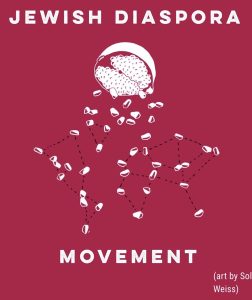
An old friend of mine from Brooklyn kept alive the image of a Diasporic Judaism in a floundering organization called, American Council for Judaism, which has evolved to a “new” Jewish Diaspora Movement. It’s a rapidly growing community of Jews who are vocally resisting ethnonationalism, apartheid and genocide in Israel and Judaism at large. Unfortunately, my friend died before this organizational rebirth. I would like to honor his memory.
Will my destiny lead me to put my energy in preserving the “universal” values of Judaism, through this rebirthed movement; reclaiming the Judaism I love, over the Zionism I abhor.
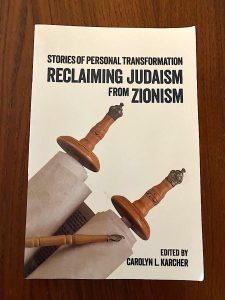 I am an Anti-Zionist, not because I want Israel to disappear but because I want ethnic privilege to disappear and genocide and injustice to stop. Zionism is a geo-political ideology, not a religion. My dream is for these two peoples to somehow learn to live together in one unified democratic state.
My life’s work seems to be about speaking truth to power. But the query remains, what have I been chosen for? There’s a saying: “I’m not sure where I’m going, but I’m not lost.” And as a Friend reminded me, “God is the Clerk of the Outcome Committee.”
– – – – – – – – – – –
Nostalgia for Home
Sandy Green
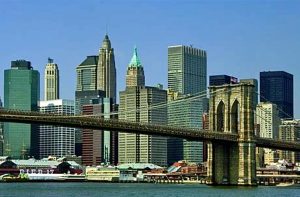
There she stood, the bridge from Brooklyn to Manhattan, proudly spreading her wings across East River. So many tales about the Brooklyn Bridge. For me, its elegance stands out, strong and stable, proud of herself. The walk across her expanse is a vision worth a thousand words. Walking north, toward the skyscrapers of Manhattan is metaphorically majestic, as is she, and the return, a clarity of purpose.
Or cross it heading south, follow the bridge off its ramp and you enter a neighborhood that many consider “la crème de la crème” of Brooklyn. The Heights, they call it, with its promenade that overlooks the skyscrapers of lower Manhattan, which once gave a bird’s eye view of the collapse of the World Trade Center. The sight of that event forever changed the psyche of its witnesses. The Heights has thrived, as has Brooklyn to a lesser or greater degree. It continues to bridge the gap between there and here, and then and now.
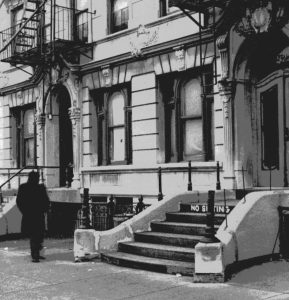
As you continue the drive down Flatbush Avenue, stopping at every light, with horns blasting, you go through the heart of Brooklyn, and with your grateful eyes, you come upon diverse middle-class neighborhoods, with small businesses owned and operated by the moms and pops who live there. Lots of diversity and aliveness; the old timers mixing with the newly transformed; it is black, white, and brown at its finest. It’s young and old, moderately middle class and lower, if you’re into class. Forty Acres & A Mule Filmworks, Spike Lee’s joint, operates out of a couple of Brownstones in this neighborhood of moms and pops. It sits across the street from the hospital where I was born, Brooklyn Jewish.
Traveling further south, you come upon the heart of Black Brooklyn. The house of my birth on Nostrand Avenue, a Haitian restaurant when I last visited, where West Indian French is spoken. When my grandparents owned this house, in the early 1900’s, raising my father and his siblings, they had a dry-goods store, and my grandfather rolled cigars in the back. During that era of new arrivals, there were trolley cars and push wagons, fish mongering on Fridays, and knife sharpening on Saturdays. They went street to street and door to door.
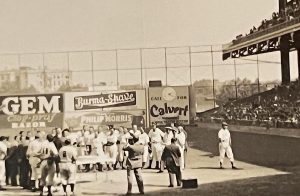
In the 1950s, when I was a small child growing up in that same residence, my family occupied the second floor, in what they called a cold-water flat, one room leading to the next. You could hear a lot, behind those flimsy walls. Another flight up, my aunt and uncle lived with their two boys, my cousins. On the ground level was a Chinese laundry, where Tom and his uncle lived, in the back of the store. I ate Haitian food my last visit, fried pork over rice with plantains, served in Styrofoam containers. Memories flooded my brain of Tom and his uncle while sitting there in that space.
Tom, this frail boy, suffered from scabies or rickets, or some other mal-nutritious disease. Together he and his uncle laundered shirts, stiffly; the upward mobile men in the area needed this self-image to make their white-collar livelihood. These shirts were tightly wrapped in brown paper, which lined the shelves of this laundry. At that time, I was much too young to question whether this man and his nephew were there legally.
In the course of 100 years, Brooklyn hosted a series of immigrants, from many different cultures and religions. Brooklyn, the birthplace of multi-culturalism, its own unique melting pot with every possible diversity one can think of: rich, poor, Jews, Italians, Irish, Chinese, Puerto Ricans, Blacks and Browns from various countries, a melting pot for Syrians too! The pride of America, my Brooklyn, it is the America I proclaim, and, in my fantasy lives on as a role model for multi-culturalism, a light unto other nations.
We left this neighborhood when I turned 6, my first sense of departure from anywhere, leaving not only the street, but my extended family and cousins. They were like siblings, with stories to share. Now each of us was experiencing yet another side of Brooklyn.
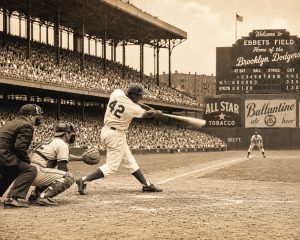
Moving across town, to the site of the old Ebbets Field, are four twenty story apartment buildings, named after the field that housed my fondest memories. For more than half of Brooklyn, life revolved around the circumstance of the Brooklyn Dodgers. There were some wannabees New Yorkers, loyal to the Yanks, but the heart of Brooklyn lies with the Dodgers, those damn bums. Life could have been very sad, with the Holocaust lurking with its dirty head. But those bums saved us. Jackie Robinson, was the first Black man to integrate baseball, and it happened in Brooklyn, under my watch. The character of my Brooklyn is bold, smug, audacious, tenacious, and damn proud.
The place that I called home for my latter childhood and teen years, “the shtetl”, a brand-new neighborhood in Brooklyn, heavily Jewish. The homes were built on filled in swamp land over Jamaica Bay. Each boxy brick house had six rooms. The residents groping to find a place that wouldn’t betray them. Where betrayal had to be on the minds of these Brooklyn Dodger Jews, not only the catastrophe in Europe faced by their brethren but abandoned by their home team, the Dodgers, who moved to California in 1958.
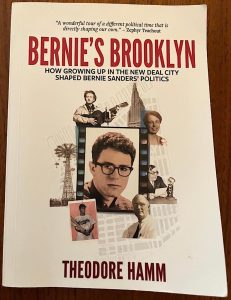
Just think about all the people you know, the stars, the celebrities, the comics, a candidate for President, who went to high school with my cousin, a Supreme Court Justice and even the most famous pedophile. You mean he is from Brooklyn too? We are fair minded people, because we were born into a fair-minded place, at least most of us, I dare say.
My first marriage was arranged in the confines of look-alike houses, with budding neighborhood stores, owned and operated by the neighbors. Delivery of everything, from eggs to milk and butter, bread, cakes; Arnold’s white truck roamed the streets, and you knew when he was coming. Rain or shine, he was very reliable, except when he wasn’t, and then we worried. Everyone knew everyone, and watched out for each other’s kids. Teensy bits of antisemitism mocked the assumptions, but no residual damage, so the audacity continued.
We lived in a neighborhood, not just a street, but a place where you could walk endlessly for anything you needed. A place where modern life emerged safely out of tradition. My brother and I walked our dog Butch, up and down the streets of that neighborhood daily, stopping to talk to everyone, especially if they had a dog. Except for Cappy, the white one up the street, he and Butch did not like each other, mutual contempt, if it was territorial, neither one would win in the end.
This neighborhood is now the stomping ground for the “nouveau riche” and a healthy middle class of all denominations, including very religious Jews, living quite well in what had once been called the “asshole” of Brooklyn.
My father spent the last years of his life in Brighton Beach, a nesting ground for Jews of every genre, where circumcision might have been the criterion for entry at the Baths.
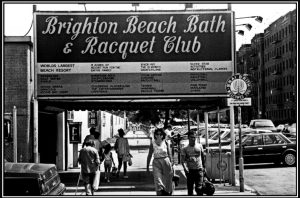
He lived in an apartment on the 16th floor, with a balcony overlooking the ocean. He inhabited this neighborhood at the start of the Jewish exodus from Russia in the mid-seventies.
They brought their love for the sea, which reminded them of Odessa. Those able to get out on religious grounds to come to America, brought the smells of mother Russia with them. The pungent aromas of smoked meats and fish, mixed with overly sweet-smelling fragrances worn by heavily made-up woman, walking this massive boardwalk. If one listened, they could hear the sounds of violins playing as the ocean water crashed onto the boardwalk.
Taking this walk from the motherland into cotton candy, you get a strong sense that you have just left one country for another. A treat to walk the full length of that boardwalk, from little Russia to Coney Island, Brooklyn’s honky-tonk, roller-coasters, mini arcades, and hot dogs from Nathan’s dripping with mustard and sauerkraut on slightly soggy rolls. It is a throwback to a different era, spiraling yet again toward some unknown future.
Newcomers traveling from far and wide coming to America find compensation in its arms, or did they? How blessed, coming from the Brooklyn I remember, what more can I say, dear to me after all these years. It gave me my life and my identity, both Jewish and Brooklyn. With pride in my voice and a smile on my face, I say, I come from Brooklyn!
So you’re from Brooklyn, Sandy? I’m from Brooklyn too, by way of Jersey City, North Jersey, Westtown and Haverford, Boston, Southern Colorado and now Northern New Mexico. Like you, still figuring out roots and branches. Greenpoint, Polish section, 1/2 block on Humbolt St from St Stanislaus, 2nd Polish RCC in the US, according to my Babcia, Sofia Manciewicz Kowalewski/a [Jewish roots to those names, but she wouldn’t have liked knowing that] who emigrated when she was 18 from Czarist Poland, around 1915. I remember the shotgun/cold water flat she lived in — she owned the 6-flat building on her 30 year job cleaning a bank at night. Great story of the Jewish peddler advising her on how to approach the banker when her three boys were in combat in the Army in WWII and she couldn’t make the mortgage. He gave her the deed. Brooklyn.
Chuck’s right, worth a long read.
Thanks Sandy.
Will be in touch, maybe see you in Portugal one day.
Trevor
Thank you, such an insight into your childhood and Brooklyn and the points you make about being Jewish but not zionist.
I loved this article. Thanks, Sandy and Chuck!
Thanks, Tom! Please share it.
Hi Tom,
Thanks for the appreciation! Please share the piece.